Easter Island sits 2,300 miles from the nearest population center. That number doesn't fully register until you land at Mataveri Airport and realize the ocean in every direction isn't scenery — it's the reality these people lived inside. The original settlers arrived around 800 AD, Polynesian voyagers likely from the Marquesas or Mangareva Islands, navigating by stars, ocean swells, and the flight paths of seabirds. They brought sweet potatoes, chickens, and a hierarchical clan structure that would shape the island for centuries. DNA evidence and linguistic analysis confirm their place in the Austronesian seafaring tradition that colonized a third of the Pacific Ocean. They named it Te Pito o te Henua — the Navel of the World. The name earns its arrogance.
Explore Easter Island
Discover Easter Island through photos that tell the story.
Find out how well you know Easter Island.
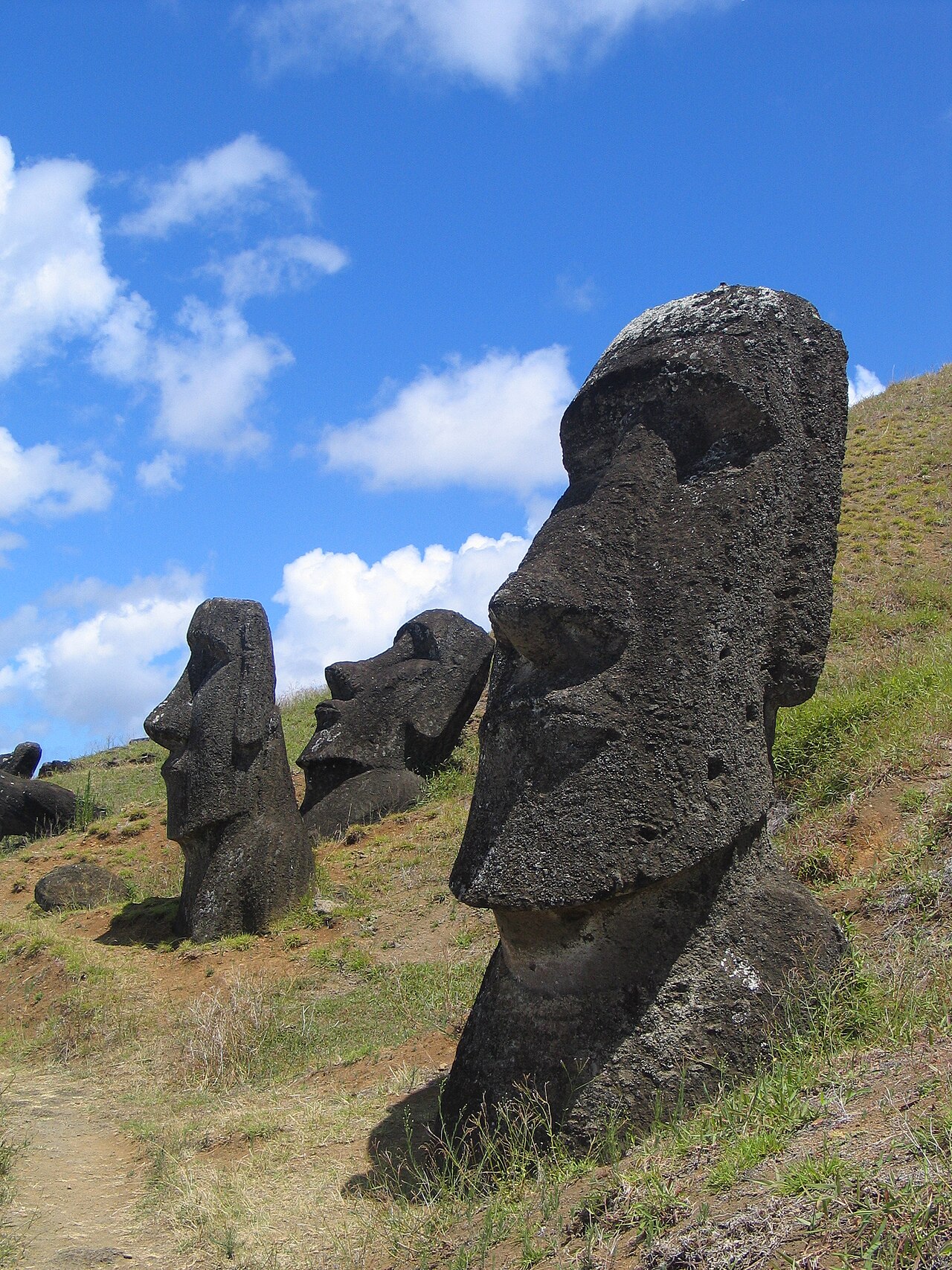
The moai are why you're here, and they hold up. Nearly 1,000 survive across the island, carved from compressed volcanic ash at the Rano Raraku quarry on the eastern slope. The average one stands about 4 meters and weighs 12.5 tonnes. The largest ever erected, Paro, reached 10 meters and 82 tonnes. An unfinished colossus still embedded in the quarry bedrock would've stood 21 meters tall. Carvers used basalt hand picks called toki to shape the soft tuff — a single statue could take a team of a dozen workers more than a year. How the Rapa Nui moved them from quarry to coast is still debated. Oral traditions describe the moai as having 'walked,' rocked forward with ropes in a motion resembling a refrigerator being shuffled across a floor. Modern experiments have replicated it. It works.
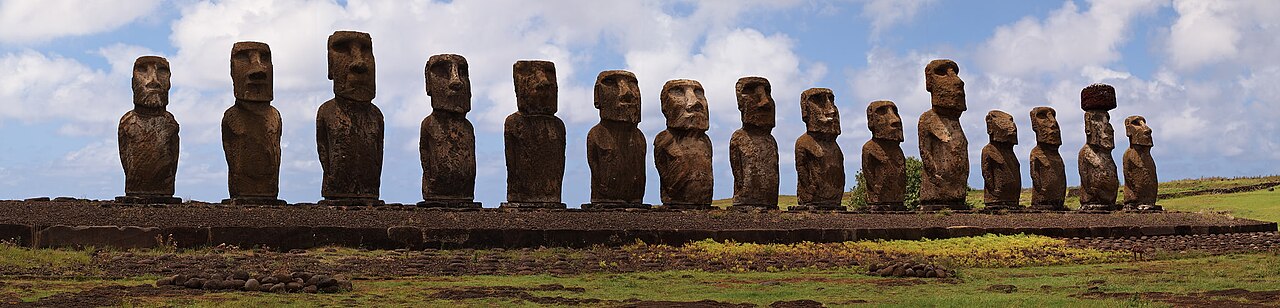
Ahu Tongariki is the payoff. Fifteen moai standing shoulder to shoulder on the island's largest ceremonial platform, facing inland against a sky that has nothing behind it but open ocean. They were toppled during internal conflicts and then scattered further by a 1960 tsunami generated by a Chilean earthquake. A Chilean archaeologist used a Japanese-donated crane to re-erect all fifteen between 1992 and 1995. Each moai originally had a red scoria topknot called a pukao and eyes inlaid with white coral and obsidian pupils — the living gaze was intentional, believed to channel the mana of deified ancestors back into the land. The ahu platforms also served as burial sites, with cremated remains interred within the stonework. Get here at sunrise if you can arrange it.
At the southwestern tip of the island, Orongo sits on a knife-edge rim between the Rano Kau crater lake and 300-meter sea cliffs. This is where the Birdman cult displaced moai worship around the 16th century. Each spring, clan representatives scaled down those cliffs, swam through shark-infested waters to the offshore islet of Motu Nui, and waited for the first sooty tern to lay an egg. First one back to Orongo with the egg unbroken won his clan chief the title of Tangata Manu — political and spiritual authority for the year. Hundreds of birdman petroglyphs are carved into the basalt there, a human body with a frigatebird head clutching an egg. The site has a quiet sense of consequence to it.
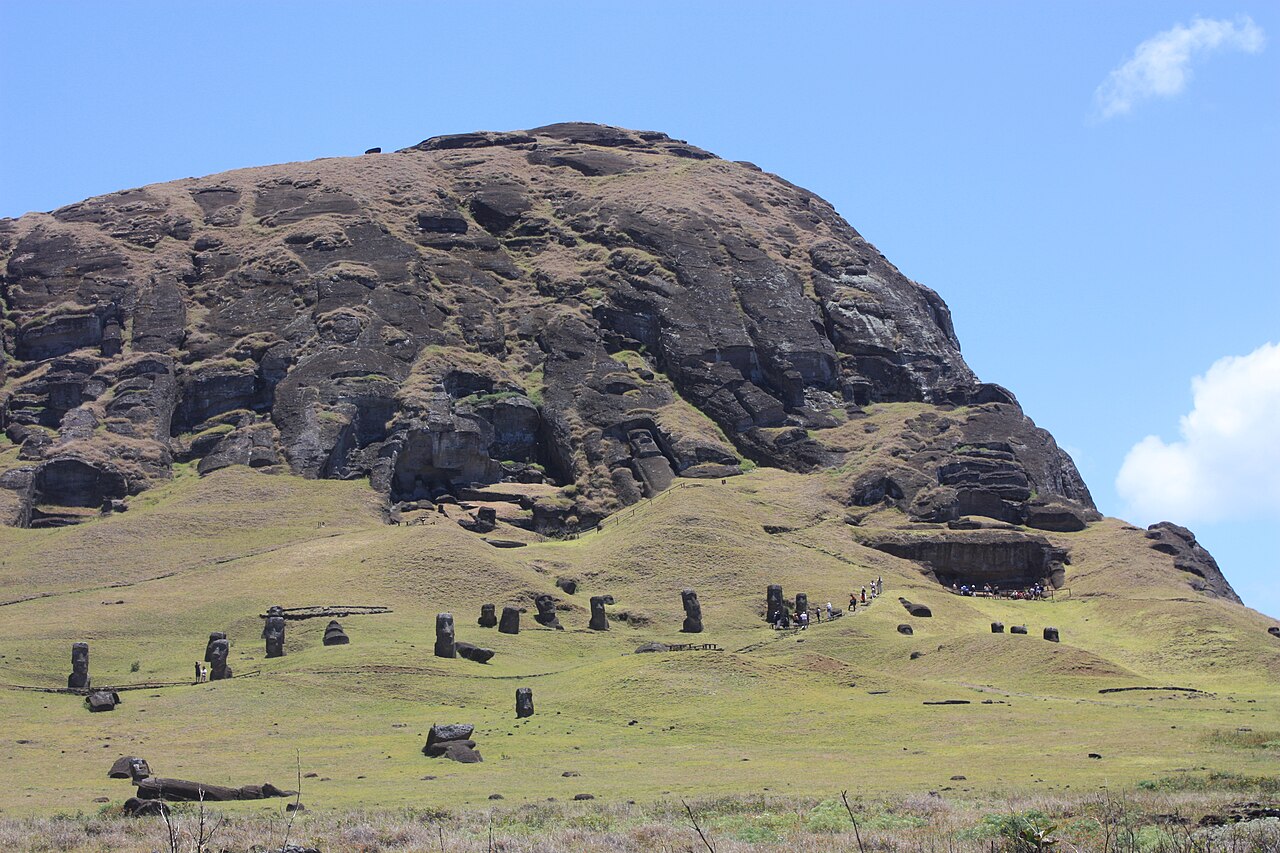
Here's the honest part. Easter Island is also a cautionary tale you're visiting in person. Pollen core samples show the island was once covered in subtropical forest dominated by the now-extinct Paschalococos palm. By the time Dutch navigator Jacob Roggeveen became the first European to sight the island on Easter Sunday 1722, virtually every tree was gone. The traditional explanation blamed the Rapa Nui themselves — timber demand for moai transport, canoes, and fuel outpaced the forest's ability to recover. Newer research adds Polynesian rats, which arrived with the original settlers and gnawed palm seeds before they could regrow. Both explanations were probably true. The deforestation ended deep-sea fishing, eliminated bird habitat, and triggered soil erosion that collapsed agricultural yields. You hold that history alongside everything else here.
Rapa Nui National Park, a UNESCO World Heritage Site since 1995, protects roughly 40 percent of the island. Flights arrive via Mataveri from Santiago and, seasonally, from Tahiti. The roughly 8,000 residents — many of Rapa Nui descent — maintain a living Polynesian culture through wood carving, string-figure storytelling, and the Tapati Rapa Nui festival each February. This trip isn't cheap, and there's no way to make it cheap — the airfare from Santiago alone sets the tone. But if you've made the investment to stand in front of those moai at sunrise, watching the light catch their profiles against an ocean stretching unbroken for thousands of kilometers in every direction, the question of whether it was worth it tends to answer itself.