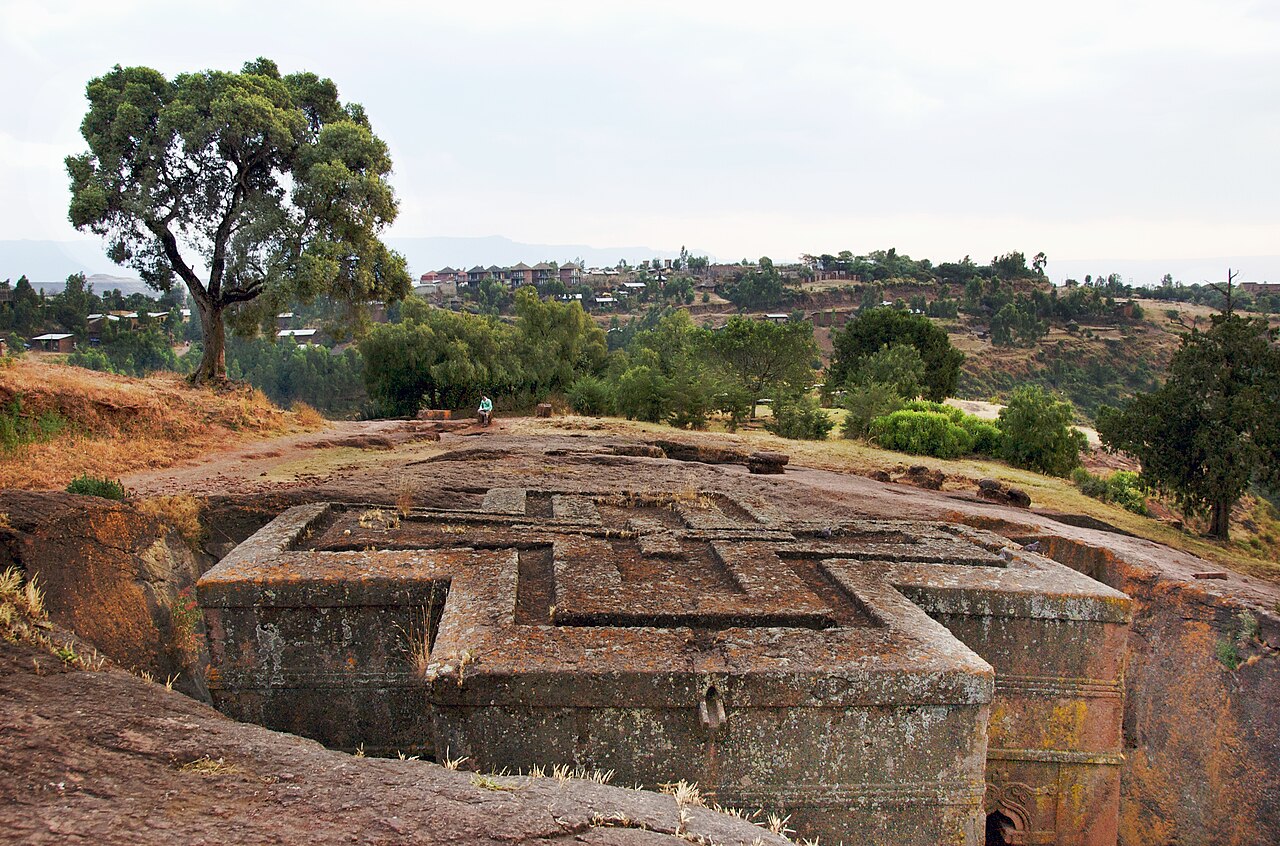
Lalibela's eleven churches weren't built. They were carved — straight down into volcanic bedrock, top to bottom, every column and arch and drainage channel cut from a single continuous mass of stone. No mortar. No stacked blocks. Just rock that was systematically removed until a church remained. That's not a building technique. It's an idea about construction that most architects today would refuse to price.
Explore Lalibela
Discover Lalibela through photos that tell the story.
Find out how well you know Lalibela.
High in the mountains of northern Ethiopia, at roughly 2,500 meters, King Gebre Mesqel Lalibela commissioned these churches in the late twelfth and early thirteenth centuries. He was a ruler of the Zagwe dynasty, and Ethiopian Orthodox tradition holds that he received a vision: fall into a poisoned sleep, travel to heaven, see Jerusalem, and return to build a New Jerusalem in stone. Whether or not that's literal history, the intent was clearly symbolic. A stream running through the complex is named the Jordan. The churches are grouped to mirror the geography of the Holy Land. This wasn't construction for convenience. It was construction as theology.
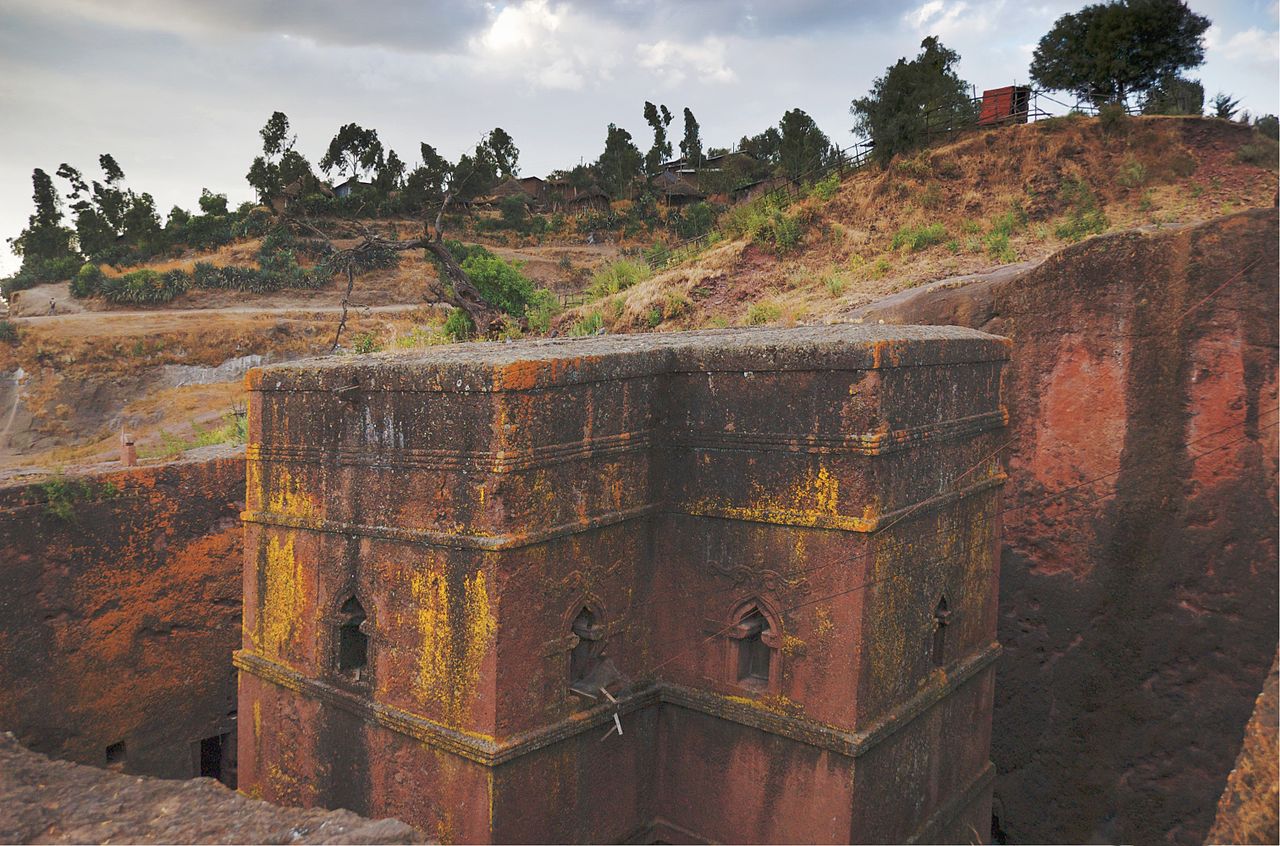
The most celebrated of the eleven is Bet Giyorgis — the Church of Saint George — which sits apart from the main clusters. You approach it by descending a narrow trench cut into the rock, and the church reveals itself as you go: twelve meters deep, perfectly cruciform, walls plumb, roof flush with the surrounding ground and decorated with nested Greek crosses carved in relief. Photographs of it exist everywhere. They still don't prepare you for the scale. The precision is what gets you — every cut was permanent, errors couldn't be patched, and somehow the proportions are nearly flawless.
Bet Medhane Alem, the House of the Saviour of the World, holds the record as the largest monolithic rock-hewn church in the world — roughly 33 meters long, 23 wide, over 11 tall, with 72 pillars arranged like a classical basilica. Its design is thought to have been influenced by the ancient Church of St. Mary of Zion in Axum. Bet Maryam, the Church of the Virgin Mary, is the most ornate: interior walls and ceilings covered in painted frescoes, carved geometric patterns, birds, flowers, and the Star of David — in Ethiopian tradition a symbol linking the Solomonic dynasty to King Solomon himself.
The engineering required is hard to fully absorb. The process: cut a deep trench around a massive block of bedrock, then hollow the interior from the top down. Every cut permanent. The builders also carved an elaborate network of tunnels and passageways connecting the churches, some running through near-total darkness before opening into sunlit courtyards. Drainage channels were cut throughout to manage water — porous volcanic tuff doesn't handle it well — and that problem hasn't gone away. It's still the main threat to the site today.
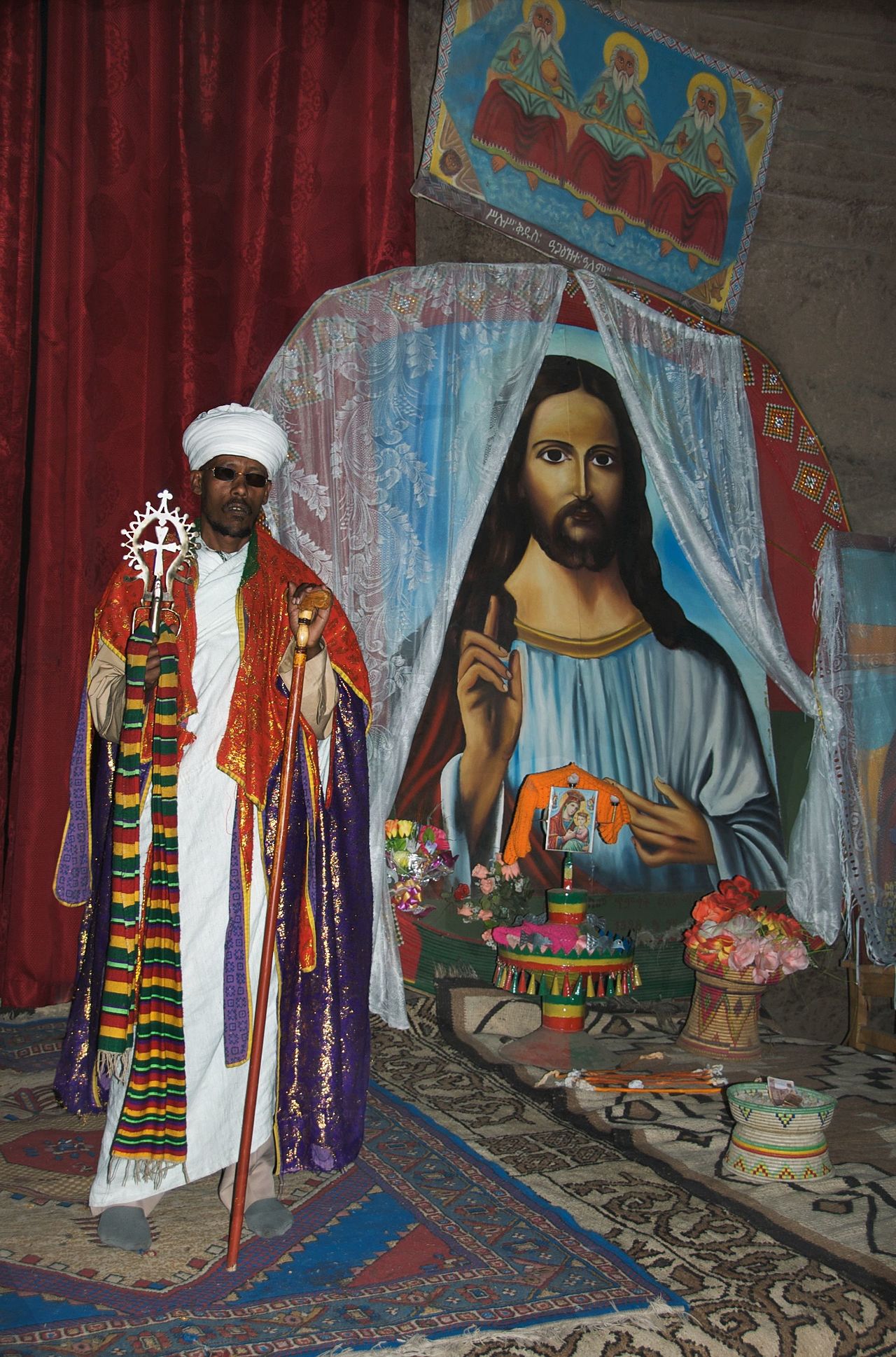
What makes Lalibela unusual among ancient sites is that it's been in continuous use for roughly eight hundred years. Priests in white robes conduct daily services. During Timkat — the Ethiopian celebration of Epiphany each January — tens of thousands of pilgrims descend on the town for three days of prayer, processions, and the blessing of water. It's one of the largest Christian pilgrimages in Africa. These churches were never meant to be museums, and they aren't.
Here's the honest caveat: UNESCO inscribed the site in 1978, and preservation has been a constant fight since. The tuff is soft and porous, vulnerable to water, biological growth, and weathering. In 2008, large metal shelter structures were erected over several churches to protect them from rain. Those shelters are ugly. Functionally necessary, visually intrusive — you'll notice them in every wide-angle photograph. Cracks have appeared in some structures. The tunnels flood in the rainy season. Whether you visit now or in ten years, you're seeing it at a different point in a long conservation battle.
Standing at the rim of the trench around Bet Giyorgis and looking down at the cross-shaped roof is the kind of moment that recalibrates what you think medieval builders were capable of. If you're going to Ethiopia, Lalibela isn't optional. If Lalibela is the reason you're going to Ethiopia, that's a legitimate reason.