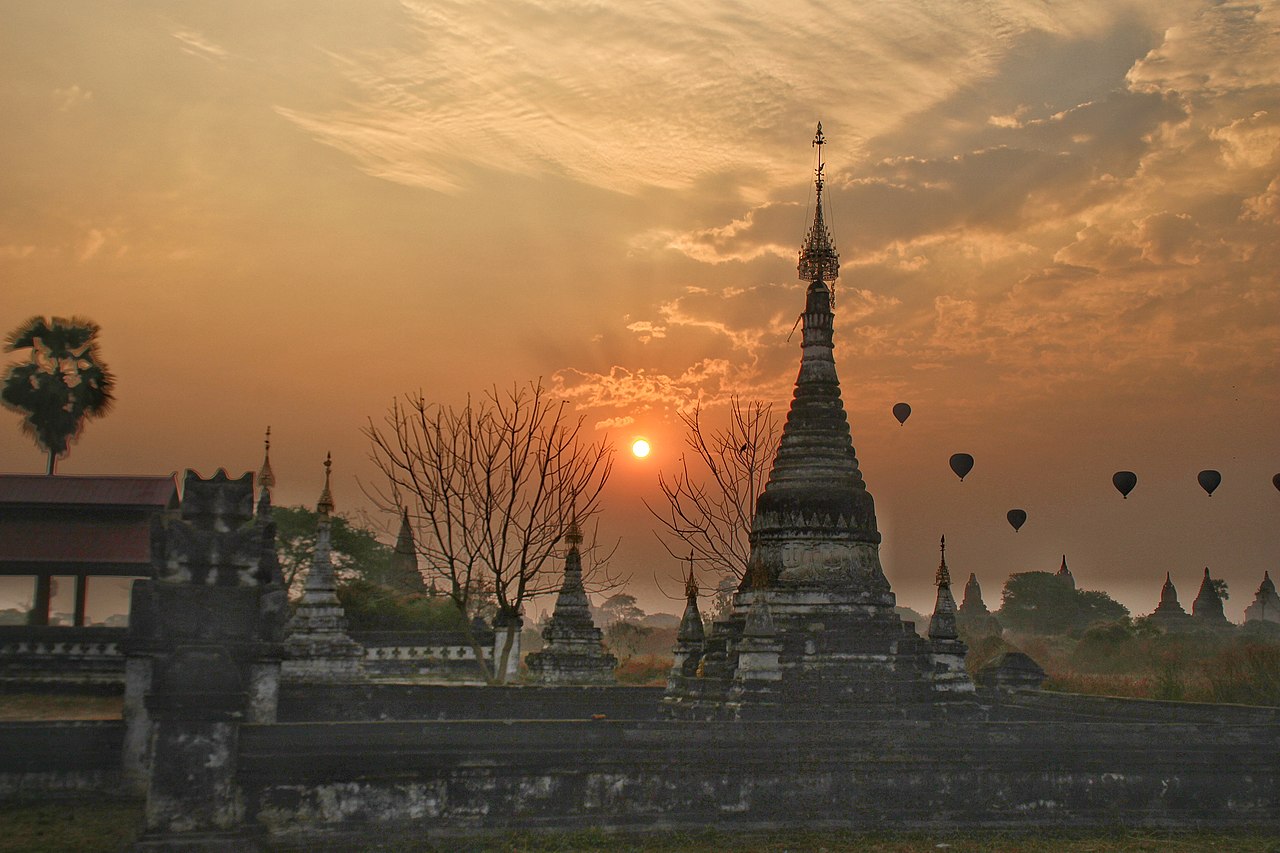
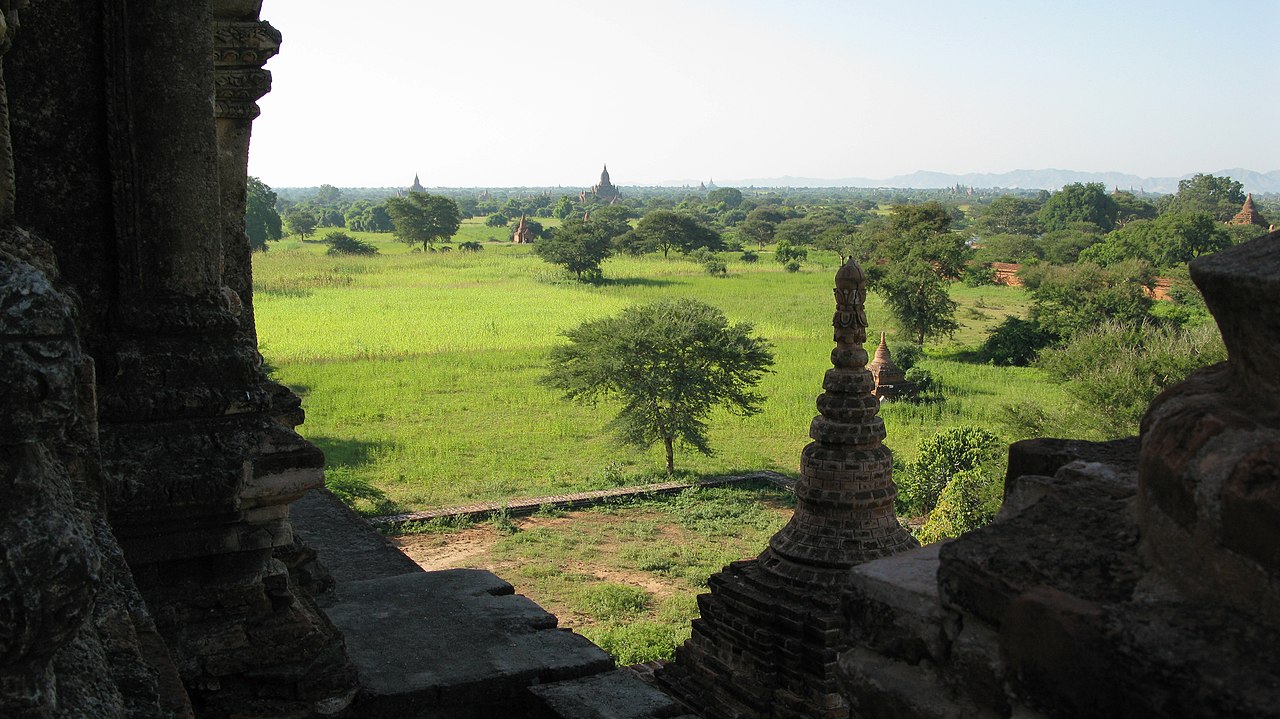
Bagan is one of the few places where the superlatives are simply accurate. A dry, scrubby plain above the Irrawaddy River in central Myanmar, it holds more than 2,000 brick temples and whitewashed stupas rising from the earth in every direction you look. The Pagan Kingdom built over 10,000 of them here between the 11th and 13th centuries — not an approximation, not a rhetorical number. One of the densest concentrations of Buddhist architecture on the planet, and I say that having seen enough of the competition to mean it.
Explore Bagan
Discover Bagan through photos that tell the story.
Find out how well you know Bagan.
The dynasty's founder, King Anawrahta, seized the throne in 1044 AD and moved quickly. After conquering the Mon kingdom of Thaton in 1057, he brought back Mon monks, craftsmen, and a complete set of the Pali Buddhist scriptures — the Tripitaka — that established Theravada Buddhism as Burma's dominant faith. What followed was equal parts religious conviction and political consolidation. The Shwezigon Pagoda, begun by Anawrahta as a reliquary for a tooth and a bone of the Buddha, established the bell-shaped stupa form that became the template for virtually every Burmese pagoda built afterward. You'll recognize the form everywhere you look on the plain.
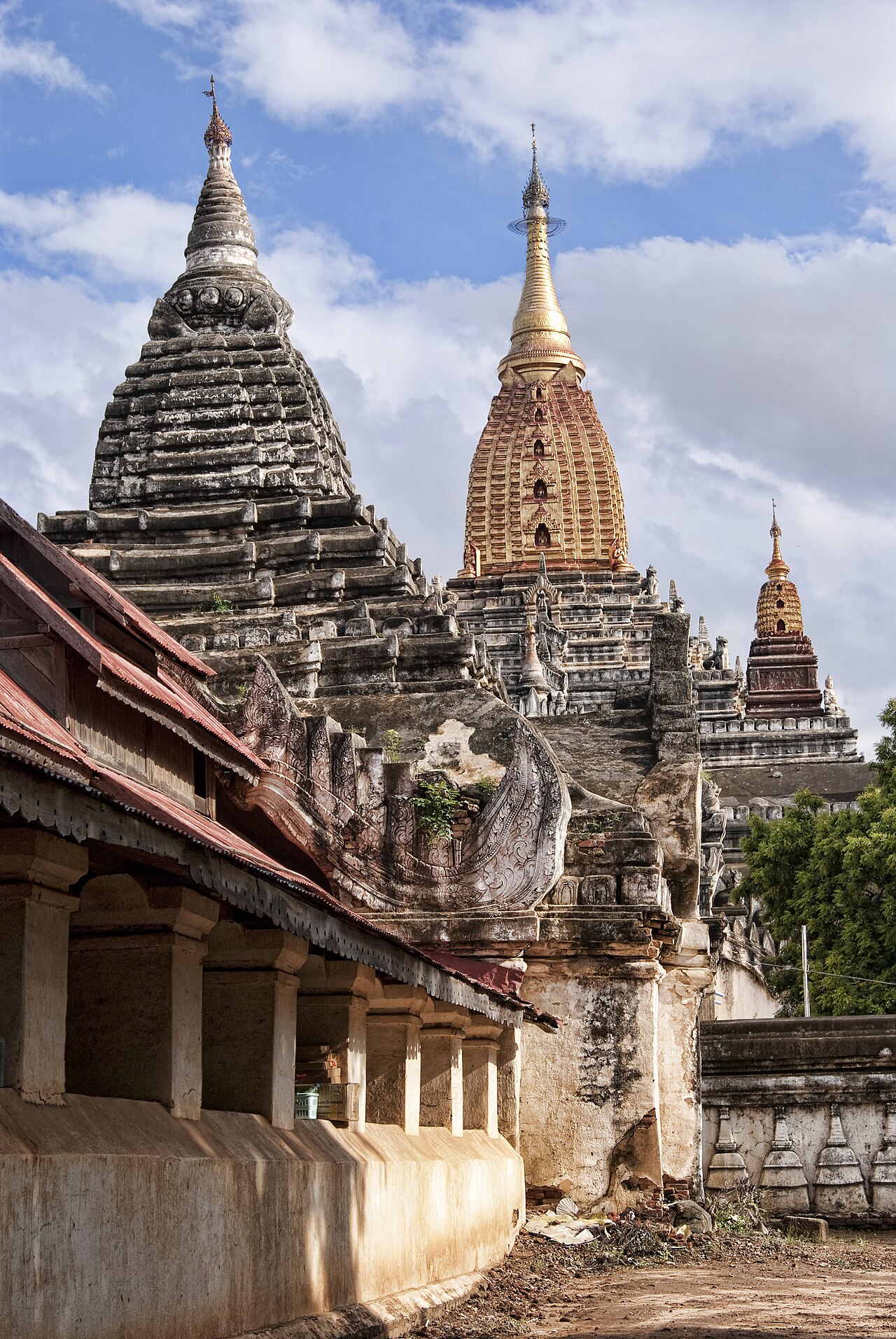
His successors built with rising ambition. King Kyansittha completed the Ananda Temple around 1105 AD, and if I had to pick one monument on the entire plain, this is it. The Ananda is a Greek-cross layout topped by a gilded spire 51 meters above the ground, with four standing Buddhas — each nearly 10 meters tall, each facing a cardinal direction — that are among the most quietly powerful religious images in Southeast Asia. The corridors hold over 1,500 stone plaques depicting the Jataka tales arranged so a pilgrim walking the passages absorbs the full narrative cycle of the Buddha's previous lives. The mortar joints between the bricks are so fine they're invisible to the naked eye in many places. Twelfth-century craftsmanship. It's genuinely hard to absorb.
The largest temple in Bagan has the darkest backstory. King Narathu built Dhammayangyi around 1170 AD as penance for murdering his father and brother to take the throne. He reportedly had bricklayers' hands cut off if the mortar joints failed to meet his standard. The result is the most precise brickwork in Bagan — and a monument that was never finished, because Narathu was assassinated before the interior could be completed. His successors sealed the inner corridors and wanted nothing to do with his legacy. Dhammayangyi's massive pyramidal silhouette dominates the skyline from nearly every viewpoint on the plain. Whether that's ironic or fitting depends on your read of history.
Later kings added their own contributions. King Narapatisithu built the Sulamani Temple in 1183 — the stucco work is refined, the interior murals show Buddhist scenes alongside ordinary daily life, and the contrast with Dhammayangyi's brutalism tells you something about the dynasty's range. Htilominlo Temple, completed in 1211, stands three stories at 46 meters with ornate plaster moldings and original glazed sandstone details that have held up well. The Thatbyinnyu, the tallest structure in Bagan at 61 meters, helped drive a shift from single-story to multi-story temple design that spread across the region.
The honest thing to know about Bagan is that the dynasty was already in decline before its last great monuments were finished. Internal feuds and the staggering cost of maintaining thousands of tax-exempt religious properties consumed the kingdom's revenue for generations. When Kublai Khan's Mongols arrived in 1287, the last Pagan king simply fled. The Mongols didn't destroy the temples — they had no reason to — but the political collapse was complete. The plain's population dwindled, and for centuries these monuments sat largely unattended, visited mainly by local pilgrims. Something this extraordinary, effectively abandoned.
Modern Bagan has had its own complications. A magnitude 6.8 earthquake on August 24, 2016, damaged nearly 400 temples — toppled spires, cracked walls across the archaeological zone. UNESCO finally inscribed Bagan as a World Heritage Site in July 2019, a designation delayed for decades over concerns about earlier restoration work that used cement and modern materials inconsistent with the original construction. The inscription brought stricter conservation standards, which is the right outcome, even if some of the earlier restorations are frustrating to look at. The site is still a working religious landscape: monks meditate in ancient halls, locals pray at shrines their ancestors built nine centuries ago.
What makes Bagan worth prioritizing over other Asian heritage sites is the light. At dawn, mist rises off the Irrawaddy and the temples emerge as silhouettes against a sky going from violet to gold. Hot air balloons drift over the plain in the dry season — expensive, but one of those cases where cost isn't really the deciding factor. At sunset the brick turns deep orange, the shadows lengthen, and the whole plain seems to pull down into the earth. If you're deciding whether Bagan belongs on the itinerary: it does. There are places that deliver exactly what they promised. This one delivers something different than what you expected.