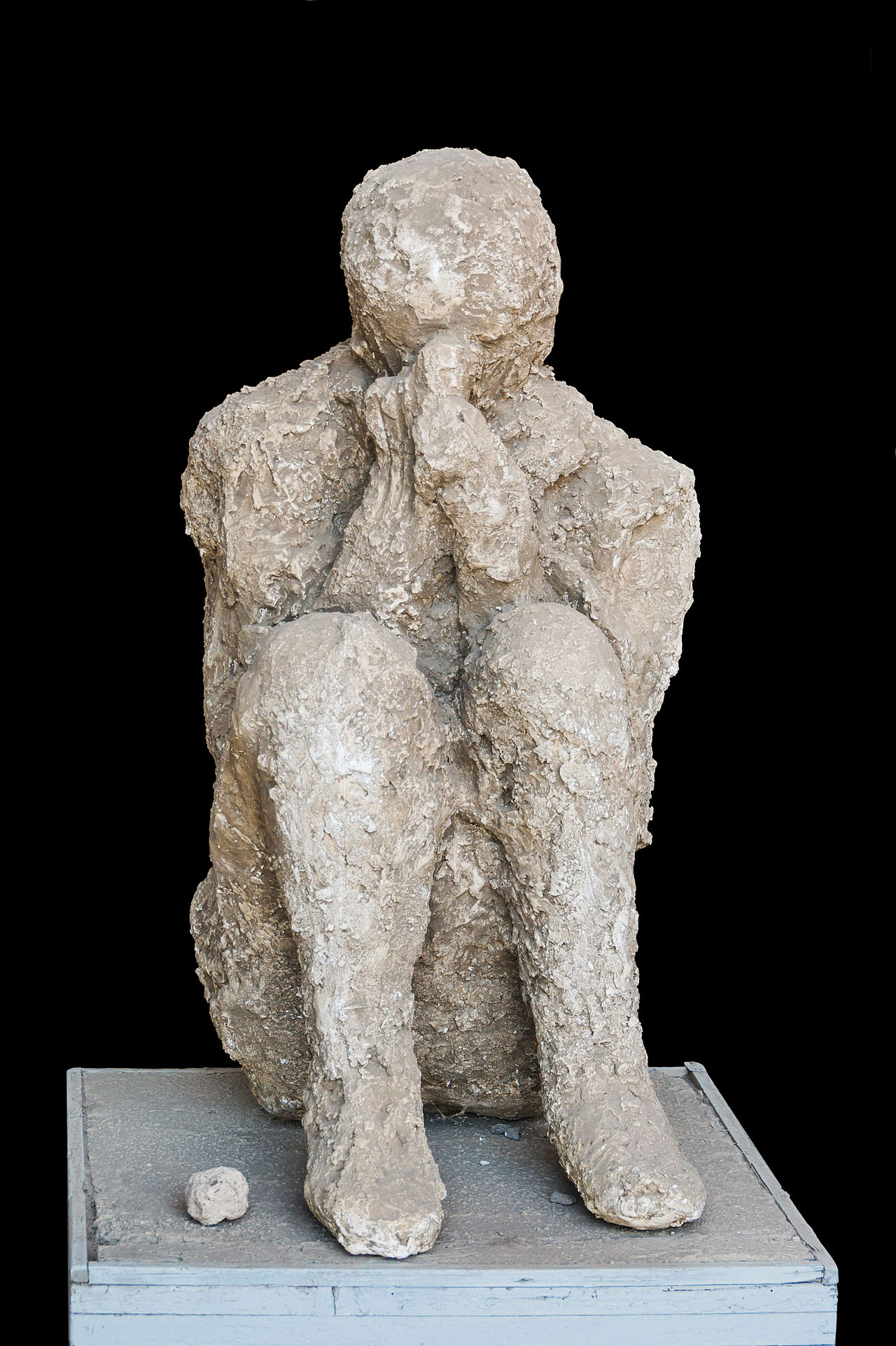
The plaster casts stop you cold. There's a man sitting against a wall, knees pulled up, face buried in his arm — and it takes a second to register that this isn't a sculpture. It's a void left in hardened volcanic ash, filled by archaeologists with plaster, of a person who died on August 24, 79 AD. That's what Pompeii does that no amount of reading prepares you for: it's not a ruin. It's a city that just stopped.
Explore Pompeii
Discover Pompeii through photos that tell the story.
Find out how well you know Pompeii.
On that morning, Pompeii's roughly 11,000 residents were doing ordinary things — eating at thermopolia (snack bars), arguing politics, watching gladiators practice — when Vesuvius turned catastrophic. Within 18 hours, 4-6 meters of volcanic ash and pumice had buried the city almost completely. The approximately 2,000 who didn't flee were asphyxiated by a superheated surge of gas and ash. The city had been warned: a serious earthquake in 62 AD had already signaled instability, and in the days before the eruption water sources dried up and tremors increased. Nobody connected the dots. A 17-year-old named Pliny the Younger, staying across the Bay of Naples at Misenum, watched the eruption and later wrote two letters to Tacitus that remain the only firsthand account we have — so precise that geologists still call this eruption type a 'Plinian eruption.' His uncle, Pliny the Elder, commanded the Roman fleet and sailed toward the disaster to rescue survivors. He died trying.
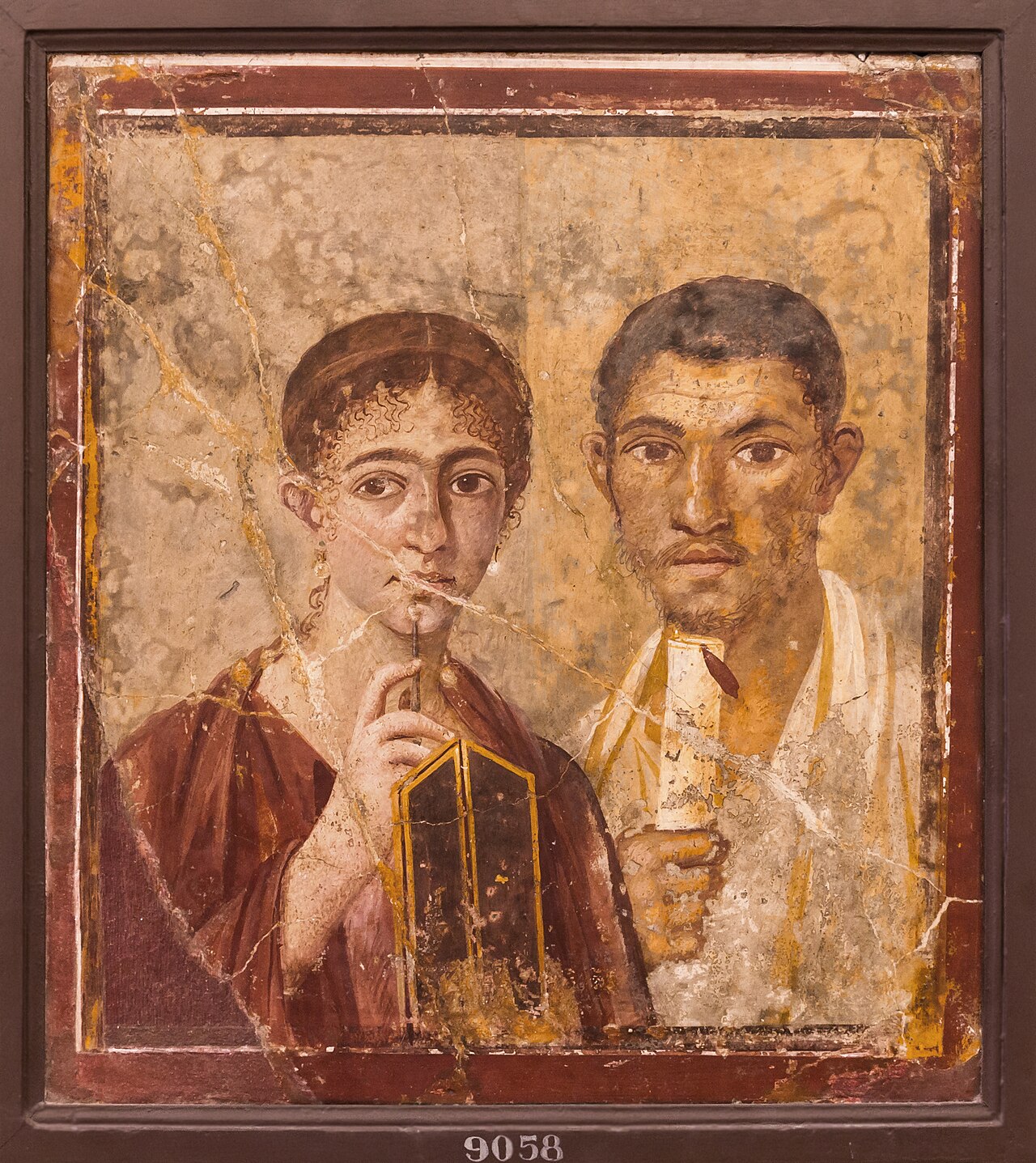
Systematic excavation began in 1748 under King Charles III of Naples, and about two-thirds of the city has been uncovered since. What archaeologists found is genuinely astonishing: bakeries with loaves still in the ovens, political graffiti endorsing specific candidates, prices posted in taverns, a legal brothel with an erotic fresco price list, a dog chained to a post. More than 11,000 inscriptions have been catalogued. Pompeii is the single richest source of information about how ordinary people actually lived in the Roman world — not emperors and senators, but bakers and innkeepers and street vendors.
The frescoes are the other thing nobody fully prepares you for. Roman painting almost entirely vanished from history — Pompeii is the exception. The Villa of the Mysteries has a room-sized cycle of life-size figures painted in the deep 'Pompeii red' derived from mercury sulfide, apparently depicting a Dionysiac initiation ritual. Nobody's entirely sure what it means. Other villas preserve mythological scenes, garden landscapes, still lifes, and portraits executed with real sophistication. These weren't decorative afterthoughts — they were the artistic standard of their time.
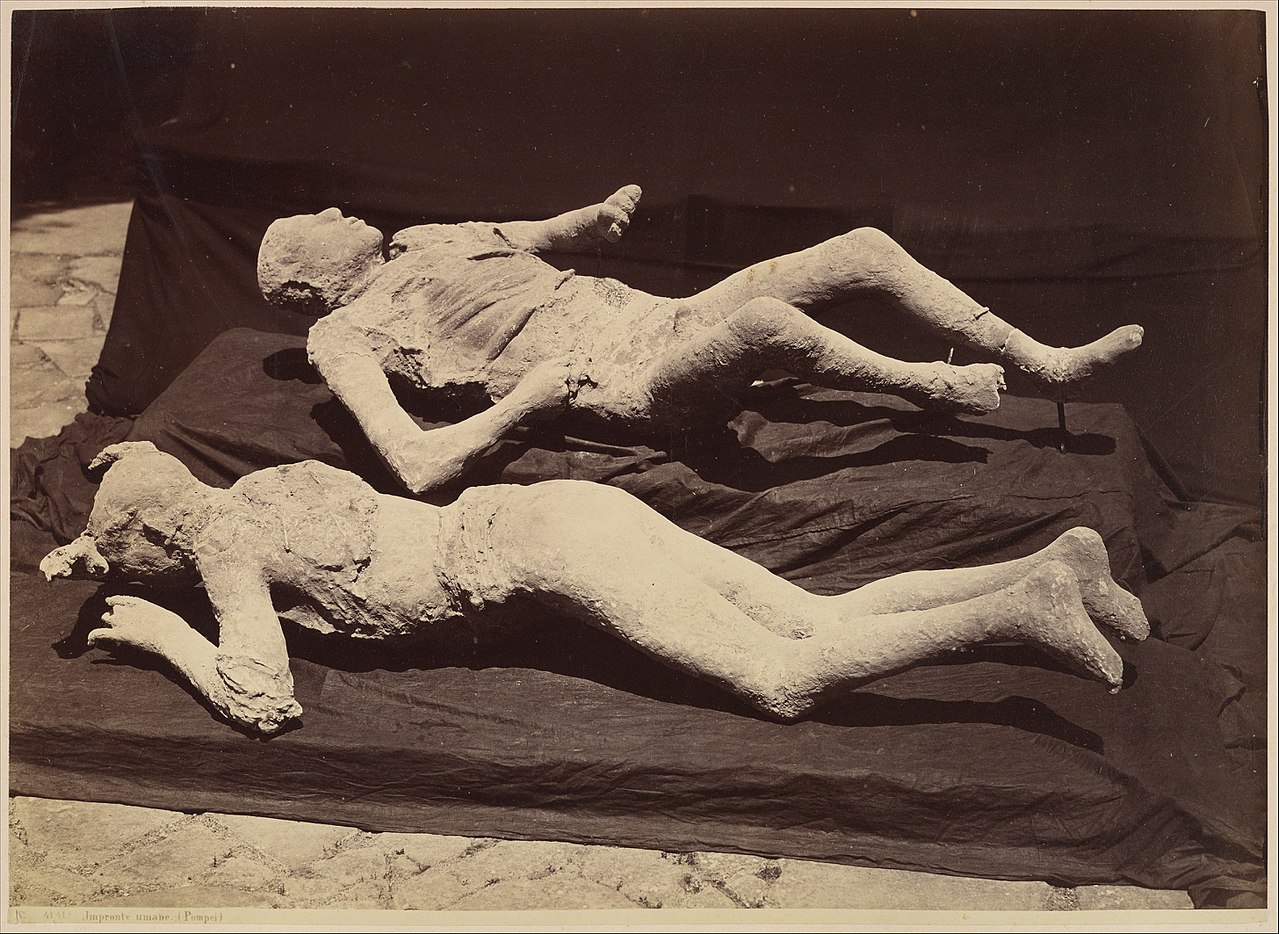
Here's the honest caveat: Pompeii is crowded, it's large, and on a summer day it can feel overwhelming. You'll want at least three to four hours, comfortable shoes, and a water bottle. The site gets hot and there's limited shade. That said, I'd skip the cheap audio tour and invest in a good guided walk or a reputable app — the difference between knowing what you're looking at and just walking past ruins is significant. The 'Great Pompeii Project,' an EU-funded conservation effort started in 2012, has stabilized dozens of structures that were collapsing and opened new areas of the site. Excavations are ongoing: between 2019 and 2023, archaeologists uncovered a ceremonial chariot, a vivid food mosaic snack bar, and two more eruption victims. Pompeii isn't finished. It's still being discovered.