Athens earns the hype, but not in the way you'd expect. The Acropolis is real — it hits harder in person than any photograph prepares you for. But the city itself is sprawling, trafficky, and sun-bleached in ways that catch first-time visitors off guard. If you go expecting a polished museum piece, you'll struggle. If you go ready to feel the actual weight of what happened here, it'll stay with you for years.
Explore Athens
Discover Athens through photos that tell the story.
Find out how well you know Athens.
The numbers are almost absurd. Athens had its golden age in roughly fifty years — 480 to 430 BC, sandwiched between the Persian Wars and the outbreak of the Peloponnesian War. The Athenian victory at Marathon in 490 BC, where perhaps 10,000 men routed a Persian force twice their size, triggered it. The naval battle of Salamis in 480 BC, where Athens destroyed the Persian fleet in the narrow straits off the coast, sealed it. With the existential threat eliminated, the statesman Pericles poured the tribute empire's money into stone. The Parthenon, the Erechtheion, the Propylaea — all of it built within a single generation on a plateau that had been sacred ground since the Bronze Age.
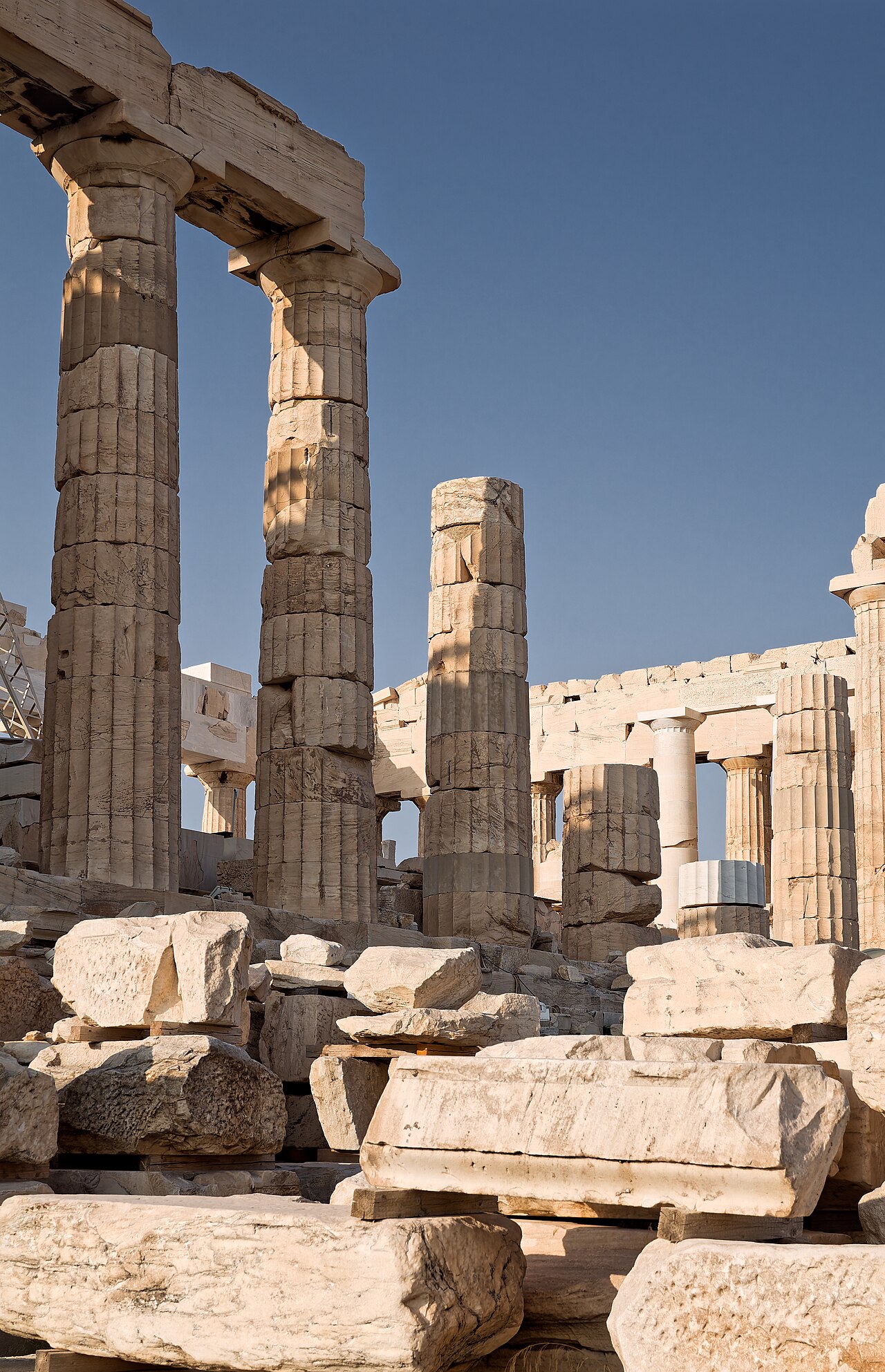
The Parthenon was finished in 432 BC, and it's still the most technically precise building ever constructed. Every horizontal surface curves slightly upward to counteract the optical illusion that makes straight lines appear to sag. The columns taper and lean inward by fractions of an inch. There's not one truly straight line in it — it's a structure of calculated imperfections engineered to look geometrically perfect from every angle. A forty-foot-tall statue of Athena, sheathed in ivory and gold, once stood inside. Then the building became a Christian church, then a mosque, then an Ottoman powder magazine. In 1687, a Venetian mortar round hit the stored gunpowder and blew the interior out. What's standing now is ruin. It's still the most-visited ancient monument on earth.
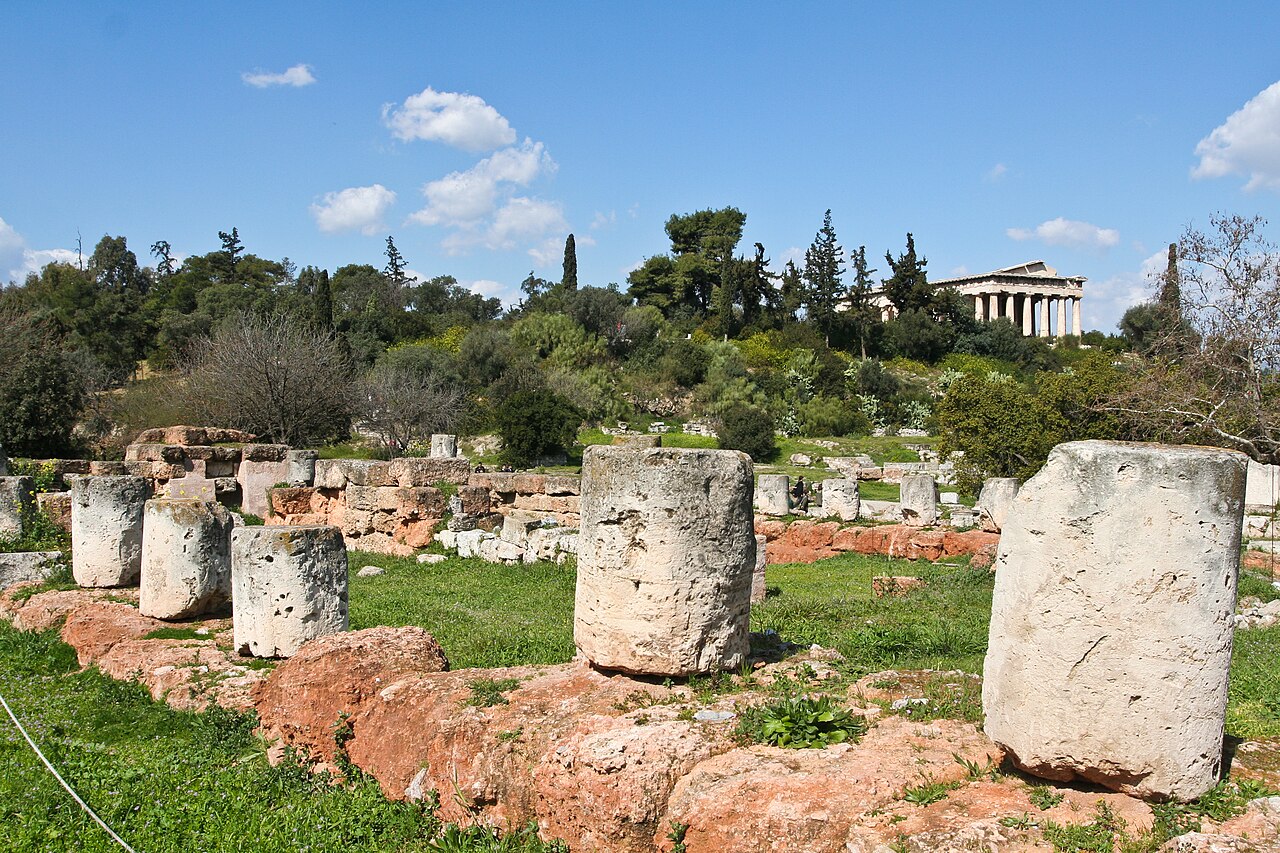
Below the Acropolis sat the Agora — the civic and commercial heart of Athens, and the place where the philosophical tradition the West still runs on was actually born. Socrates walked here and questioned everyone he encountered. Juries of hundreds of citizens voted on verdicts with bronze ballots. The philosopher who most shaped Western thought was tried and executed here in 399 BC, convicted of impiety and corrupting the youth. His student Plato founded the Academy. Plato's student Aristotle tutored Alexander the Great. The chain of influence from a single cup of hemlock runs through virtually every philosophical tradition that followed.
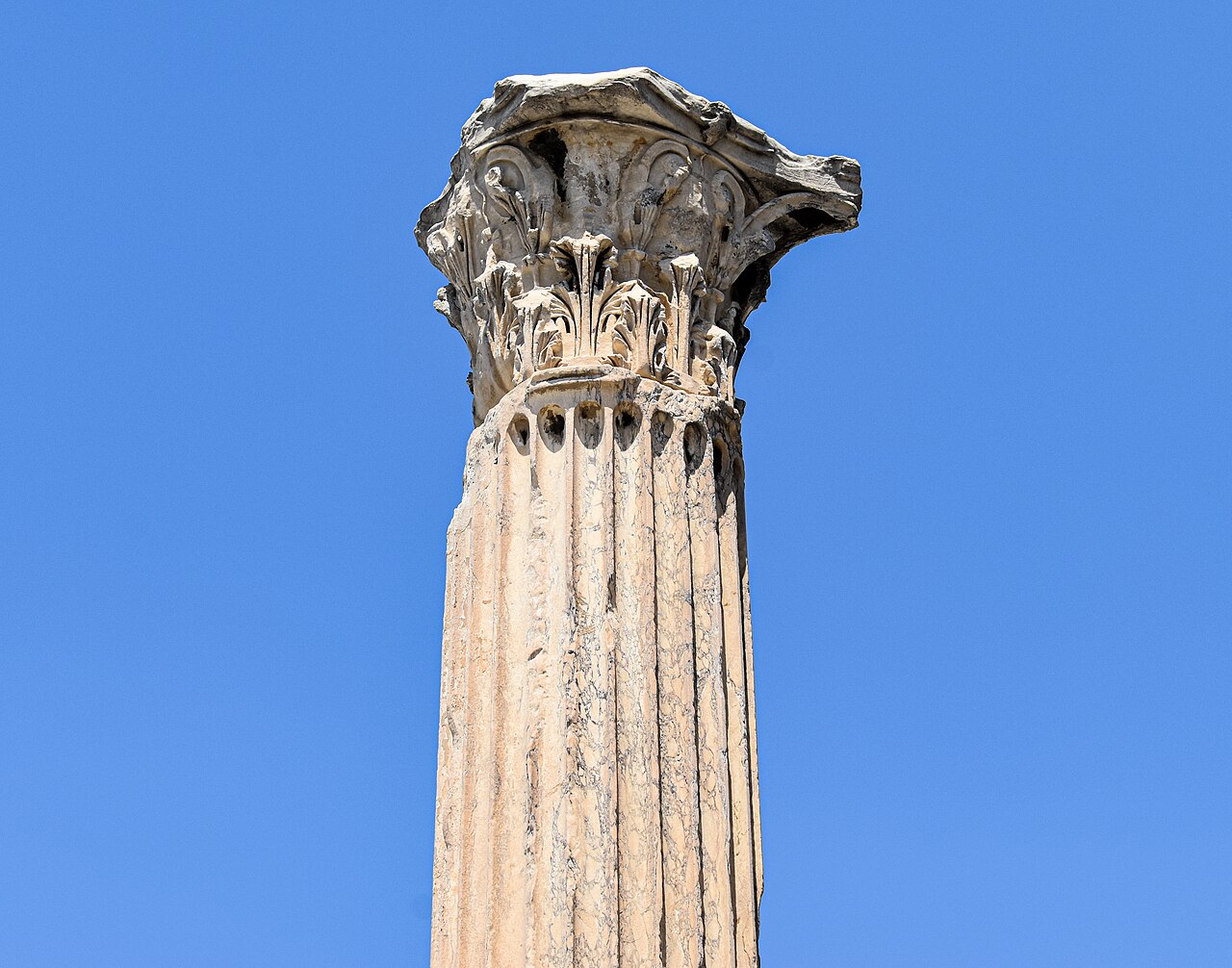
Athens fell to Rome in 86 BC and immediately started winning intellectually. Roman aristocrats sent their sons to study here. The Emperor Hadrian became so taken with the city that he spent years there, finally completed the Temple of Olympian Zeus — started in the 6th century BC and still unfinished after 650 years — and built a library and an entire new quarter of the city. His arch still stands at the edge of the old city: "This is Athens, the ancient city of Theseus" on one side; "This is the city of Hadrian, not of Theseus" on the other. A Roman emperor, so eager for legacy he carved it in marble.
Here's the honest caveat: plan around the logistics or they'll plan around you. The heat in July and August is serious. The crowds at the Acropolis peak during those months and they're relentless. Book a hotel within walking distance of Monastiraki or Plaka — the city sprawls and if you're far from the center, you'll spend time you can't recover. One counterintuitive move: go to the Acropolis Museum before you go up the hill. It opened in 2009, built on a glass floor over an excavated ancient neighborhood, its top floor aligned precisely with the Parthenon above — so the building you're studying looks back at you through the ceiling. It makes the ruins speak in a way they don't on their own.