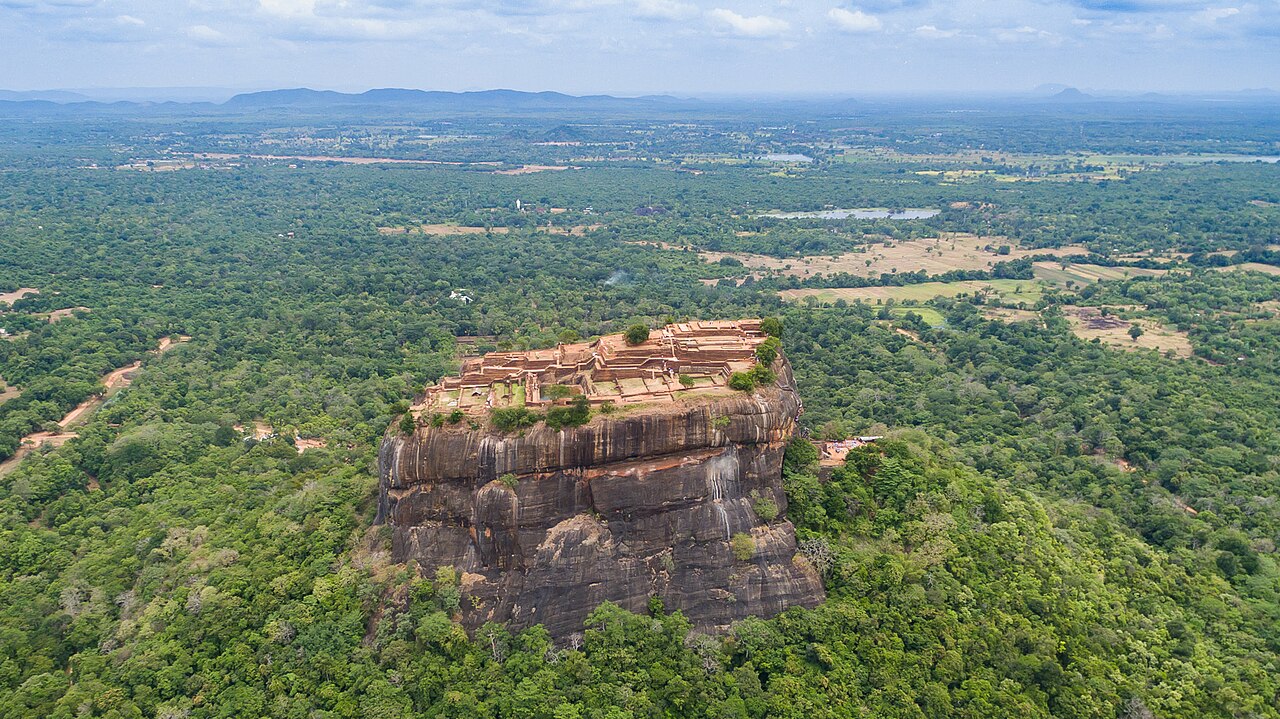
Sigiriya is a 200-meter volcanic plug rising from the plains of central Sri Lanka, and on its summit sit the ruins of a palace built in the fifth century by a king who murdered his father and was trying to survive what came next. The rock itself is geological accident — the hardened magma core of an ancient volcano, stripped bare over millions of years while the softer material eroded away. What Kashyapa I looked at and saw was not a rock. He saw a throne no army could take.
Explore Sigiriya
Discover Sigiriya through photos that tell the story.
Find out how well you know Sigiriya.
Kashyapa seized power around 477 AD by overthrowing King Dhatusena, reportedly walling him up alive. The succession dispute with his half-brother Moggallana — who fled to India to raise an army — made the traditional capital at Anuradhapura indefensible. Kashyapa's answer was to build something unprecedented: an entirely new fortress-palace, eighteen years in the making, fused to a column of granite that rose nearly 200 meters above the surrounding plain. It's worth pausing on that number. Eighteen years. From a man who had every reason to believe his time was running out.
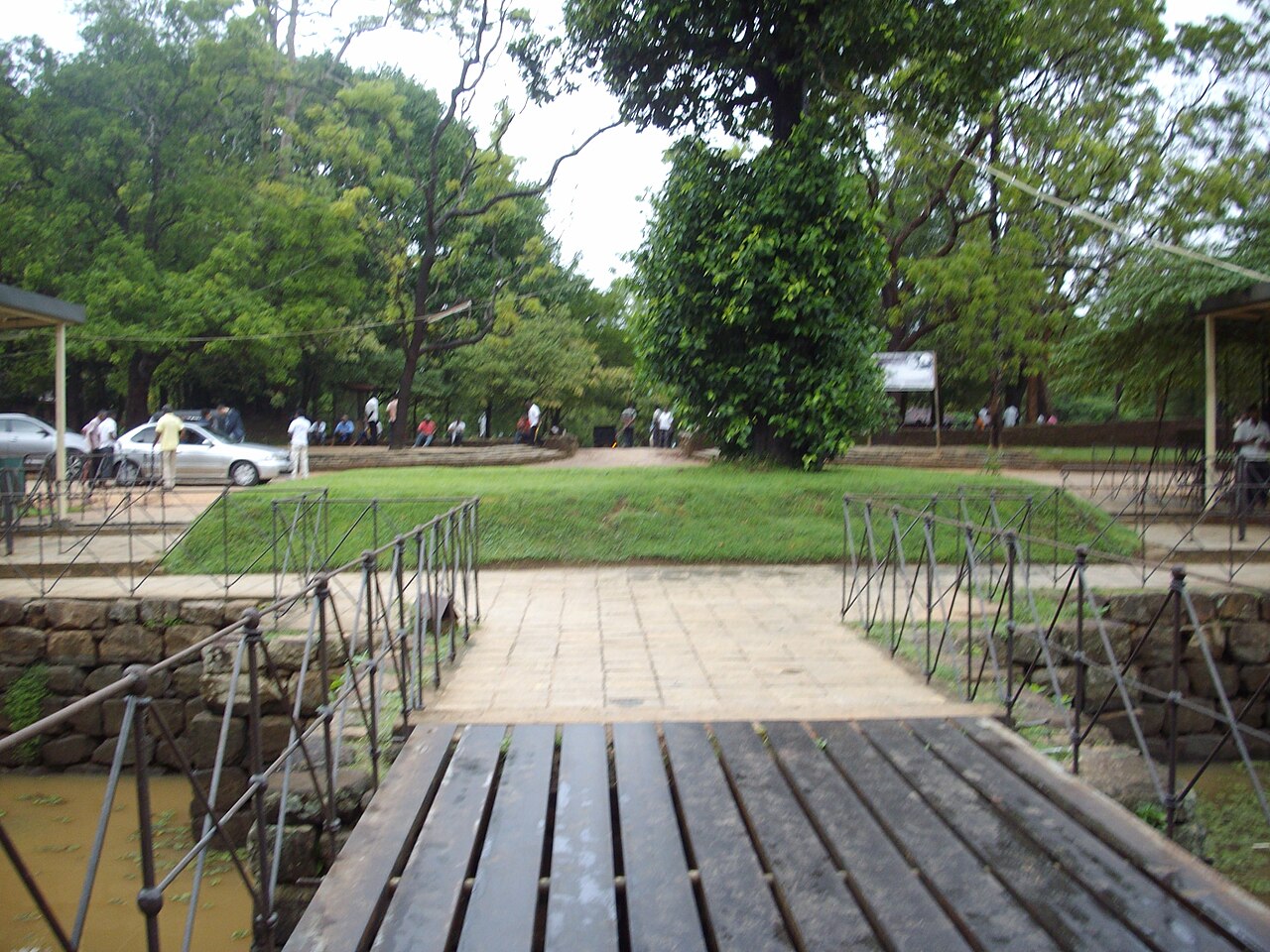
The engineering begins at ground level, long before you reach the rock. Kashyapa's architects laid out one of the oldest landscaped gardens in the world along the western approach — symmetrical pools, fountains, and channels fed by a gravity-operated hydraulic system connected to an artificial lake. Some of these fountains still function during the monsoon season, their underground conduits intact after fifteen centuries. I find that more impressive than most of what came after it.
Partway up the western face, the Sigiriya Frescoes are sheltered in natural rock pockets. These are paintings of female figures — apsaras, or cloud maidens — rendered in vivid yellows, oranges, greens, and reds using a technique close to Italian fresco. Roughly 19 survive from what may have been 500 originals. Whether they represent celestial nymphs, royal consorts, or devotional figures is still debated, and honestly the ambiguity makes them more interesting, not less.
Just beyond the frescoes runs the Mirror Wall — a polished plaster surface that once reflected the images of those who walked past it. Over the centuries, visitors scratched poems and observations into it, creating graffiti that dates from the eighth century onward. Love poems. Philosophical musings. Comments about the frescoes above. It's one of the oldest collections of secular writing in Sri Lanka, and it survives because nobody in power ever thought to clean it off.
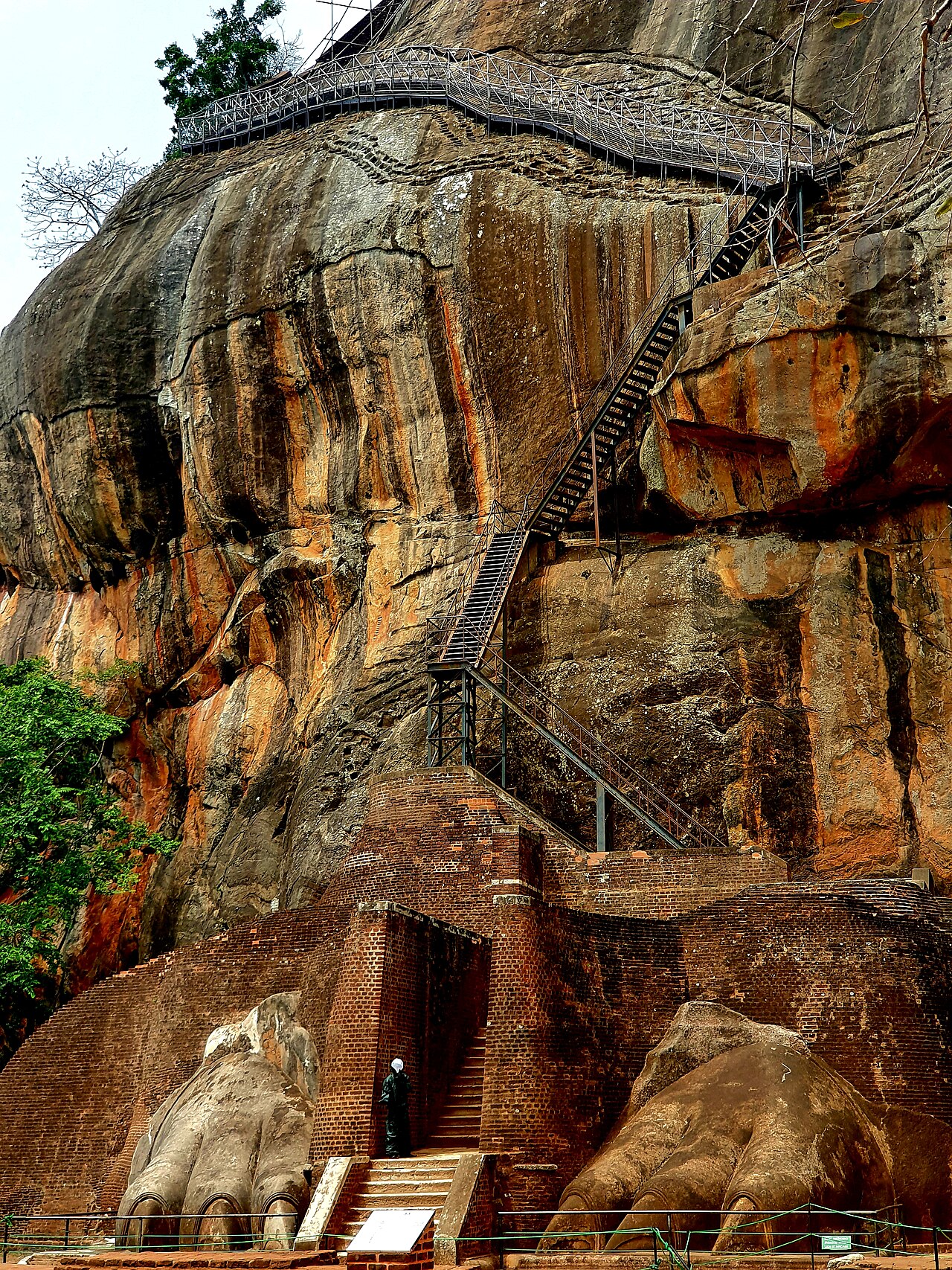
The Lion Gate is the most dramatic threshold on the entire climb. Halfway up the northern face, the final staircase once passed through the open jaws of an enormous lion built from brick and plaster. Only the paws remain — each one several meters across, flanking the stairs like anchors. The lion gave the fortress its Sinhalese name: Sinhagiri, Lion Rock. Standing between those paws and looking up the metal staircase bolted to the vertical cliff above, you get a clear sense of what Kashyapa was trying to communicate to anyone who made it this far.
The summit spreads across roughly 1.6 hectares. What's left are foundations — a royal audience hall, residential quarters, bathing pools, cisterns carved into the bedrock. The view extends in every direction across the Sri Lankan lowlands, with Pidurangala rock visible to the north. Kashyapa could see a foreign army coming from dozens of kilometers away. It didn't help. When Moggallana invaded around 495 AD, Kashyapa rode down to meet him on the open plain rather than endure a siege. His army deserted mid-battle. He took his own life.
Moggallana returned the capital to Anuradhapura and handed the rock to Buddhist monks, who converted it to a monastery that operated for roughly eight centuries before the site was abandoned to jungle. In 1831, British Major Jonathan Forbes encountered the overgrown ruins on a journey between Polonnaruwa and Dambulla. Systematic excavation began under H.C.P. Bell in the 1890s and has continued since.
UNESCO gave Sigiriya World Heritage status in 1982, and Sri Lankans sometimes call it the Eighth Wonder of the World. The claim holds up better than most. There's genuinely nothing like it — a fortress, palace, garden, and gallery built onto a single column of rock by one desperate king in one desperate decade and a half. Worth the climb? Yes. Go early. The heat and the crowds both get worse as the day goes on, and neither improves the experience.