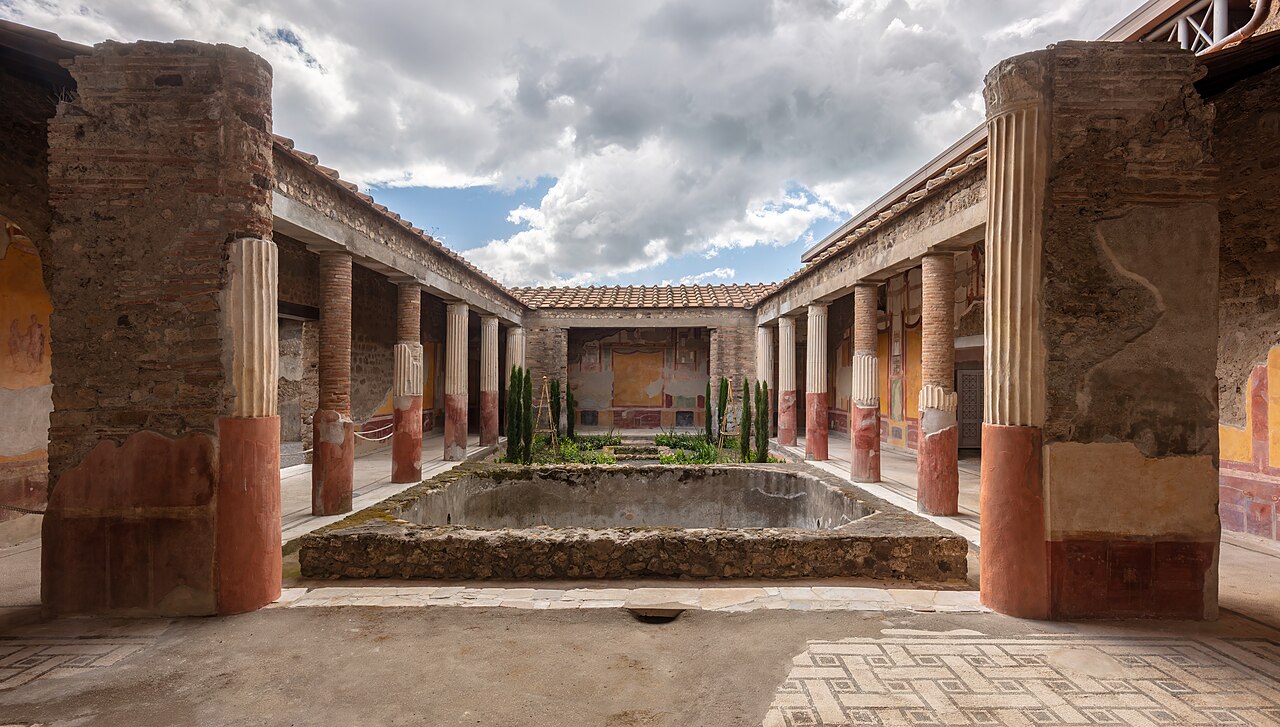
The plaster casts stop you cold. There's a man sitting against a wall, knees pulled up, face buried in his arm — and it takes a second to register that this isn't a sculpture. It's a void left in hardened volcanic ash, filled with plaster by archaeologists, of a person who died on August 24, 79 AD. That's what Pompeii does that no amount of reading prepares you for: it's not a ruin. It's a city that just stopped.
Explore Pompeii
Discover Pompeii through photos that tell the story.
Find out how well you know Pompeii.
On that morning, Pompeii's roughly 11,000 residents were doing ordinary things — eating at thermopolia, arguing politics, watching gladiators — when Vesuvius turned catastrophic. Within 18 hours, four to six meters of ash and pumice had buried the city almost completely. The approximately 2,000 who didn't flee were killed by a superheated surge of gas and ash. What makes this more than a disaster story is what the ash preserved: bakeries with carbonized loaves still in the ovens, political graffiti endorsing candidates by name, prices posted in tavern doorways, a guard dog still chained to its post. More than 11,000 inscriptions cover Pompeii's walls. It's the single richest source of information about how ordinary Romans actually lived — not emperors and generals, but bakers and street vendors and people who ate lunch standing up.
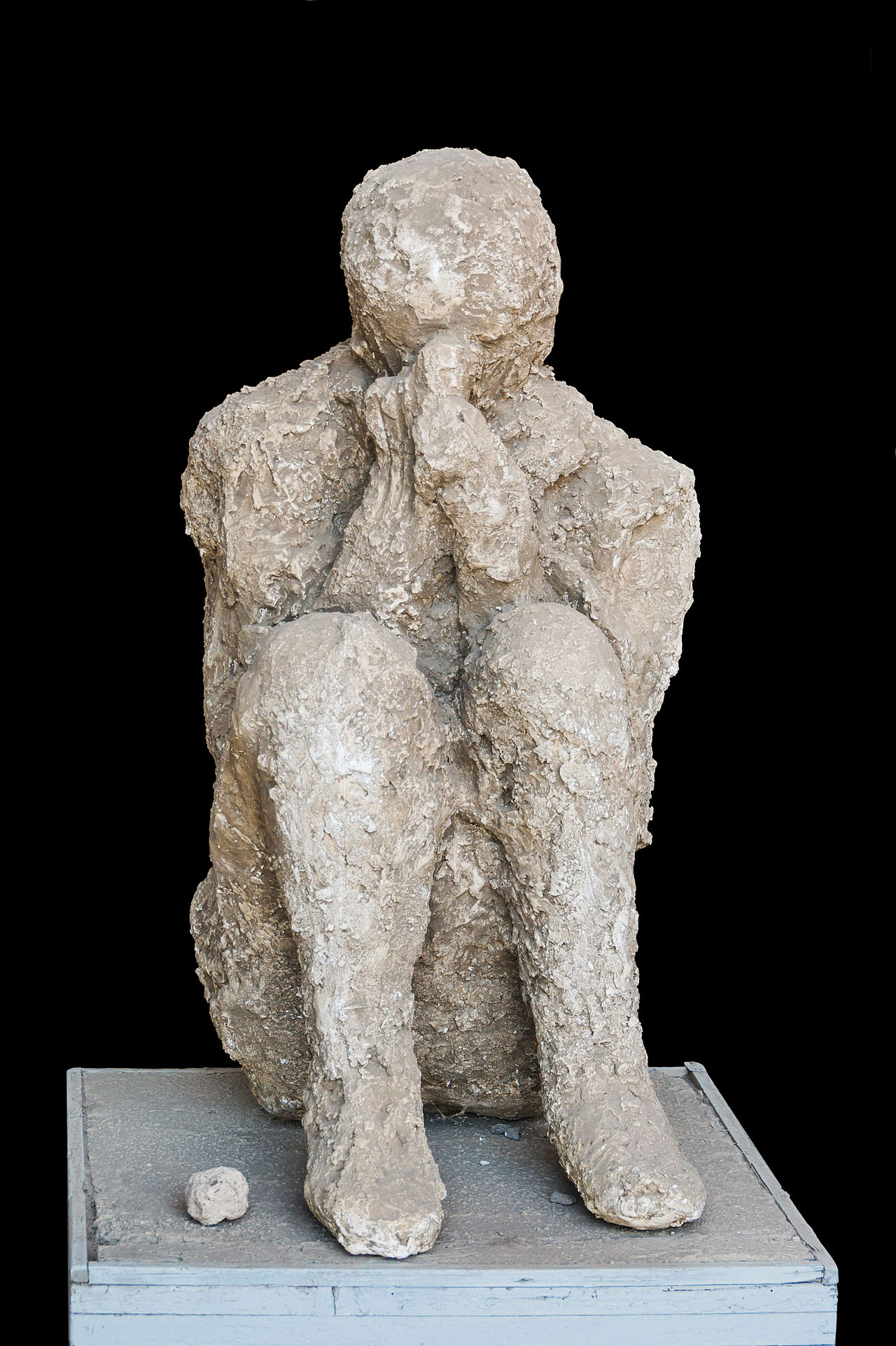
The Forum is where you understand the scale of the city. It was the civic and commercial heart, flanked by the Temple of Jupiter, with Vesuvius looming in the background — invisible as a threat to everyone who walked past it daily for centuries. The amphitheater, built around 80 BC, is the oldest surviving stone amphitheater in the Roman world; it seated 20,000 people in a city of 11,000, which tells you something about how seriously Pompeii took its entertainment. It was notorious even in its own time: a riot between Pompeian fans and visitors from the nearby town of Nuceria during gladiatorial games in 59 AD was bad enough that the Roman Senate banned events there for a decade. The House of the Faun, the largest private residence in the city, once contained the Alexander Mosaic — a nearly six-meter floor panel depicting Alexander the Great's victory over Darius III. It's now in the National Archaeological Museum in Naples, and worth the separate trip.
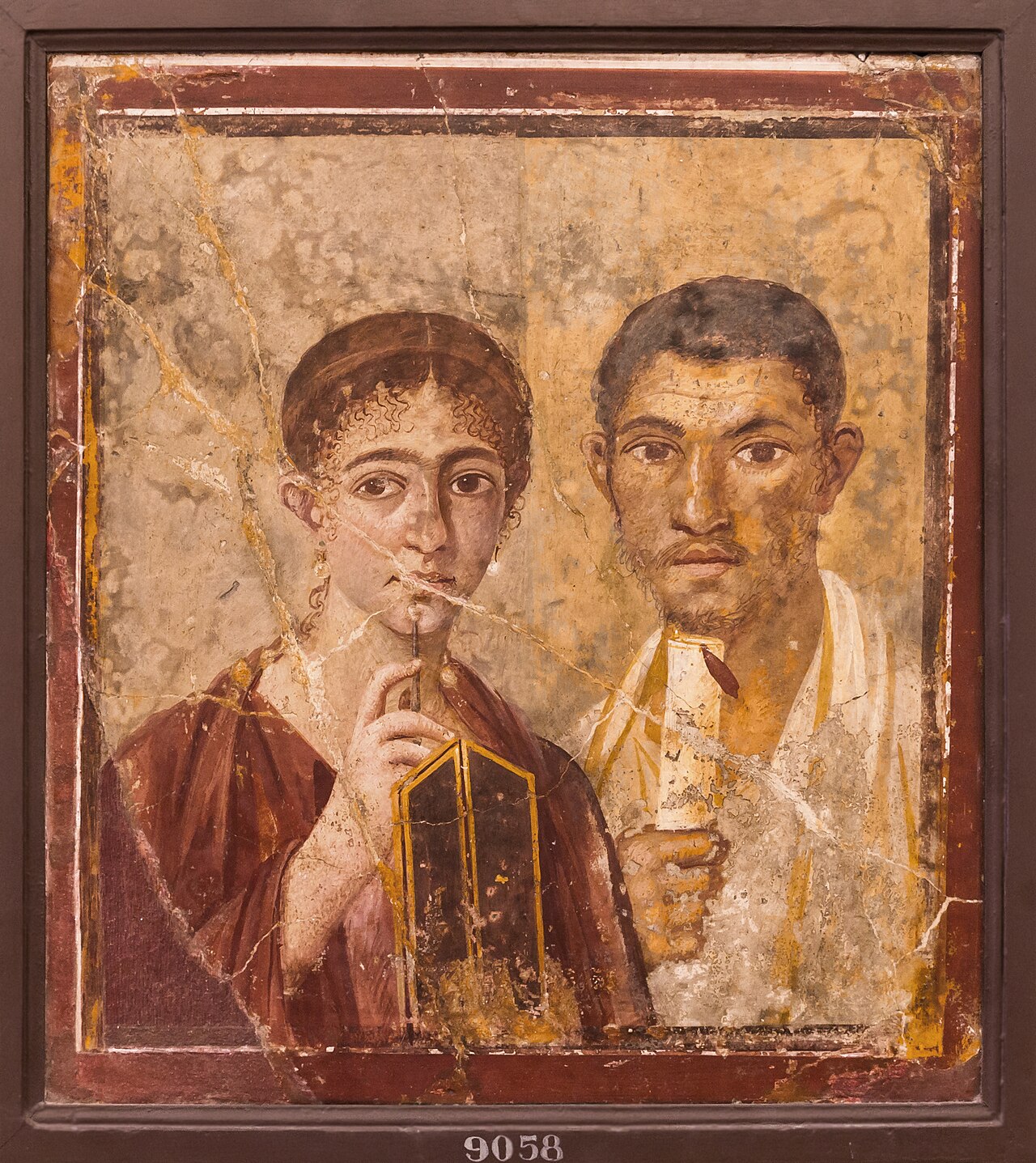
Roman painting almost entirely vanished from history. Pompeii is the exception, and it's a meaningful one. The Villa of the Mysteries, just outside the city walls, has a room-sized cycle of life-size figures painted in the deep crimson known as Pompeii red — derived from mercury sulfide, expensive and deliberately chosen — depicting what scholars believe is a Dionysiac initiation ritual. Nobody is entirely sure. The winged figure, the flagellant, the triumphant dancer: it has been debated for over a century and the ambiguity is part of why it holds up. Other villas across the site preserve mythological scenes, garden landscapes, and portraits painted with real sophistication. These weren't decorative afterthoughts — they were the artistic standard of their time, and almost nothing else from that world survived to compare them against.
Here's the honest caveat: Pompeii is large, it's crowded, and on a summer day it can be relentless. You'll want at least three to four hours, good shoes, and water. Skip the cheap audio tour — the difference between understanding what you're looking at and just walking past ruins is significant. I'd invest in a solid guided walk or a well-reviewed app. The Great Pompeii Project, an EU-funded conservation initiative launched in 2012, has stabilized dozens of structures that were on the verge of collapse and opened significant new areas to visitors. Excavations continue: between 2019 and 2023, archaeologists uncovered a ceremonial chariot, a thermopolium with food still in its serving jars, and two more eruption victims. Pompeii isn't finished. It's still being discovered.