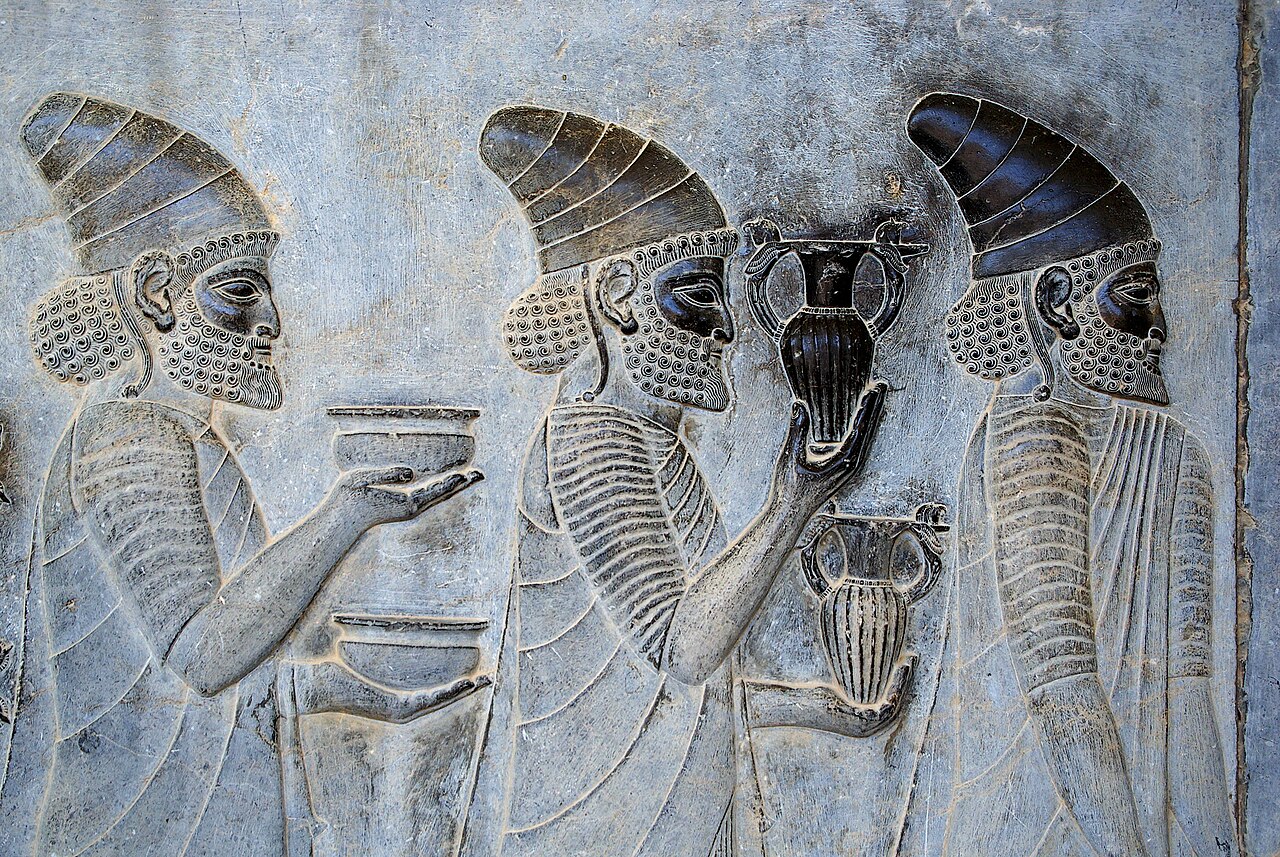
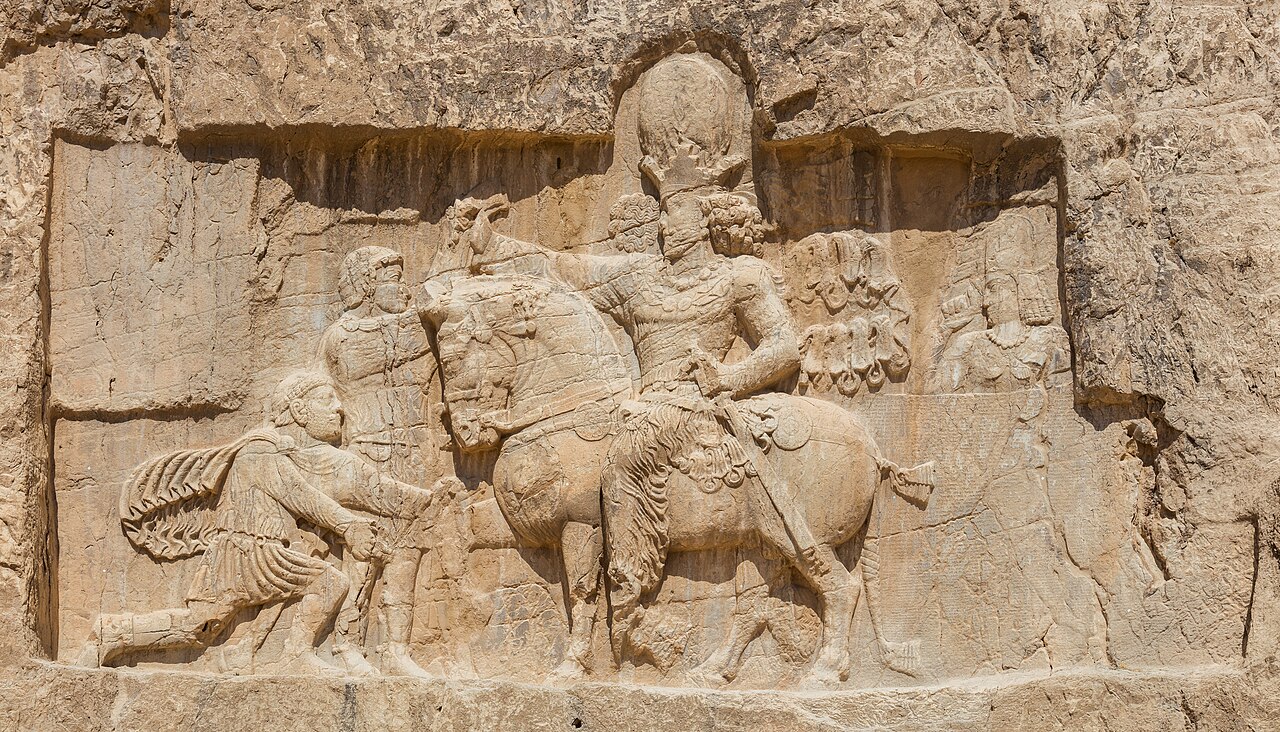
The most powerful empire the world had ever seen built its showcase capital with almost no images of war. After you've been to Rome or Luxor, where every wall is a highlight reel of military violence, that absence hits differently. Persepolis was propaganda, yes — but it told a story of an empire so confident it didn't need to show you what happened to people who refused.
Explore Persepolis
Discover Persepolis through photos that tell the story.
Find out how well you know Persepolis.
The site sits on a raised stone terrace at the foot of Kuh-e Rahmat — the Mountain of Mercy — about 60 kilometers northeast of Shiraz in southwestern Iran. Darius I began building around 518 BC. The first move was audacious: level a platform roughly 450 meters long and 300 meters wide, raise it 13 meters above the plain, and carve it partly from the living rock. The message before a single column went up was already clear. You don't do this because you're worried about your legacy.
The approach was designed to impress. A grand double staircase — steps shallow enough for horses and dignitaries in formal robes to ascend without breaking stride — led to the Gate of All Nations. Xerxes I finished it around 486 BC, flanking the western entrance with enormous stone bulls modeled on Assyrian tradition but unmistakably Persian. A trilingual inscription in Old Persian, Elamite, and Babylonian left no room for interpretation: you are entering the center of the world. Every delegation arriving for the Nowruz spring festival walked through this gate. The psychology of it was precise.
The Apadana is where Persepolis earns its reputation. Thirteen of the original 72 columns still stand, each nearly 20 meters tall, topped with double-headed bull or griffin capitals. But the real work is on the staircases. The eastern and northern facades carry bas-reliefs of delegations from 23 subject nations — Medes, Elamites, Babylonians, Armenians, Bactrians, Indians, Ethiopians — each rendered in specific detail. Different dress, different hairstyles, different tribute. Horses, camels, rams, gold vessels. No two delegations are identical. It's a stone catalog of the known world, and it remains some of the finest relief carving ever produced.
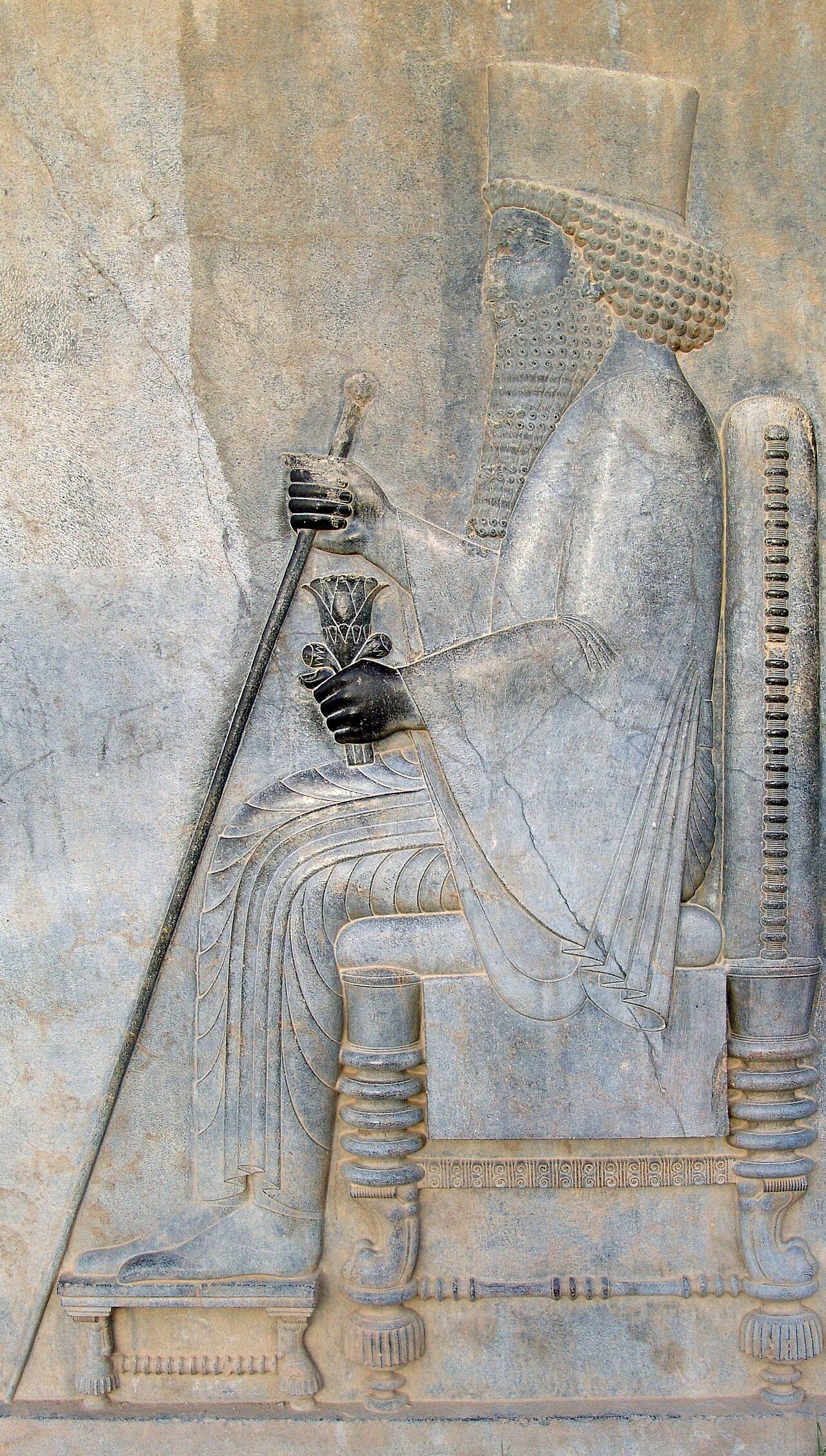
Darius built his private palace, the Tachara, south of the Apadana — smaller, exquisitely detailed, its polished dark stone earning it the name 'mirror hall.' The reliefs here show the king attended by servants with parasols and fly whisks, emphasizing dignity over dominance. Xerxes added his own palace, the Hadish, and the massive Throne Hall — the Hall of a Hundred Columns — covering nearly 4,600 square meters, its doorways carved with scenes of the king fighting lions and mythical beasts. Standing in what's left of it, you can still read the intended scale.
The lion-and-bull combat motif appears throughout the site — generally interpreted as the eternal struggle of seasons, the triumph of spring over winter, tied to the Nowruz celebrations that were the whole point of Persepolis. Persian and Median soldiers stand in calm, dignified rows, spears grounded. Guardians, not conquerors. The Achaemenid pitch was that the empire was a commonwealth of willing participants. Whether that was true is a separate question, but the PR was sophisticated.
Here's the honest caveat: Persepolis was destroyed. In January 330 BC, Alexander of Macedon arrived. What followed is still debated. Plutarch and Diodorus describe a drunken banquet, an Athenian courtesan named Thais urging Alexander to burn the palace as payback for Xerxes' destruction of Athens 150 years earlier. Arrian says it was a deliberate political act. Whatever the cause, the cedar beams caught fire, the columns cracked in the heat, and one of the ancient world's greatest architectural achievements became a roofless skeleton. You're looking at ruins. Extraordinary ruins — but ruins.
The site sat mostly forgotten for centuries. The French jeweler Jean Chardin made the first serious drawings in 1674, and his published engravings introduced Persepolis to European readers. Systematic excavation didn't begin until the 1930s, when Ernst Herzfeld and later Erich Schmidt for the Oriental Institute of Chicago uncovered thousands of Elamite cuneiform tablets — wage records, ration lists, work assignments. The administrative machinery behind the imperial spectacle. It's the kind of detail that makes the whole thing feel real.
UNESCO inscribed Persepolis as a World Heritage Site in 1979 — the same year as the Iranian Revolution. The site carries enormous weight in modern Iran as the most potent symbol of pre-Islamic Persian civilization. That history isn't simple, and if you're traveling to Iran, you already know the trip requires more planning than most. But the site itself is worth it. Standing on the great terrace with the Apadana columns rising against the bare mountains of Fars, the ambition of what Darius built is still legible. He wanted a stage worthy of the world's largest empire. Two and a half millennia later, it still reads that way.