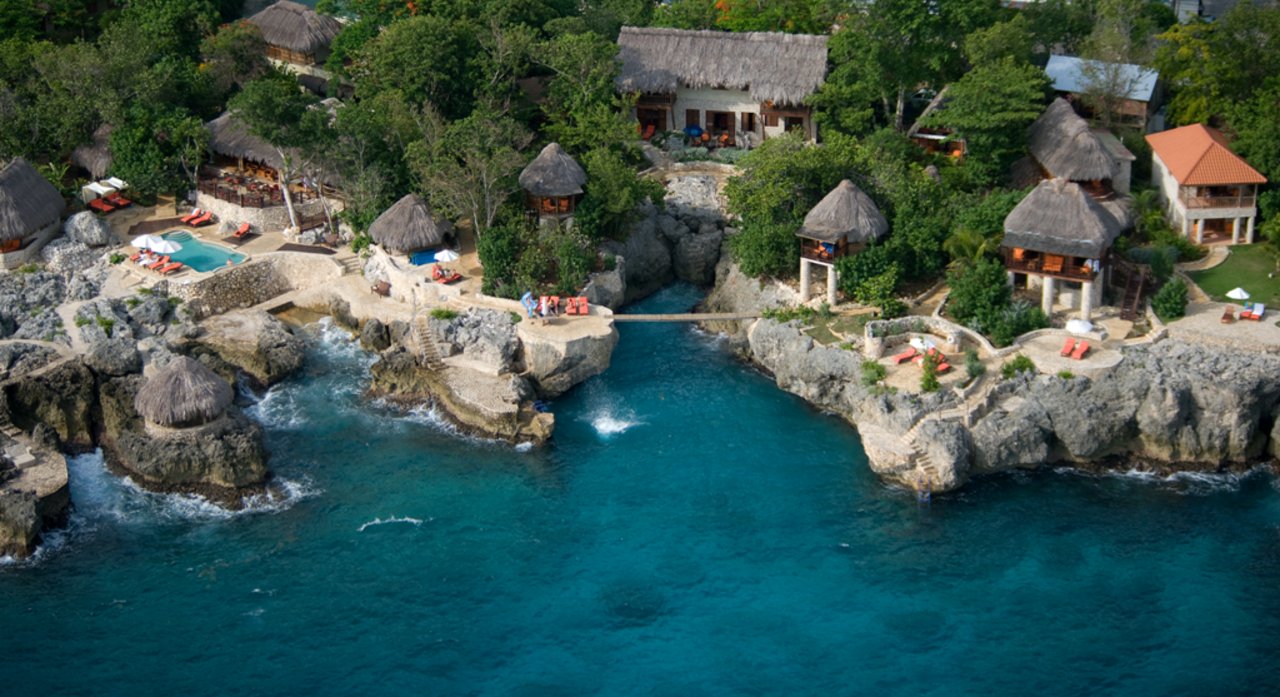
Among Caribbean islands, Jamaica is the one that actually has something to say. We're not talking about a place that just sits there looking pretty — though it does that too. Jamaica hits you with music the moment you land, and it never really stops. This is where reggae was born, where Bob Marley turned pain into something transcendent, and where every taxi driver, beach bar, and sunset gathering reminds you that life has a rhythm worth listening to. At 4,244 square miles, it's the third-largest island in the Caribbean, and it earns every one of them.
Explore Jamaica
Discover Jamaica through photos that tell the story.
Find out how well you know Jamaica.
Here's what makes Jamaica genuinely worth the trip: the variety. The misty Blue Mountains rise to 7,402 feet in the east, producing some of the world's most prized coffee in cool, cloud-draped plantations. Seven Mile Beach in Negril glows orange every evening as the sun sets directly over the water — and trust us, you'll want to be there for that. The lush Rio Grande Valley offers bamboo rafting through scenery so green it almost doesn't look real. And Kingston, the capital, is a gritty, vibrant city of over a million people where the Bob Marley Museum, the National Gallery, and street food vendors serving fiery Scotch bonnet-laced fare all compete for your attention. We'd make time for all of it.
The north coast is Jamaica's tourism corridor, and it delivers. Montego Bay has the all-inclusive resorts and championship golf courses, plus a historic downtown where Sam Sharpe Square honors the enslaved people whose 1831 Christmas Rebellion helped accelerate emancipation throughout the British Empire. Ocho Rios gives you Dunn's River Falls, a 600-foot terraced waterfall you climb hand-in-hand through cascading pools — it's one of the most iconic experiences in the Caribbean, and yes, it's worth the crowds. For something more quietly stunning, Port Antonio on the northeast coast wins: the Blue Lagoon shifts between deep sapphire and emerald depending on the light, and Frenchman's Cove is a beach where a freshwater river meets the sea beneath a jungle canopy. We'd go back just for that.
The food alone justifies the flight. A few things we'd put on any Jamaica itinerary: - **Jerk anything** — slow-smoked over pimento wood after marinating in Scotch bonnet, allspice, thyme, and scallions. Boston Bay near Port Antonio is the birthplace, and the roadside pits there are the real deal. - **Ackee and saltfish** — Jamaica's national dish, a savory combination of tropical ackee fruit sautéed with salted cod, onions, and peppers. It's more interesting than it sounds. - **Curried goat and oxtail stew** — braised until the meat simply gives up. This is the kind of cooking that takes all day and rewards accordingly. - **Jamaican patties** — flaky turnovers filled with spiced beef or vegetables. Perfect for eating while you figure out where you're going next. - **Devon House ice cream** in Kingston, in flavors like soursop and Devon Stout, on the grounds of the mansion built by Jamaica's first Black millionaire, George Stiebel. Wash all of it down with Red Stripe, overproof rum punch, or fresh coconut water hacked open with a machete. You're getting good value on every single one of those.
Jamaica's history is layered and worth engaging with. The Taíno people were here first, then the Spanish in the early 1500s, then British rule from 1655. Centuries of sugar plantation slavery left deep cultural currents that still resonate — most visibly in the Maroon communities of the Cockpit Country, descendants of escaped slaves who fought the British to a standstill and still maintain semiautonomous governance in their mountain villages. Port Royal, once called the wickedest city on Earth for its pirates and privateers, sank into the sea during a catastrophic 1692 earthquake. This is a place with real stories.
One honest note: Jamaica rewards those who venture beyond the resort corridor. The all-inclusives are comfortable, but they're a bubble — and some of the most worthwhile experiences here (Boston Bay jerk, a Maroon village visit, the Blue Lagoon at dawn) require a rental car or a good private driver. Public transportation outside Kingston is unpredictable. Budget for that flexibility and it pays off considerably. November through mid-December is the sweet spot — lower prices, pleasant weather, and just before the holiday rush. The hurricane season runs June through November, but Jamaica's mountains mean conditions vary dramatically across the island. The Blue Mountains stay cool year-round, and a pre-dawn hike to the peak for sunrise is the kind of thing you'll still be talking about a decade later. Jamaica's warmth goes well beyond the temperature — but you have to show up ready to actually receive it.