Go at high tide if you can arrange it — when the causeway floods and the bay fills in, Mont Saint-Michel looks exactly like the background of a medieval painting, stacked stone towers and Gothic spires climbing 150 meters from the water. That image isn't exaggerated. It's accurate, and it's why this place has drawn people for over 1,300 years.
Explore Mont Saint-Michel
Discover Mont Saint-Michel through photos that tell the story.
Find out how well you know Mont Saint-Michel.
The religious history begins in 708 AD with Bishop Aubert of Avranches, who received a vision from Archangel Michael commanding him to build a sanctuary on the rocky mount. He reportedly ignored the first two visions. The angel reportedly burned a hole in his skull with a divine finger to drive the point home — the skull, still preserved at Avranches, shows a circular depression that tradition attributes to exactly that. Benedictine monks arrived in 966 AD when Duke Richard I of Normandy invited them to replace secular canons, and construction of what became one of the great Gothic abbeys of Europe began in earnest.
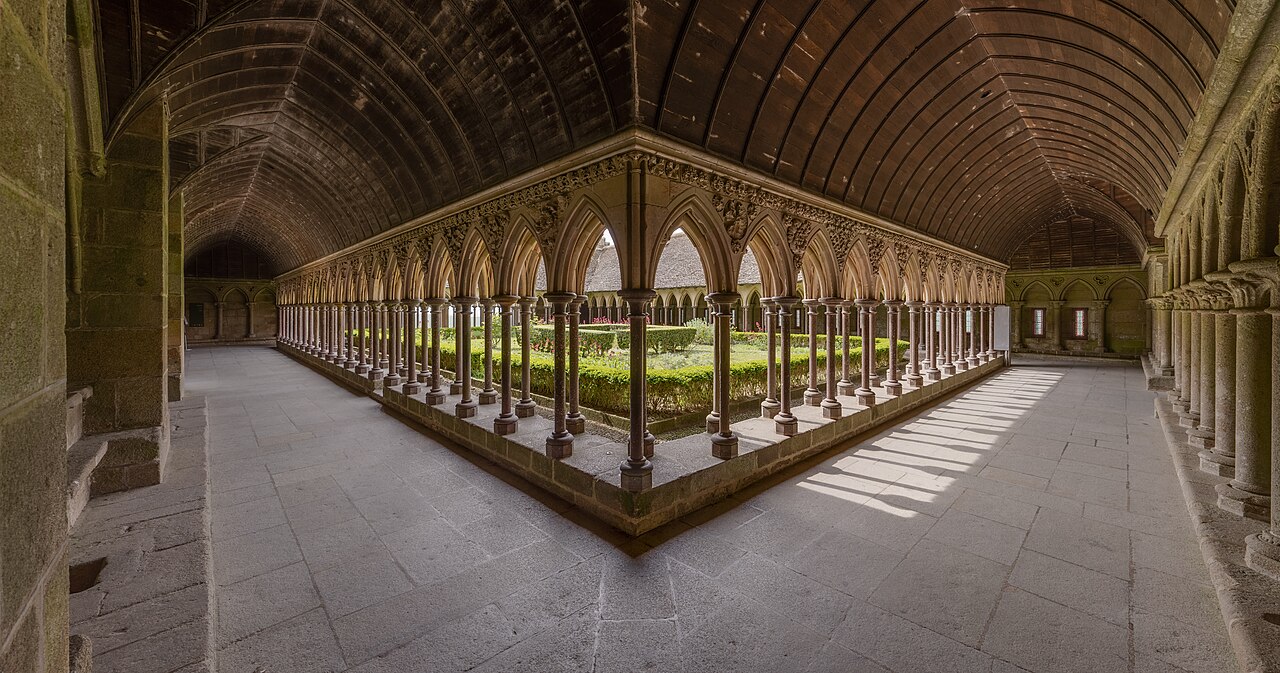
The 13th-century section called La Merveille — 'the Marvel' — earns the name. Two three-story buildings completed between 1211 and 1228 house the cloister, refectory, and monks' dormitories in a feat of early Gothic engineering that shouldn't work on the steep face of a granite rock, but does. The cloister's arcades of slender marble columns, set at a slight angle to prevent visual monotony, are the kind of detail that makes you stop walking. The abbey was built over 500 years by successive generations who each added to the design, and that layering shows in the best possible way.
The military history matches the drama of the architecture. During the Hundred Years War, Mont Saint-Michel was the only territory in northwestern France to resist English occupation — holding out for more than a century against sieges that the surrounding tides and vertical walls made nearly impossible to mount. After the French Revolution, the abbey became a prison. Victor Hugo's protests — he compared keeping criminals in a cathedral to storing a toad in a reliquary — helped restore it as a monument. That kind of history isn't decorative. It's structural.
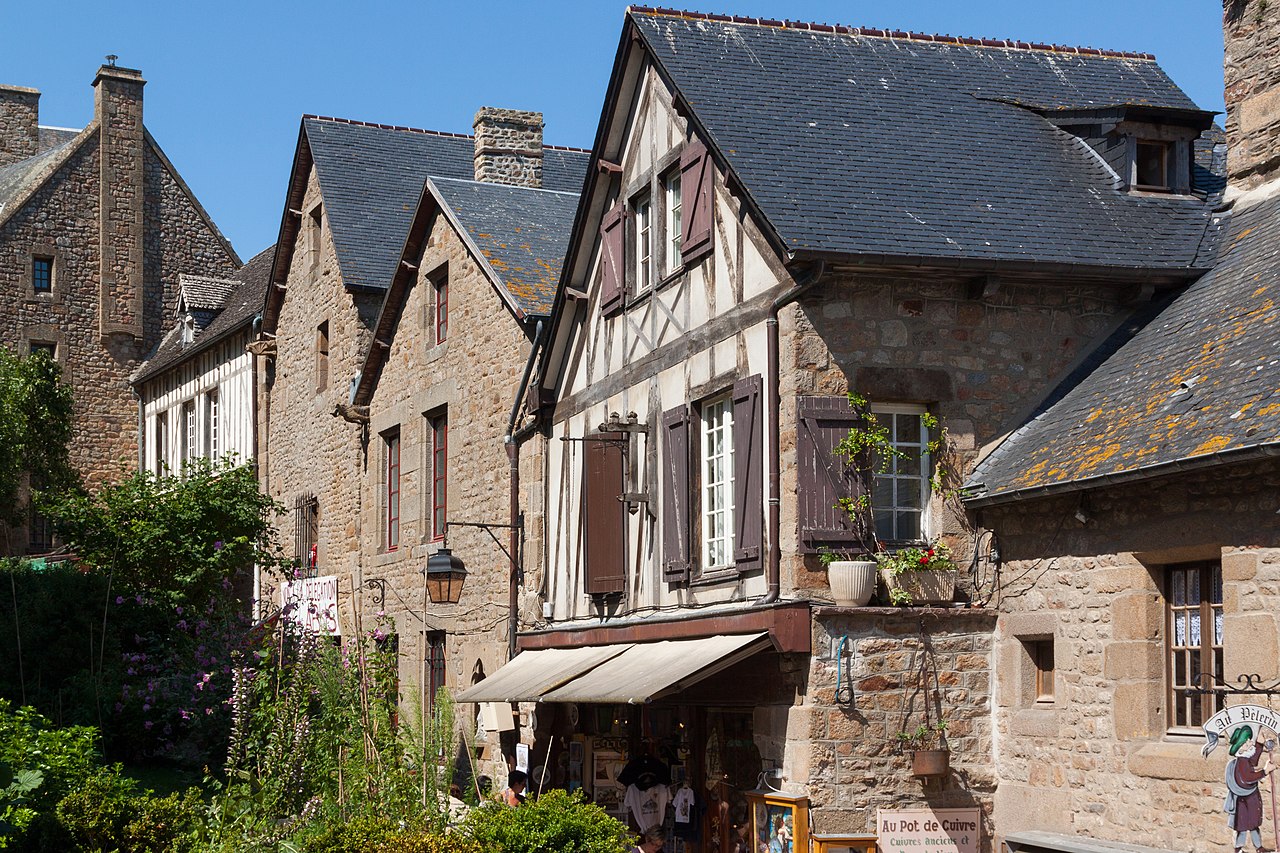
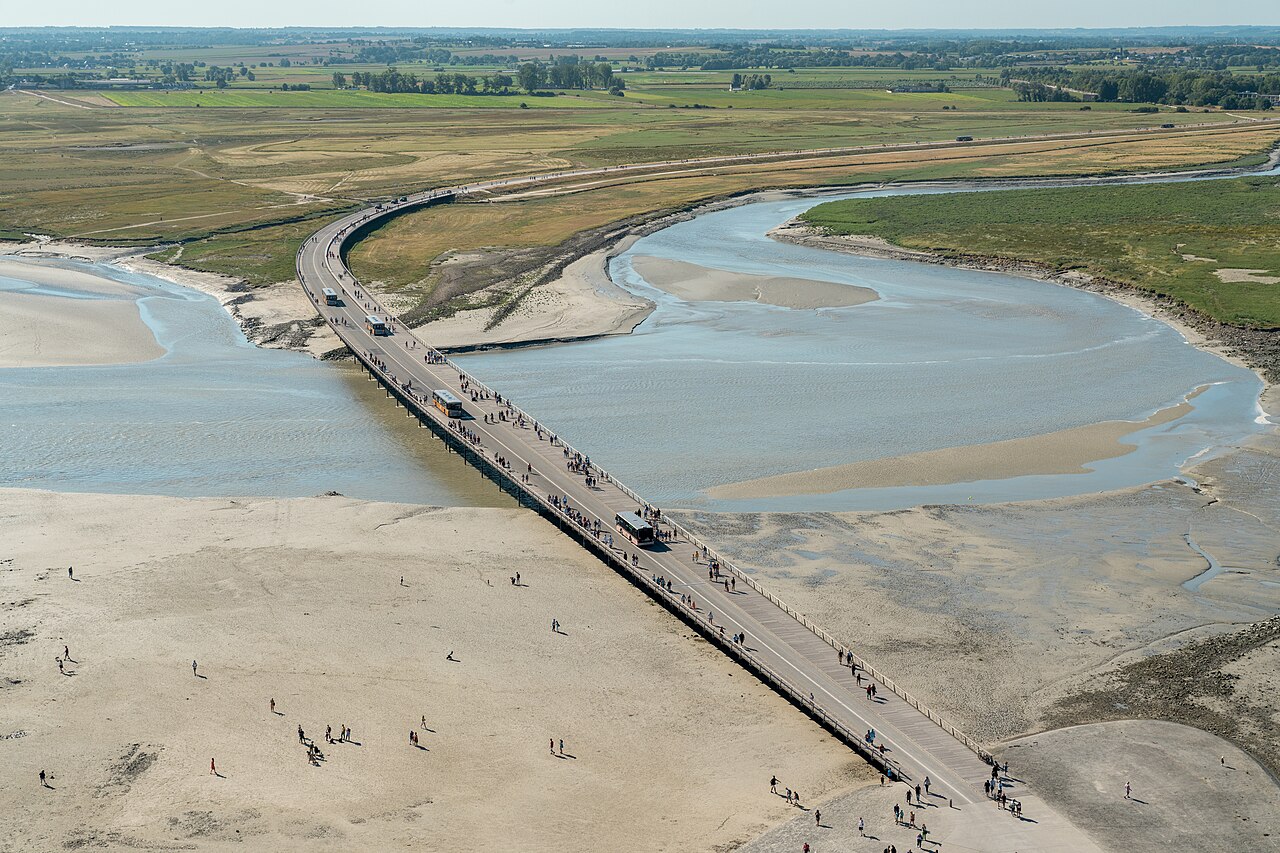
Here's the honest caveat: the island is crowded, and the Grand Rue — the main commercial street leading up to the abbey — is a tourist gauntlet of mediocre restaurants and souvenir shops you have to walk through to get anywhere. Three million visitors a year move through a very small space. If you're serious about this place, stay on the island overnight. The crowds thin dramatically after day-trippers leave, and the view of the bay at dusk or dawn earns the extra cost of a room inside the walls. The 2014 project that replaced the old causeway with a bridge restored full tidal flooding — arrive at high tide if you can coordinate it. The bay filling in around the island is exactly what the approach was designed to look like. The Monastic Fraternities of Jerusalem have lived in the abbey since 2001, which means the building is still being used for the purpose it was built for. That's worth knowing before you visit. This is a UNESCO World Heritage Site drawing three million people a year for a reason — it's genuinely one of the most remarkable things I've seen in Europe, and that's not a sentence I use lightly.