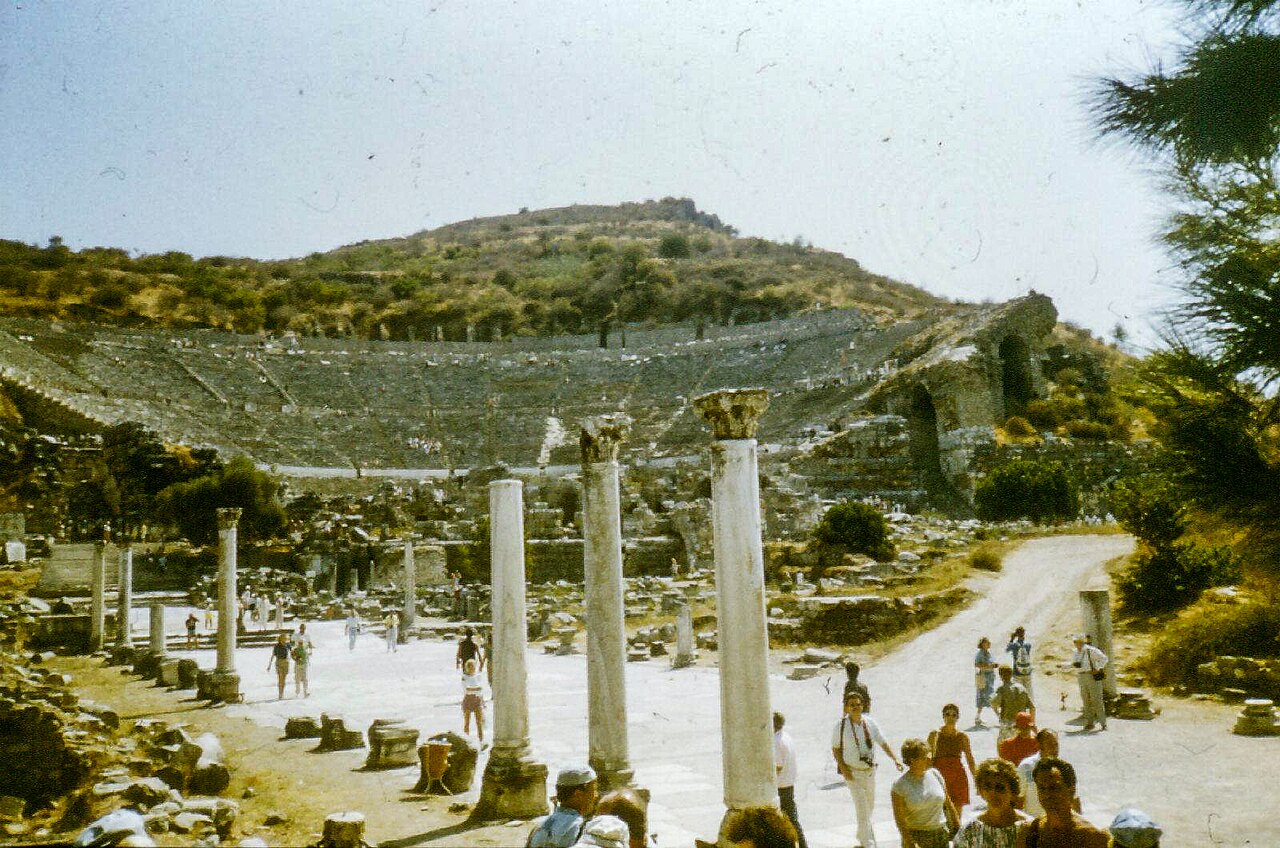
The single column standing in a marshy field outside Ephesus is all that remains of the Temple of Artemis — one of the Seven Wonders of the Ancient World. That's worth sitting with before you visit: a temple measuring 55 by 115 meters, larger than the Parthenon, supported by 127 columns each 18 meters tall. Rebuilt four times. Finally destroyed by Gothic raiders in 262 AD, then systematically quarried for centuries. One column. If you come to Ephesus expecting the Wonder, you'll leave disappointed. But if you come for the city itself — what's actually there — it's one of the most impressive ancient sites I've encountered anywhere.
Explore Ephesus
Discover Ephesus through photos that tell the story.
Find out how well you know Ephesus.
Ephesus was once the second-largest city in the Roman Empire, approaching 250,000 people. Founded as a Greek colony in the 10th century BC, it grew wealthy on its position at the terminus of major Anatolian trade routes. It changed hands — Lydian, Persian, Greek, then Roman — but reached its peak under Roman administration in the 1st and 2nd centuries CE as capital of the province of Asia. The Library of Celsus, completed in 135 AD, is now the most photographed structure on the site. It was built by the consul Gaius Julius Aquila as a mausoleum and library honoring his father, who'd served as provincial governor. Its two-story facade — columns, niches, four allegorical statues representing Wisdom, Knowledge, Intelligence, and Virtue — was Roman architectural showmanship at its best. The library within held approximately 12,000 scrolls, making it the third-largest in the ancient world after Alexandria and Pergamon.
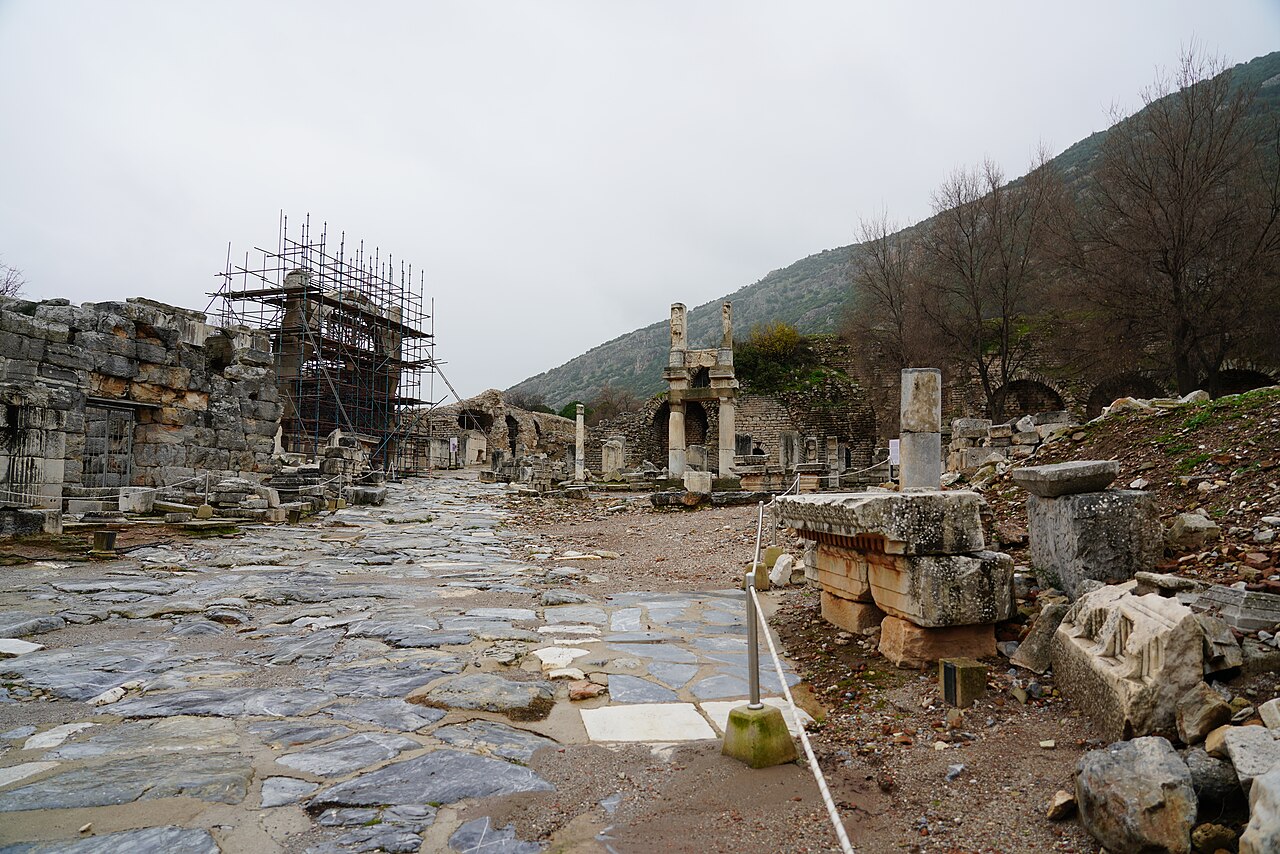
Ephesus also has an unexpected depth of early Christian significance. Paul spent roughly three years here around 52-55 AD, established a Christian community, and wrote his First Letter to the Corinthians here. According to tradition, the apostle John brought Mary, the mother of Jesus, to Ephesus after the Crucifixion. The small stone house on a wooded hill outside the city — Meryem Ana Evi, the House of the Virgin Mary — has been a pilgrimage site since at least the 4th century. Popes Paul VI, John Paul II, and Benedict XVI each made the trip to celebrate Mass there. The city later hosted the Third Ecumenical Council in 431 AD. Whether you're approaching this as a religious pilgrimage or just curious history, it adds a layer to Ephesus that most ancient ruins don't have.
The Temple of Artemis deserves its own honest treatment. The most famous version — the one that made the Wonder list — was built around 550 BC with Lydian king Croesus as a major patron. It was deliberately burned in 356 BC by a man named Herostratus, who wanted immortal fame (it worked — we're still talking about him). Rebuilt even more grandly, it stood until the Goths destroyed it in 262 AD. Today that marshy field with a single reconstructed column is technically on the visitor route. It's atmospheric if you know what you're looking at. It's underwhelming if you don't.
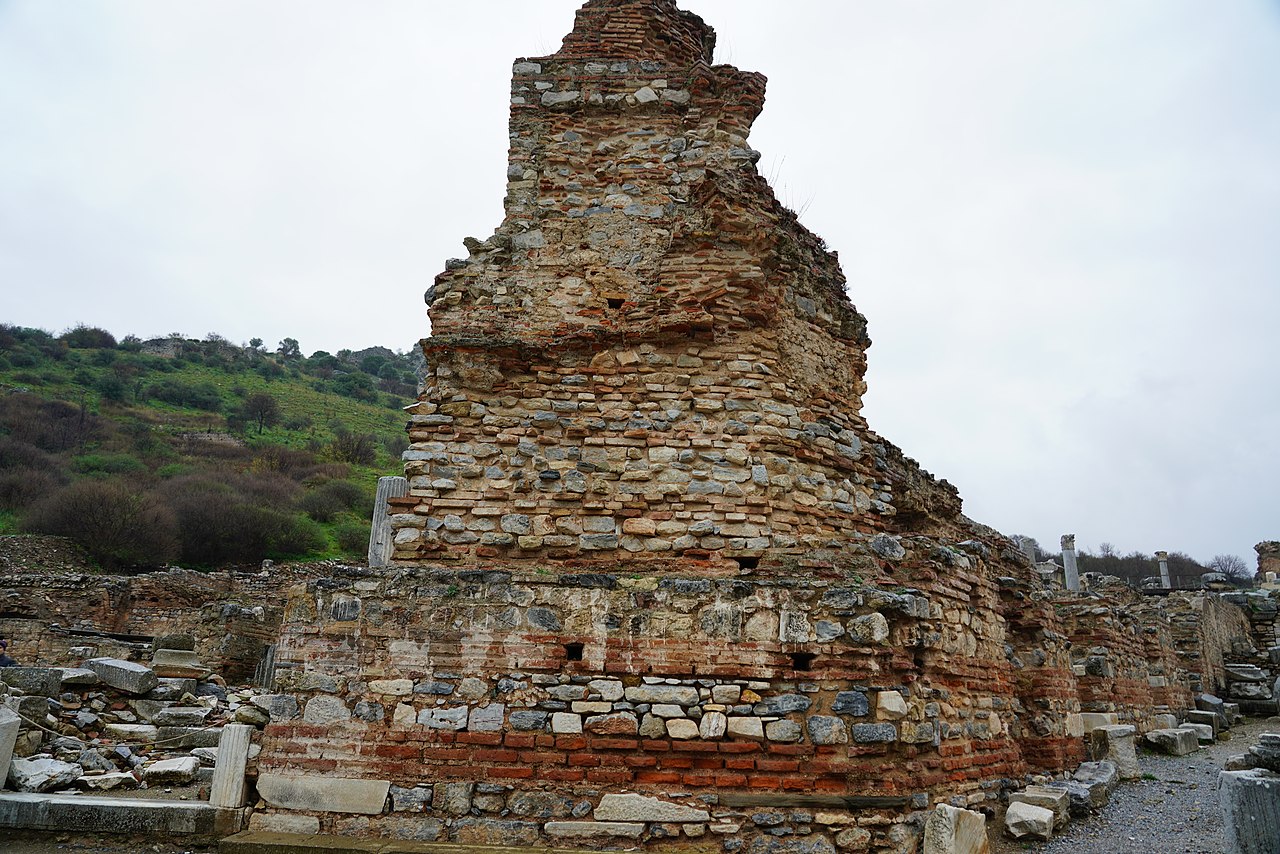
What's genuinely underrated at Ephesus are the Terrace Houses. These multi-story apartments belonged to wealthy Roman citizens and preserve floor-to-ceiling mosaics and frescoes from the 1st through 3rd centuries — one dining room ceiling still has a painted philosopher-and-muse composition that would look at home in a serious museum. Private latrines had heated floors. The Great Theater seats 25,000, and the marble-paved Curetes Street still shows its drain channels and mosaic thresholds. The whole site was designated a UNESCO World Heritage Site in 2015. Ephesus takes the better part of a day to walk properly. If you're in western Turkey, there's no reasonable argument for skipping it.