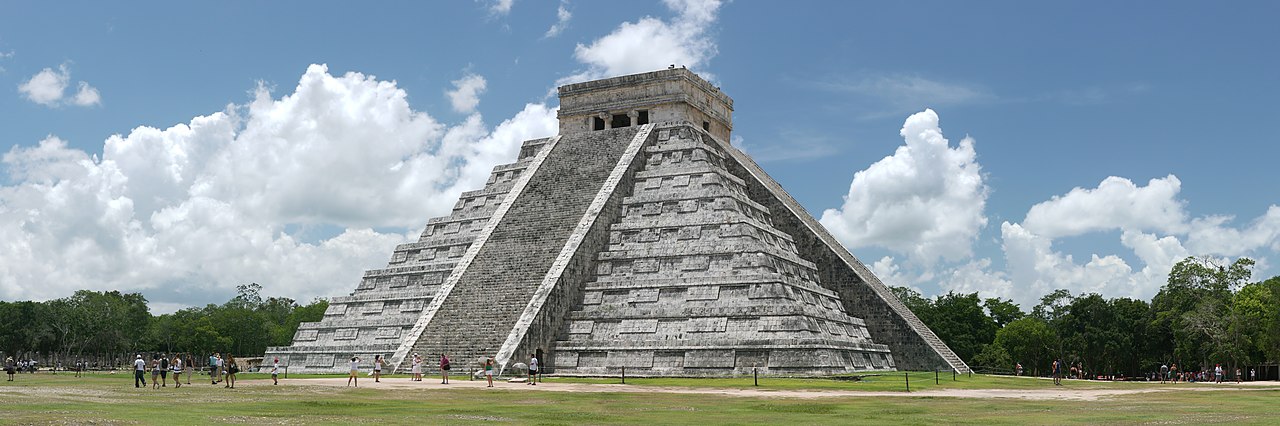
Chichen Itza is crowded, it's hot, and you can't climb El Castillo — they closed access in 2006 after a fatal fall. The drive from Cancun is two hours each way, which means an early start or a midday arrival into punishing sun. None of that is a reason to skip it. It's a reason to go prepared.
Explore Chichen Itza
Discover Chichen Itza through photos that tell the story.
Find out how well you know Chichen Itza.
What you're actually looking at when you stand in front of El Castillo is one of the most precisely engineered structures ever built. The pyramid has four staircases of 91 steps each — plus the top platform — totaling exactly 365. That's the solar year, built in stone, and it functions as intended: on the spring and autumn equinoxes, the setting sun casts a shadow along the north staircase that creates the illusion of a serpent descending toward the carved stone serpent head at the base. The Maya built this around 900 AD. The precision is the kind of thing that makes you reconsider who had the advanced civilization.
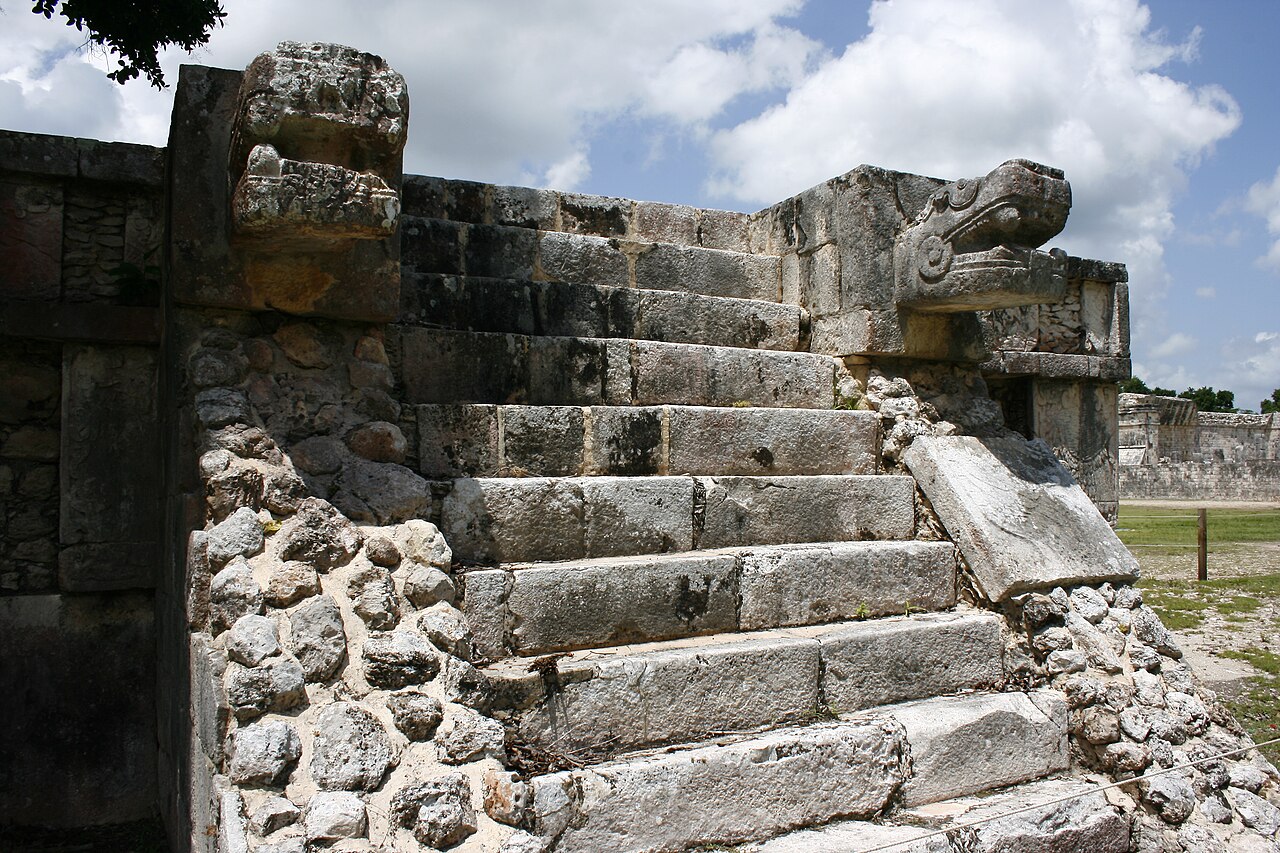
Chichen Itza flourished between roughly 600 and 1200 AD and is unusual among Maya cities. Most Maya sites show a consistent cultural identity. Chichen Itza doesn't — there's clear Toltec influence embedded into the architecture in ways archaeologists still debate. The Temple of the Warriors mirrors a temple at Toltec Tula over 1,200 kilometers away almost exactly. Whether that reflects conquest, migration, or long-distance cultural exchange has never been settled. That ambiguity is part of what makes the site interesting.
The Great Ball Court is 168 meters long — nearly two football fields — where players moved a heavy rubber ball using only their hips, elbows, and knees, aiming for stone rings mounted eight meters up. Stone reliefs on the walls depict beheadings. Whether that was punishment for losing or honor for winning is still debated, which tells you something about how differently this culture related to death. The Sacred Cenote — a natural limestone sinkhole 60 meters across — received gold, jade, incense, pottery, and human remains as offerings for over a millennium. Early 20th-century dredging operations pulled it all out.
The Observatory (El Caracol) is the structure that earns its description. A round tower with slit windows precisely aligned to Venus, built so Maya priests could track astronomical cycles with accuracy that rivals 18th-century European instruments. It wasn't decorative. It worked. Chichen Itza became a UNESCO World Heritage Site in 1988 and was voted one of the New Seven Wonders of the World in 2007. It receives over two million visitors annually — go early, gates open at 8 AM and the heat becomes brutal by 11. The city was gradually abandoned after 1200 AD, likely from political collapse and drought, but the Maya never entirely stopped coming here. That continuity matters. It's not a ruin. It's still a place.