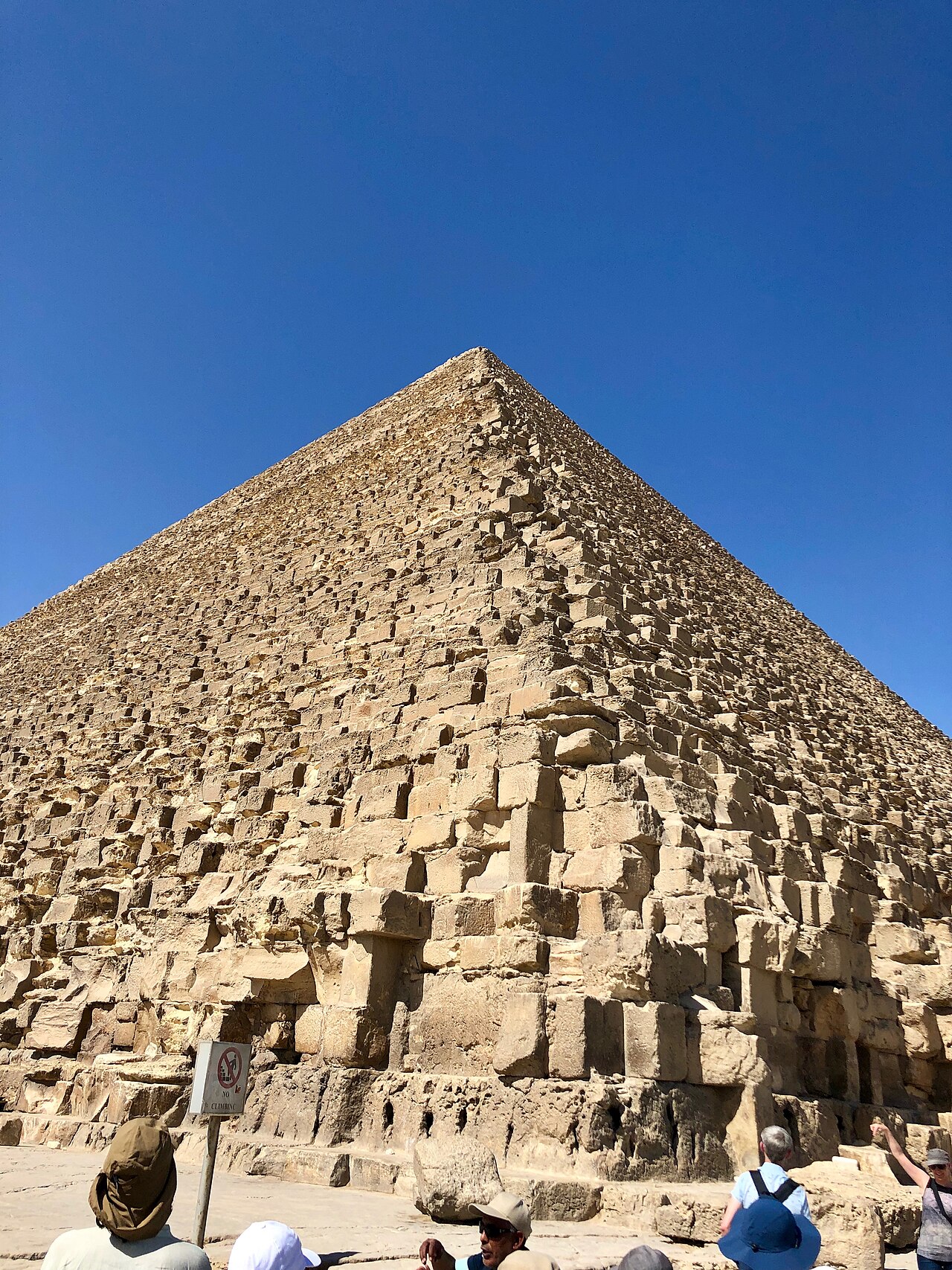
The pyramids are visible from the Cairo airport. Not as a distant smudge — visible, close, already outsized. That fact alone should recalibrate your expectations about this city before you've cleared customs. Twenty million people live pressed against a desert that holds five thousand years of human ambition, and the monuments at the center of it are so massive they've survived dynasties, invasions, centuries of stone-stripping, and forty-five hundred years of weather. The Nile still flows through the city in the same direction it always has. The call to prayer still rolls across the rooftops five times a day from minarets that have been sounding for a thousand years. Cairo is genuinely overwhelming in a way that earns that word.
Explore Cairo
Discover Cairo through photos that tell the story.
Find out how well you know Cairo.
The Old Kingdom story — roughly 2700 to 2200 BC — is where Cairo's deepest claim on your attention lives. At Giza, just outside modern Cairo, the pharaohs Khufu, Khafre, and Menkaure raised three great pyramids in the space of about a century. Khufu's Great Pyramid, completed around 2560 BC, required an estimated 2.3 million stone blocks averaging two and a half tons each. At 481 feet, it held the record as the tallest structure on earth for 3,800 years — surpassed only by Lincoln Cathedral in 1311 AD. What I find most interesting, though, isn't the finished product — it's the engineering evolution visible across the region. At Saqqara, ten miles south, the Step Pyramid of Djoser was designed by the architect and physician Imhotep around 2650 BC. It's the oldest substantial stone structure on earth, the first experiment in stacking platforms into something monumental. And at Dahshur, the Bent Pyramid literally shows the builders mid-correction: the angle of its sides changes abruptly from 54 degrees to 43 degrees partway up as the engineers recognized a structural problem and adjusted. These monuments weren't handed down from gods. They were figured out.
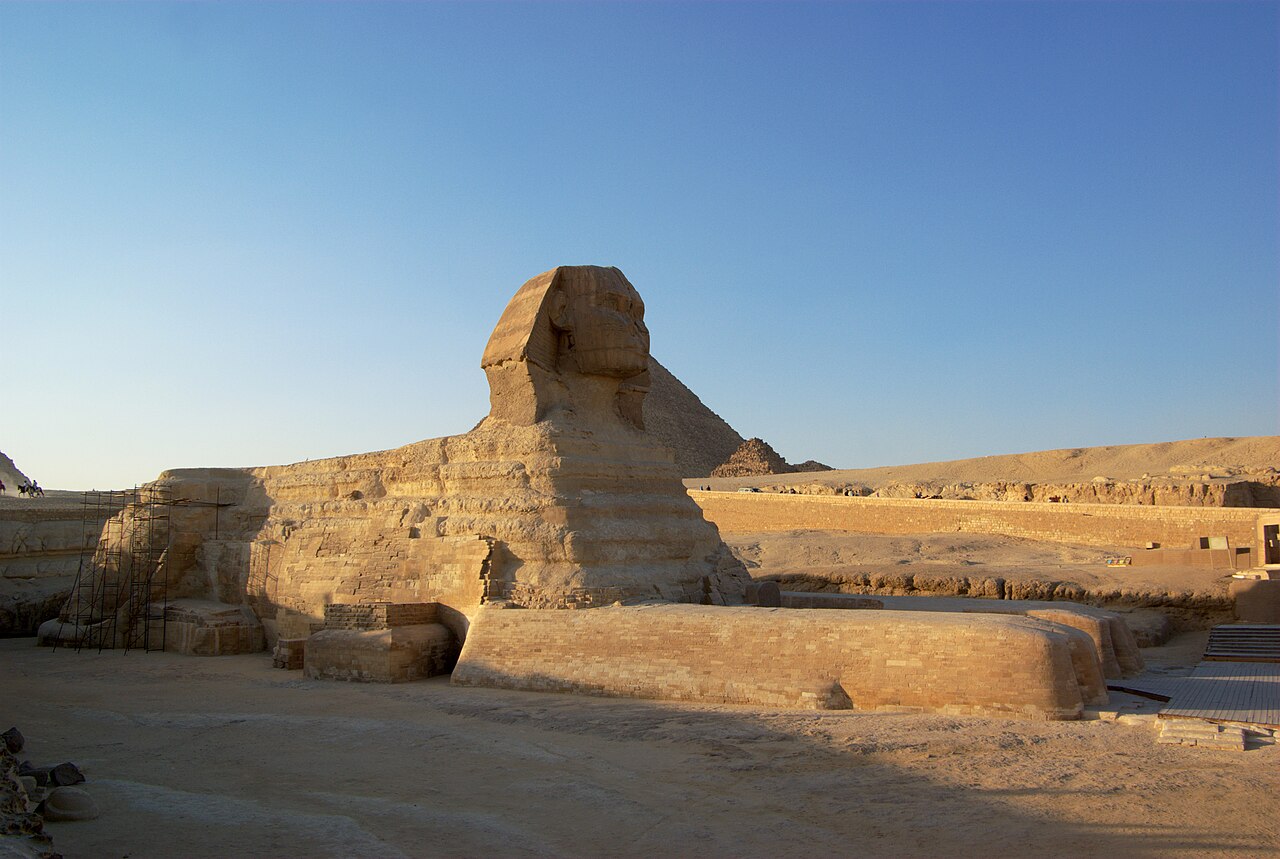
The Great Sphinx crouches at the eastern end of the Giza plateau, carved from a single natural limestone outcrop around 2500 BC, almost certainly during Pharaoh Khafre's reign. At 240 feet long and 66 feet high, it's the largest monolithic sculpture in the world. The nose has been missing for centuries — not Napoleon's fault, despite the popular story, but damaged by Mamluk soldiers in the 14th century AD. Traces of red pigment suggest the face was once painted. The Giza complex is more than three massive triangles: Khafre's pyramid connects by a 1,700-foot causeway to his Valley Temple, where priests ritually prepared the pharaoh's body. Beside the Great Pyramid, excavated boat pits held full-sized cedar vessels — one, now reassembled, stretches 143 feet — meant to carry the pharaoh through the heavens. The scale of intention behind all of it is what stays with you.
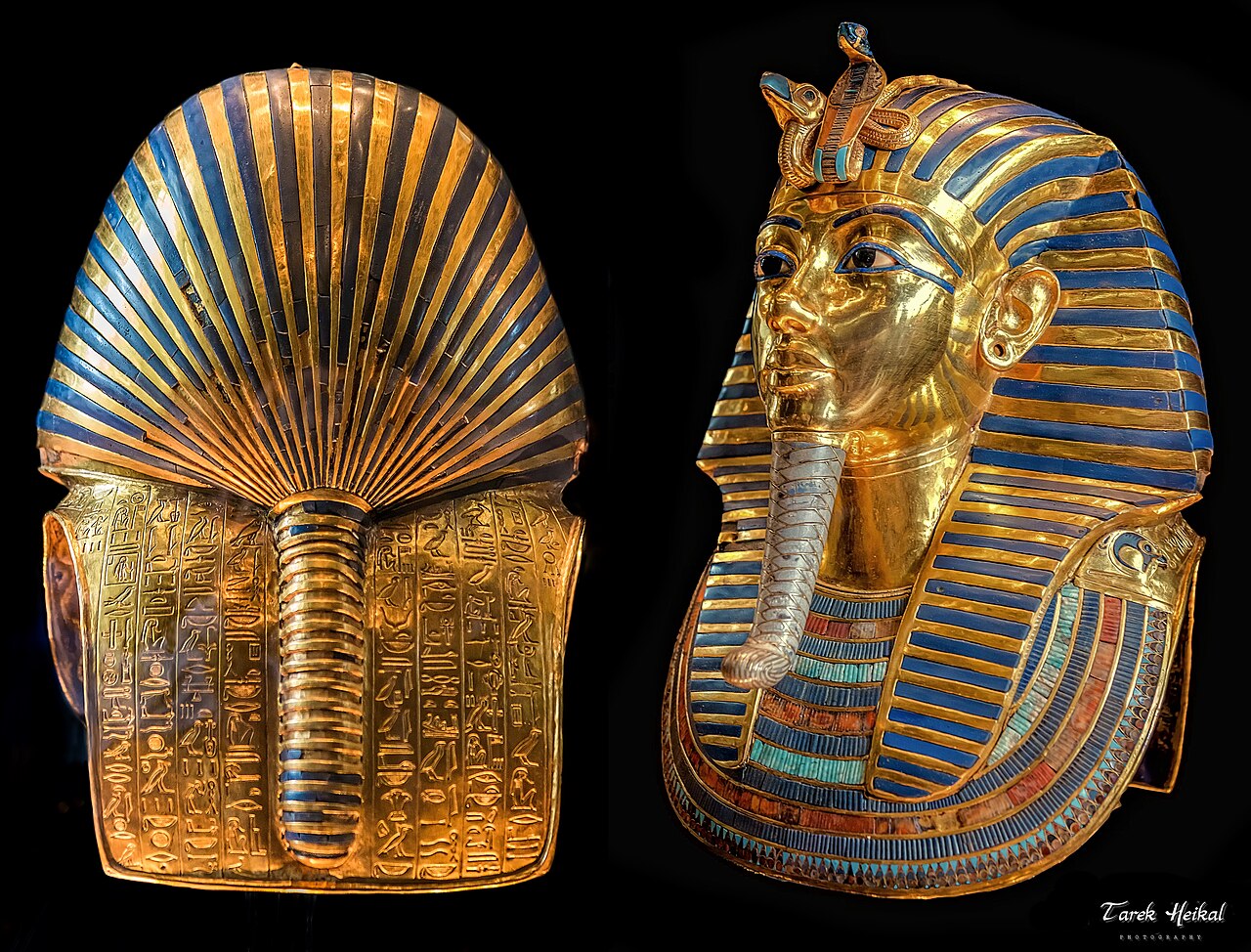
One moment in 1922 changed what we understand about ancient Egypt. On November 4th, Howard Carter's team cleared a step cut into the bedrock in the Valley of the Kings and found the virtually intact tomb of Tutankhamun — a minor pharaoh who died at roughly nineteen after a reign of only nine years, yet whose burial had been sealed for 3,200 years and contained over 5,000 objects. The centerpiece is the death mask: solid gold, 24 pounds, inlaid with lapis lazuli, carnelian, obsidian, and turquoise. It's the most recognizable artifact to survive from the ancient world. For decades the treasures lived in the old Egyptian Museum on Tahrir Square — a pink neoclassical building opened in 1902, so densely packed with antiquities that the sheer accumulation becomes part of the experience. In 2023, the Grand Egyptian Museum opened at the foot of the Giza plateau — the largest archaeological museum on earth — displaying all 5,000 Tutankhamun objects together for the first time in history. If you're going to Cairo, the GEM is worth your time and money.
Cairo's story didn't stop with the pharaohs. A thousand years of Islamic rule shaped the city that actually exists today — a skyline of over a thousand minarets and a dense urban quarter that UNESCO calls one of the world's great historic cities. In 1176 AD, Saladin began construction of a citadel on the Muqattam Hills as a fortress against the Crusaders. The Citadel still dominates Cairo's eastern skyline; within its walls stands the Muhammad Ali Mosque — the Alabaster Mosque — built between 1830 and 1848 in a style consciously echoing the great Ottoman mosques of Istanbul. Below the Citadel, Al-Azhar Mosque, founded in 970 AD by the Fatimid caliph Al-Mu'izz, is the oldest university in continuous operation in the world. Threading between these monuments, the Khan el-Khalili bazaar — founded in 1382 — has operated without meaningful interruption for over six centuries, its lanes still selling spices, gold, copper, and perfume much as they did when Cairo was the wealthiest trading hub in the medieval world.
Here's what they don't always tell you: the area around the Giza pyramids is one of the more aggressive tourist environments I've encountered anywhere. Vendors, camel rides, photos-for-money — it starts before you're through the gate. The smog is real; the heat is serious; the traffic is unlike most Western cities. Cairo isn't a polished tourist destination. It's a living city of twenty million people that also happens to contain the most extraordinary concentration of ancient history on earth. The right framing is culture shock without danger — and that's exactly what Cairo delivers if you go in with honest expectations. You decide whether that tradeoff works for you. At sunset, when the light turns the desert gold and the Nile catches the last of it, most people decide it does.