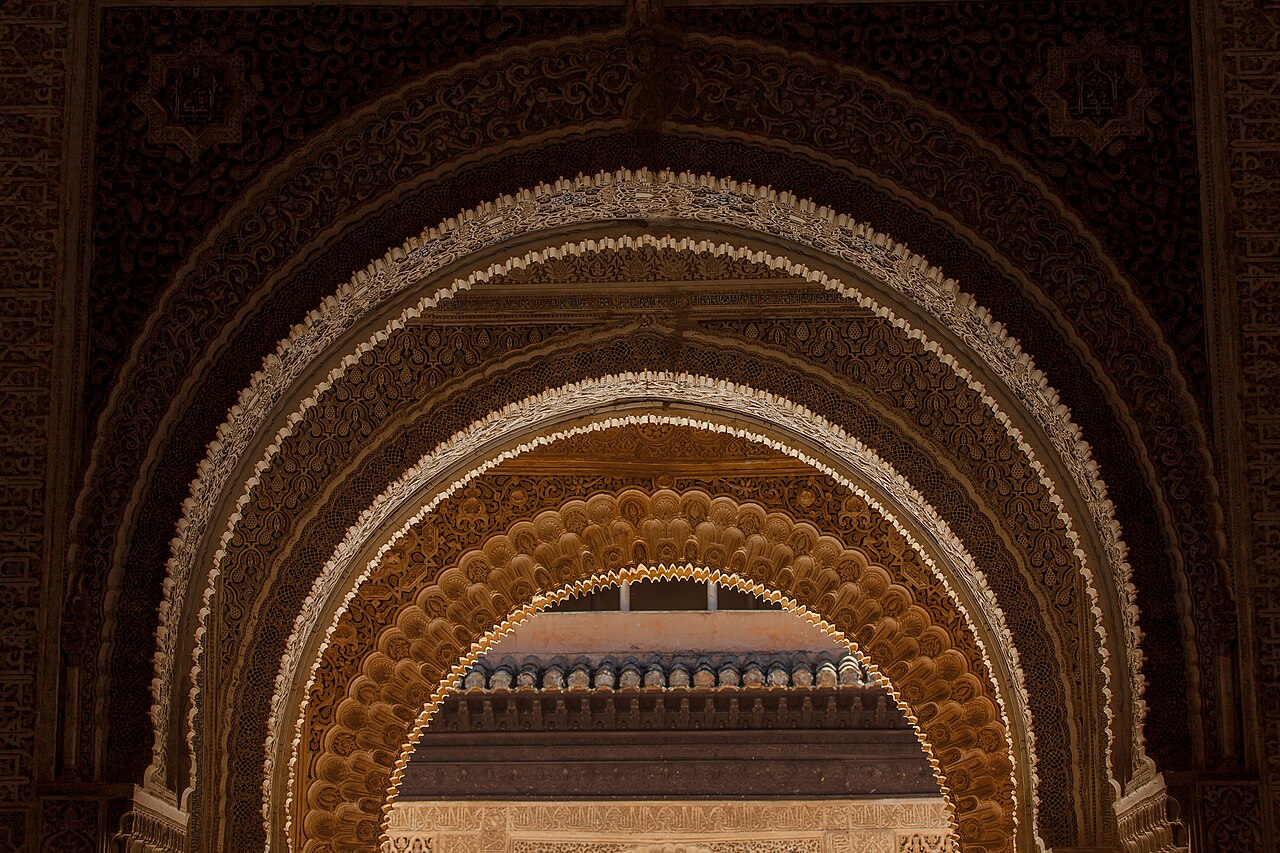
Book your tickets months in advance. That's not a formality — the Alhambra draws 2.7 million visitors a year, timed entry is mandatory, and slots fill up fast. If you're planning a trip to Granada and haven't sorted this yet, do it before you book flights. With that out of the way: it's worth every bit of the effort. The Alhambra is the most complete surviving medieval Islamic palace complex in the world, sitting on a forested plateau above the city. The name comes from the Arabic 'al-Hamra' — the red one — for the reddish clay of the exterior walls. Muhammad I, founder of the Nasrid dynasty, began construction in 1238 AD; the greatest building campaigns were finished around 1358 under Muhammad V.
Explore Alhambra
Discover Alhambra through photos that tell the story.
Find out how well you know Alhambra.
The interior is genuinely hard to process. Every surface — walls, columns, ceilings, vaults — is covered in an almost overwhelming density of geometric tilework, arabesque plasterwork, and Arabic calligraphy. The Court of the Lions (Patio de los Leones), built around 1370 AD by Muhammad V, is the centerpiece: 124 slender marble columns supporting carved arcades that look like they were cut from ivory, surrounding a fountain of 12 white marble lions with four water channels representing the rivers of paradise. The sound of water running through it is constant. Photos underdeliver here.
The muqarnas domes in the Hall of the Two Sisters and the Hall of the Abencerrages deserve more than a glance up. These stalactite-like three-dimensional structures — built from thousands of individual plaster cells — create the illusion of a star-filled sky or a cosmic honeycomb. Architectural analysis has shown the geometry anticipated modern mathematical concepts by centuries. This isn't decoration for decoration's sake. It's a worldview expressed in plaster, and it holds up.
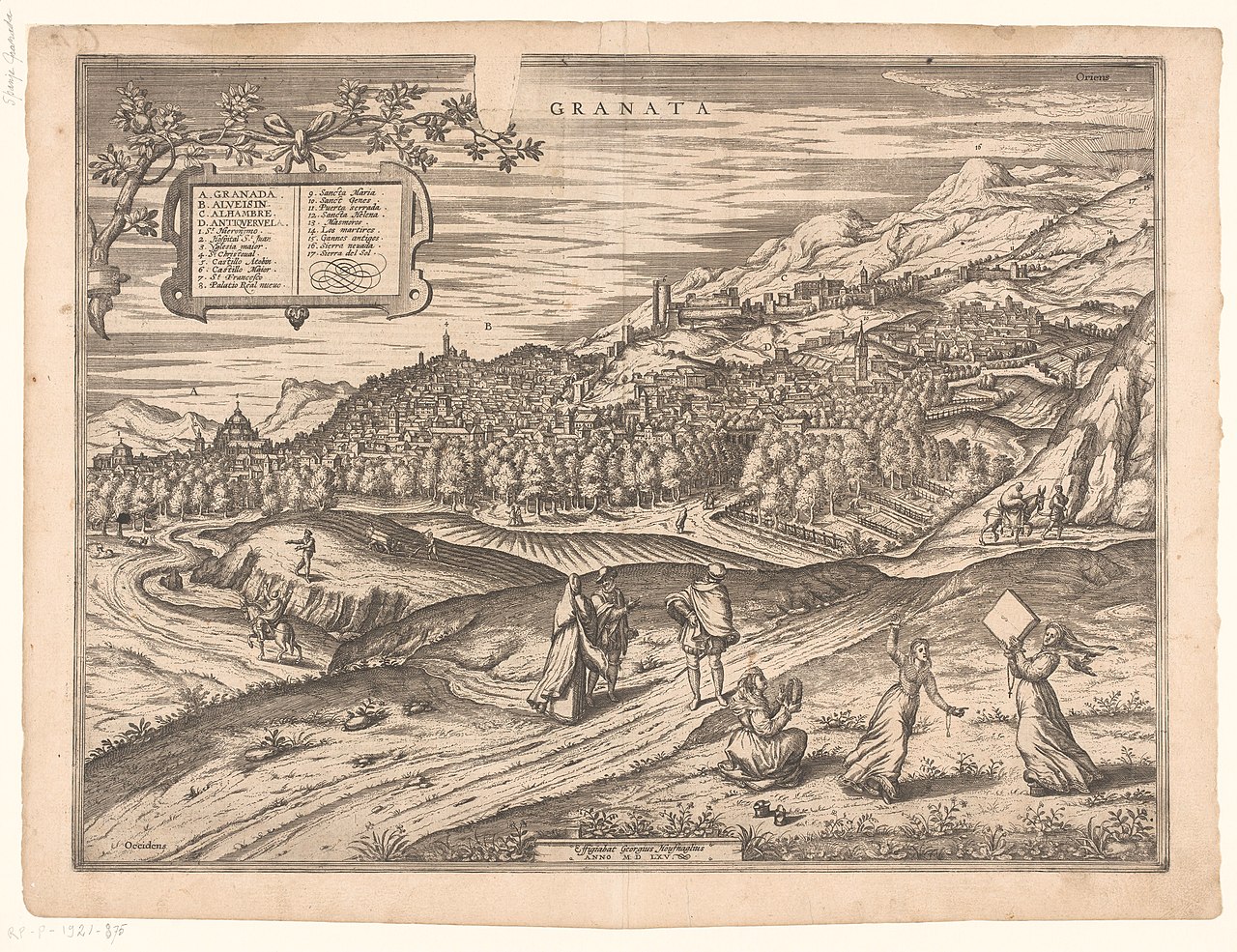
The fall of the Alhambra is one of those history moments that sticks. The last Nasrid sultan, Muhammad XII (Boabdil), surrendered Granada to Ferdinand II and Isabella I on January 2, 1492 — the same year Columbus sailed. According to legend, Boabdil looked back at the palace from a mountain pass and wept. His mother's alleged response: 'You weep like a woman for what you couldn't defend as a man.' That pass is still called El Suspiro del Moro — the Moor's Sigh. Ferdinand and Isabella added a church inside the walls; Carlos V later commissioned a Renaissance palace that sits inside the complex and still feels slightly out of place.
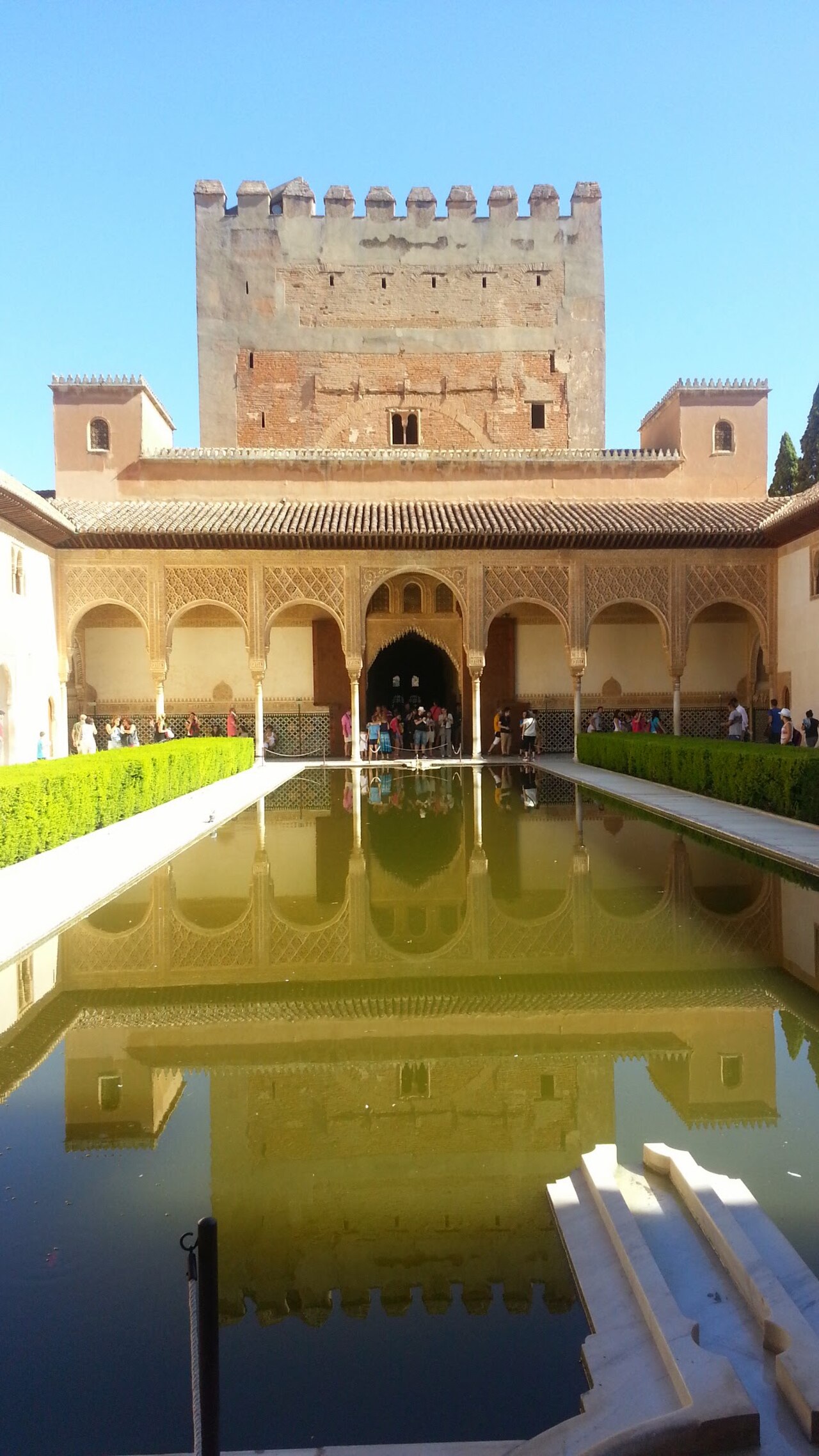
The honest caveat: this is a full day, minimum. Even with timed entry, the crowds are real, and the complex is larger than most people expect. The Generalife gardens are worth adding if you have the stamina — they're a separate ticket and often overlooked. Washington Irving's Tales of the Alhambra (1832), written while he lived in the ruined palace as a guest of the Spanish governor, is still readable and adds context if you prepare. Conservation is ongoing; the plasterwork suffers from humidity, pollution, and millions of footsteps. Go because it earns the trip. Don't go expecting to have it to yourself.