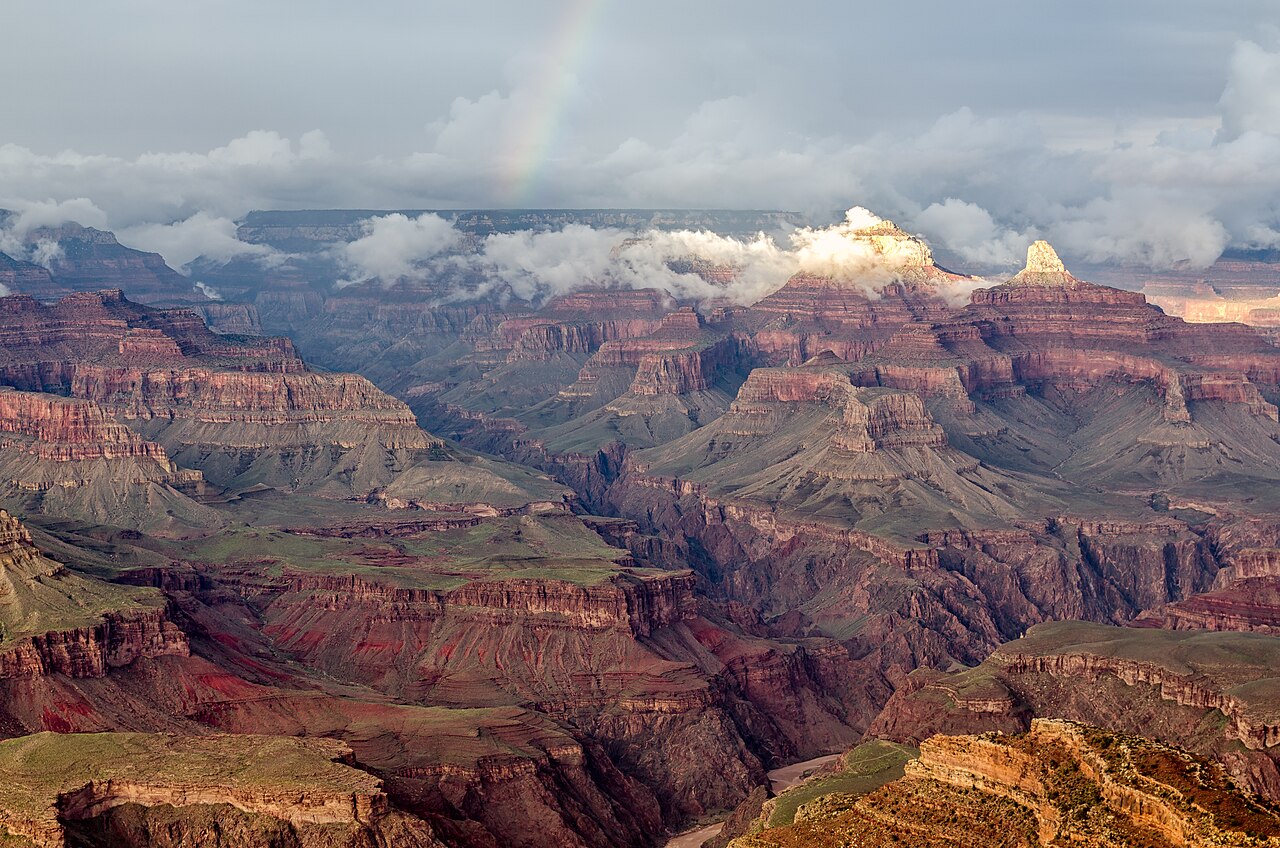
There's a reason the Grand Canyon stops families mid-sentence. We've traveled to a lot of remarkable destinations, but nothing quite matches that first moment when the forest path ends and the earth just disappears. One step you're walking through pine-scented trees, and the next, a mile of layered rock in reds, oranges, purples, and golds stretches to the horizon. The canyon runs 277 miles long, up to 18 miles wide, and carved over roughly six million years by the Colorado River through rock that's nearly two billion years old. It's one of the Seven Natural Wonders of the World, a UNESCO World Heritage Site, and honestly, those labels barely do it justice.
Explore Grand Canyon
Discover Grand Canyon through photos that tell the story.
Find out how well you know Grand Canyon.
The South Rim is where we'd start — and where most families do. It's open year-round, well-organized, and genuinely not overwhelming to navigate. Here's what makes it work: Mather Point greets most visitors first and earns the crowd — a panoramic introduction that sets the tone for everything that follows. The Yavapai Geology Museum pairs kid-friendly exhibits with massive windows looking straight into the abyss, which is a winning combination. The Rim Trail runs 13 miles along the edge, much of it paved and accessible, and the free shuttle bus lets us hop between viewpoints without fighting for parking. At the eastern end, Desert View Watchtower is worth the drive — a 70-foot climbable stone tower with murals by Hopi artist Fred Kabotie and views down toward the Colorado River that feel genuinely earned.
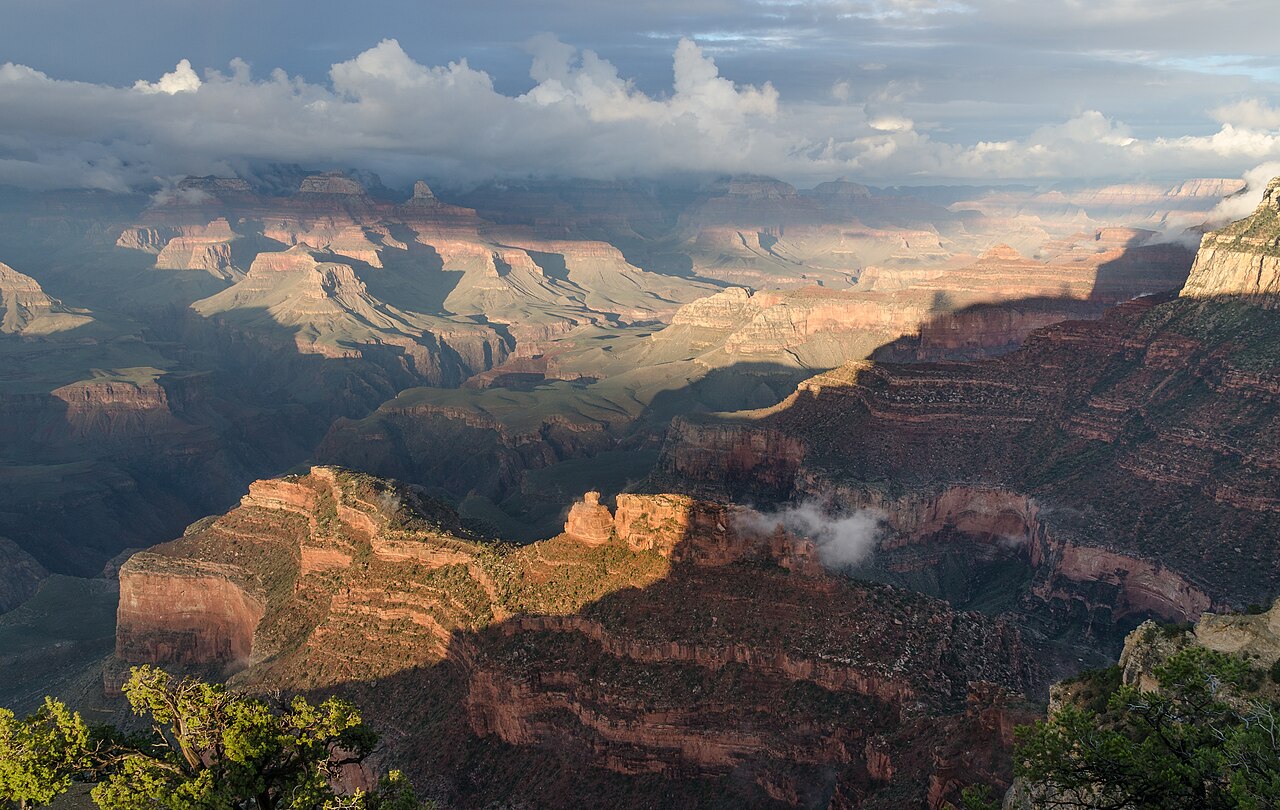
For families ready to go further, the options below the rim are memorable in the best way. Mule rides along the Bright Angel Trail are a beloved tradition — riders need to be at least 10 for shorter rim-side trips, and 12 for the full descent to Phantom Ranch at the canyon floor. The Bright Angel Trail also offers solid hike-in, hike-out options, with rest stops at 1.5 and 3 miles giving families a real taste of below-rim terrain without overcommitting. Rangers run daily programs — geology talks, fossil walks, condor-spotting sessions — and the California condor story alone is worth hearing: once reduced to just 22 birds in the wild, they now soar regularly over the canyon in one of conservation's greatest comebacks. The Junior Ranger program is well-designed and genuinely engaging, not just a checklist.
The educational payoff here is real, and it sneaks up on kids. The canyon walls are essentially a geological textbook turned on its side: the bottom layer, Vishnu Schist, is nearly two billion years old, formed when the region was a mountain range being crushed and heated underground. Moving up, we see layers from ancient seas, coastal beaches, swampy forests, and desert dunes — each representing millions of years of change. Limestone walls hold fossils of sea creatures that prove this high desert was once an ocean floor. Park rangers make deep time accessible to young minds, and it's not unusual for a family to leave with a child who's newly obsessed with geology or natural science.
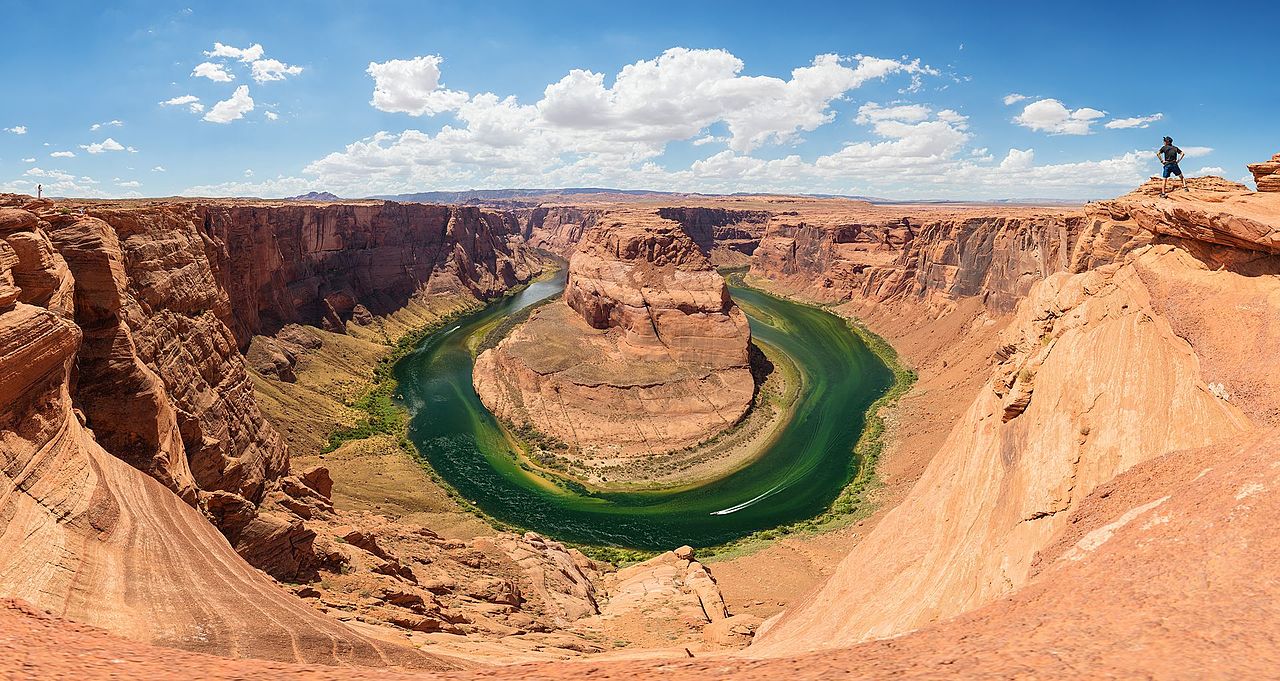
A few things worth knowing before we go. The South Rim sits at 7,000 feet, which keeps summers pleasant on the rim — but the inner canyon can hit 110 degrees, and rangers consistently advise against hiking to the river and back in a single day. Trust that advice. For lodging, El Tovar Hotel is our first choice if the budget allows: a stunning 1905 log-and-stone lodge perched right on the rim. Maswik Lodge and Yavapai Lodge offer solid value inside the park, and the town of Tusayan just outside adds more options. The most memorable way to arrive? The Grand Canyon Railway from Williams, Arizona — a two-hour vintage train ride with Wild West entertainment that deposits the family right at the rim. It costs more than driving. It's worth every dollar.