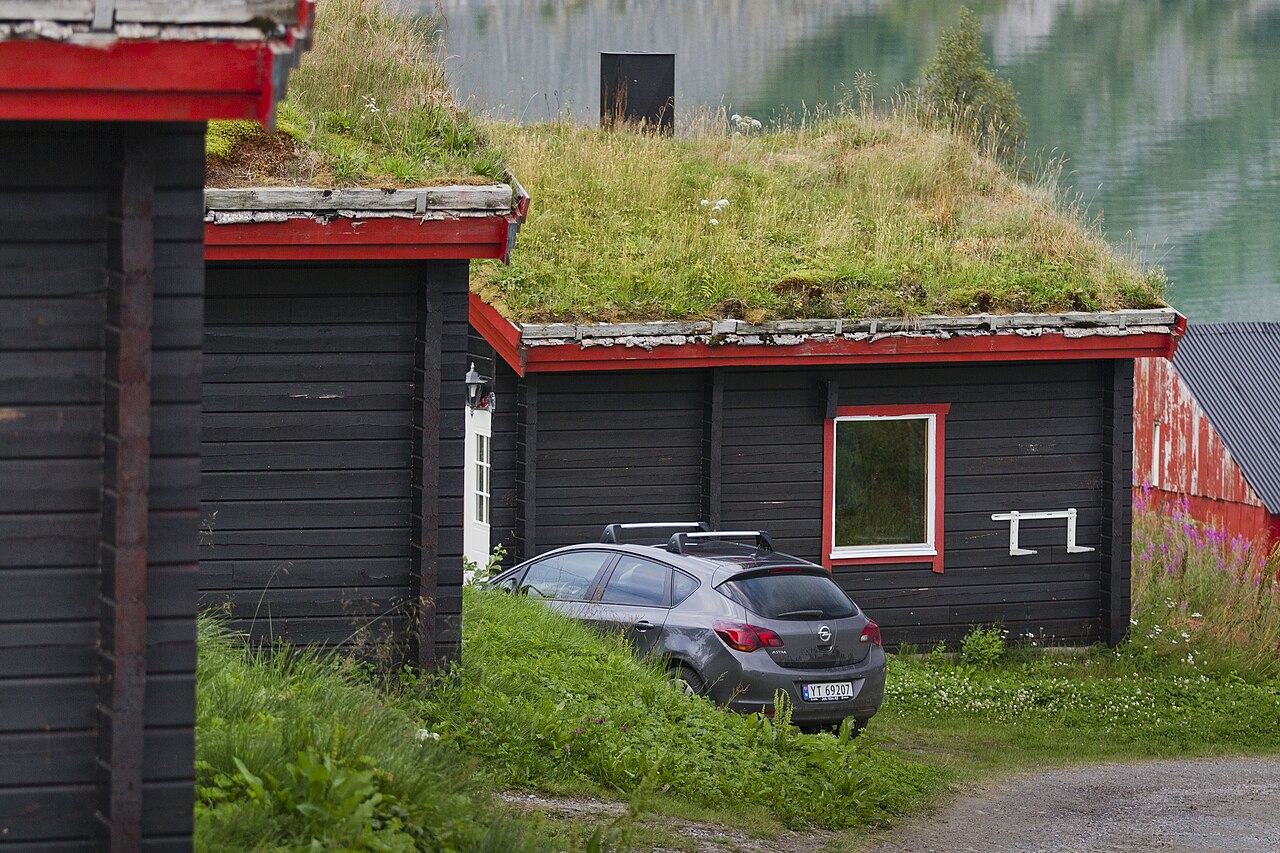
Norway has more cabins per capita than almost any country on earth — roughly 500,000 hytter for five million people, about one for every ten. The word doesn't translate cleanly. It's not cottage. It's not vacation home. The hytte predates tourism entirely. It started as a working shelter for farmers moving livestock to highland pastures in summer, a practice called stølsdrift that shaped Norwegian rural life for over a thousand years. The oldest surviving examples sit in open-air folk museums like Norsk Folkemuseum in Oslo and Maihaugen in Lillehammer, their dovetailed corners and sod roofs unchanged from the medieval period. What you're looking at isn't a design choice. It's a thousand years of necessity perfected into something that now looks, to the rest of the world, like inspired minimalism.
Explore Scandinavian Cabins
Discover Scandinavian Cabins through photos that tell the story.
Find out how well you know Scandinavian Cabins.
The geography explains everything. Norway's winters are long, summers short, terrain largely uncultivable. Walls had to be thick enough to hold warmth through February storms. Roofs carried living turf for insulation and to blend structures into hillsides. Windows were small because glass was expensive and heat was more valuable. Every element earned its place — nothing existed for ornament. When twentieth-century Scandinavian designers like Alvar Aalto and Hans Wegner talked about honesty in materials, they were articulating something Norwegian carpenters had been doing since the Iron Age. The hytte is the deep root of Nordic design. Walking through a reconstructed mountain seter isn't a museum visit — it's seeing where the whole aesthetic actually came from.
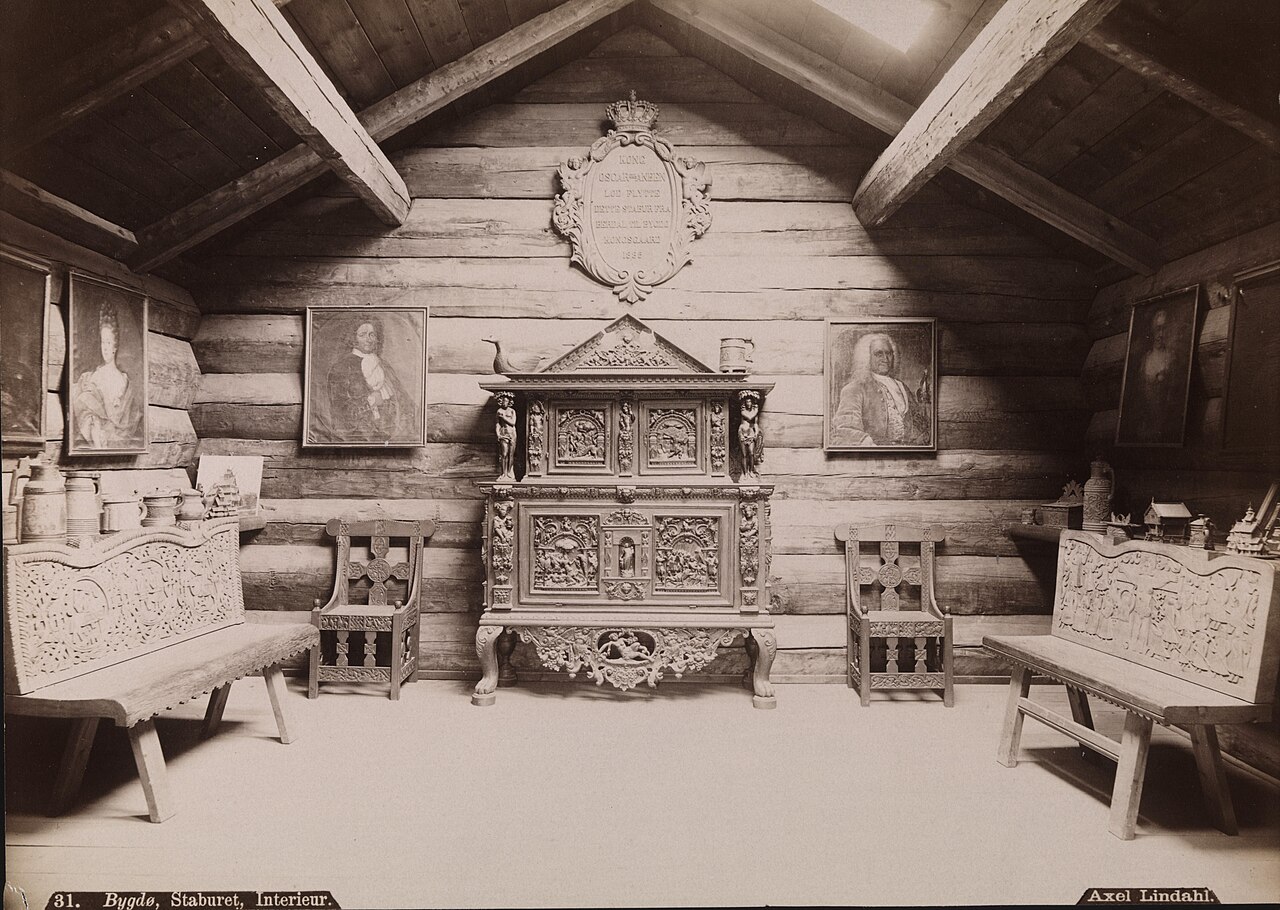
The densest concentration of this tradition sits in the Valdres and Hallingdal valleys in central Norway, where centuries-old log buildings still function as family hytter passed down through generations. In Numedal, farmsteads operating since the thirteenth century demonstrate how the same structural logic applied to domestic and sacred architecture alike — the stave church at Nore shares its material vocabulary with the nearby sleeping lofts and outbuildings. Further north, in the Jotunheimen highlands, the DNT — the Norwegian Trekking Association — has been building mountain lodges since 1868. Many are still heated by wood stoves, still lit by kerosene in the most remote locations. That's not neglect. It's a deliberate position: that the mountains don't need architecture competing with them.
Here's what i'd be honest about before you book: a traditional hytte is not luxury in any conventional sense. The best privately owned hytter on the Hardangerfjord or above the Lofoten treeline offer no room service, no spa, no curated amenities. What they offer is a wood stove that requires tending, a view that changes every hour with the northern light, and genuine silence. If that sounds like deprivation, Norway isn't your destination. If it sounds like exactly what you need, Norway will deliver it better than anywhere else. The concept of friluftsliv — open-air life — isn't a marketing phrase. The allemannsretten, or right to roam, guarantees every person access to uncultivated land regardless of ownership. The Norwegian landscape is a commons in the deepest sense, and that shapes everything about what a stay here actually feels like.
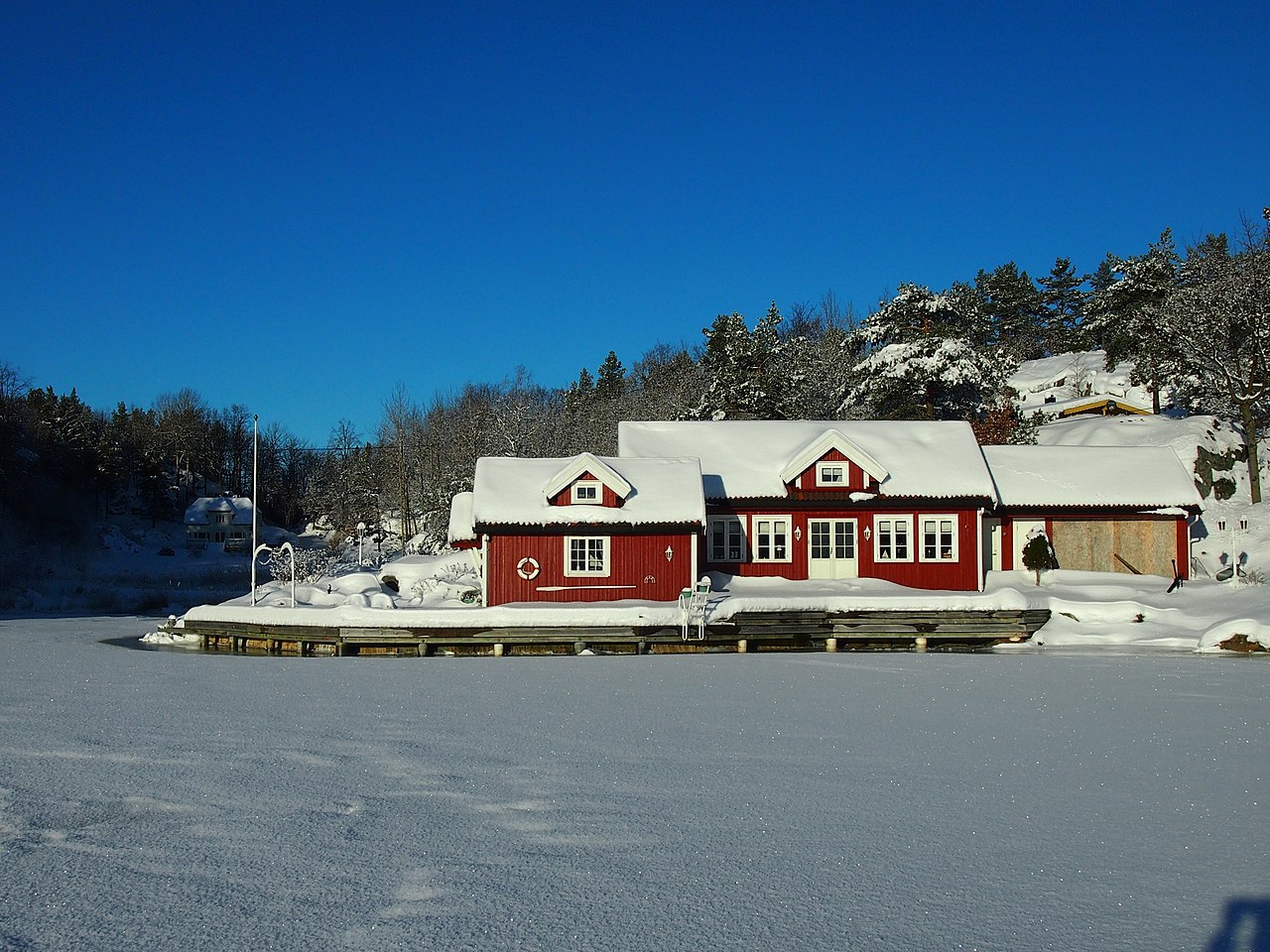
Røros is where i'd start for first-time visitors. The UNESCO-listed copper mining town in Trøndelag was founded in 1644, and its wooden townscape is preserved almost entirely intact — proof that the same timber vernacular that built mountain cabins also built a working industrial city. The miners' cottages, the smelting works, the church that served thousands of workers across two centuries — all share the same material logic as the most remote shepherd's shelter. Walking from Røros into the surrounding plateau in winter, when the temperature drops and the birch forest goes completely still under snow, you understand why this culture developed its particular relationship to warmth and shelter. The cabin isn't a retreat from Norwegian life. It's Norwegian life distilled.
Several operators now offer stays in historically restored cabins across Telemark, Setesdal, and the outer islands of the west coast, where fishing communities maintained a vernacular adapted to salt air and storms. These aren't museum experiences — they're working accommodations, which means you participate in maintaining the tradition simply by using it: splitting wood, following the light, eating simply, sleeping well. Norway won't perform luxury at you. It'll give you timber and silence and ask whether, without the usual apparatus of comfort, you can find what you actually came for. That's either the most appealing thing you've read about a destination, or it isn't. Either answer is the right one.