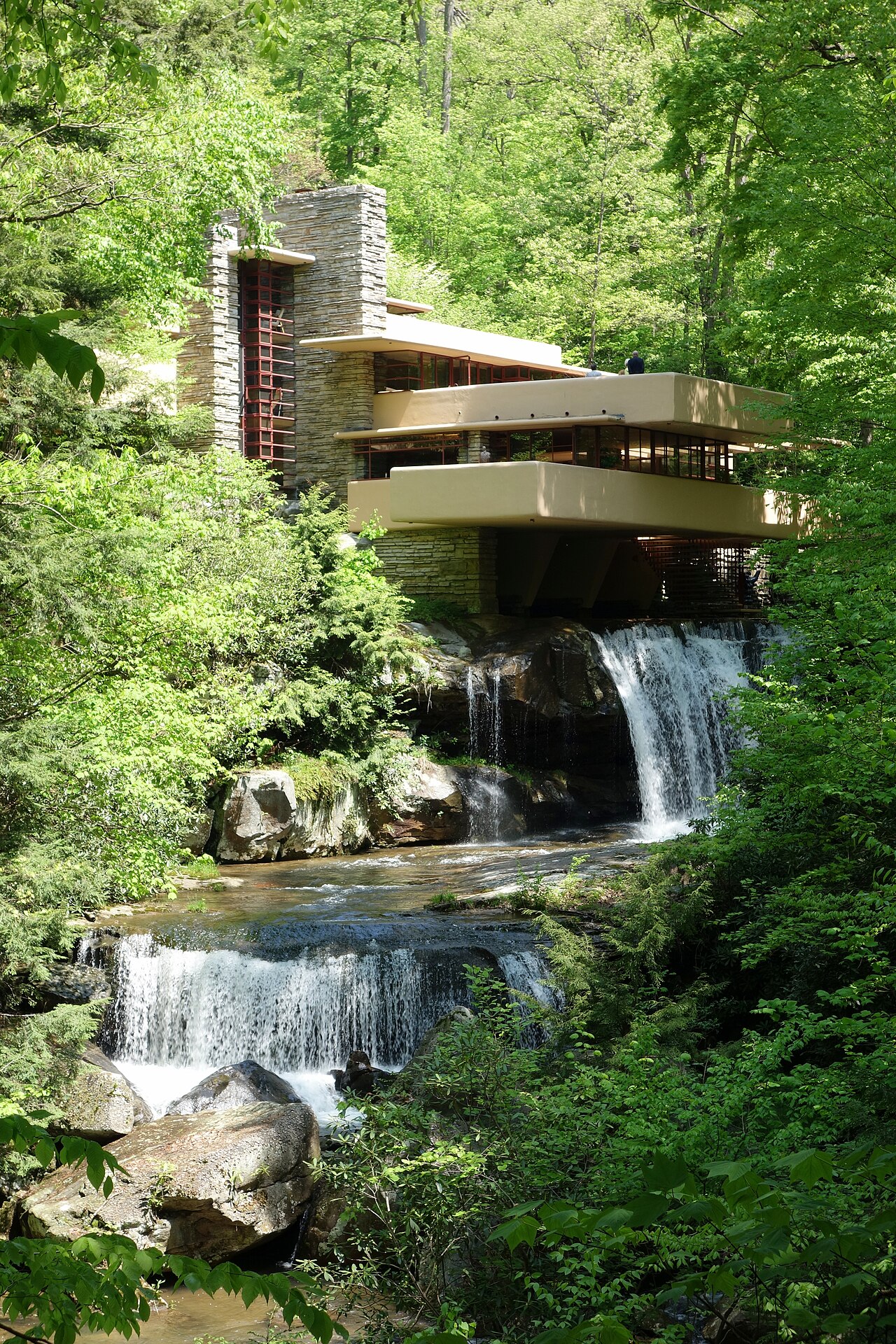
Frank Lloyd Wright was fired by Louis Sullivan in 1893 for moonlighting on private commissions. He spent the next six decades proving that dismissal was the best thing that ever happened to American architecture. That's not a defense of the man — he was genuinely difficult, financially reckless, and serially dishonest in his personal life. But if you're deciding whether to build a trip around his houses, set all of that aside. The buildings earned their reputations independently of the person who designed them.
Explore Frank Lloyd Wright Houses
Discover Frank Lloyd Wright Houses through photos that tell the story.
Find out how well you know Frank Lloyd Wright Houses.
The honest starting point is Oak Park, Illinois, a western suburb of Chicago where Wright lived and worked from 1889 to 1909. His Home and Studio there is the clearest entry point to his thinking — you can watch the ideas form in real time across structures he was literally revising for two decades. The low rooflines and horizontal window bands that define his Prairie Style weren't aesthetic choices for their own sake. Wright was making an argument: a house should orient itself to the horizon, not the sky. Over two dozen of his buildings survive within walking distance, which makes Oak Park one of the most concentrated architectural pilgrimages in the United States. Unity Temple, a Unitarian church from 1908 built from poured concrete, is worth the detour on its own — its skylights shift through the day in a way that reads as intentional rather than incidental.
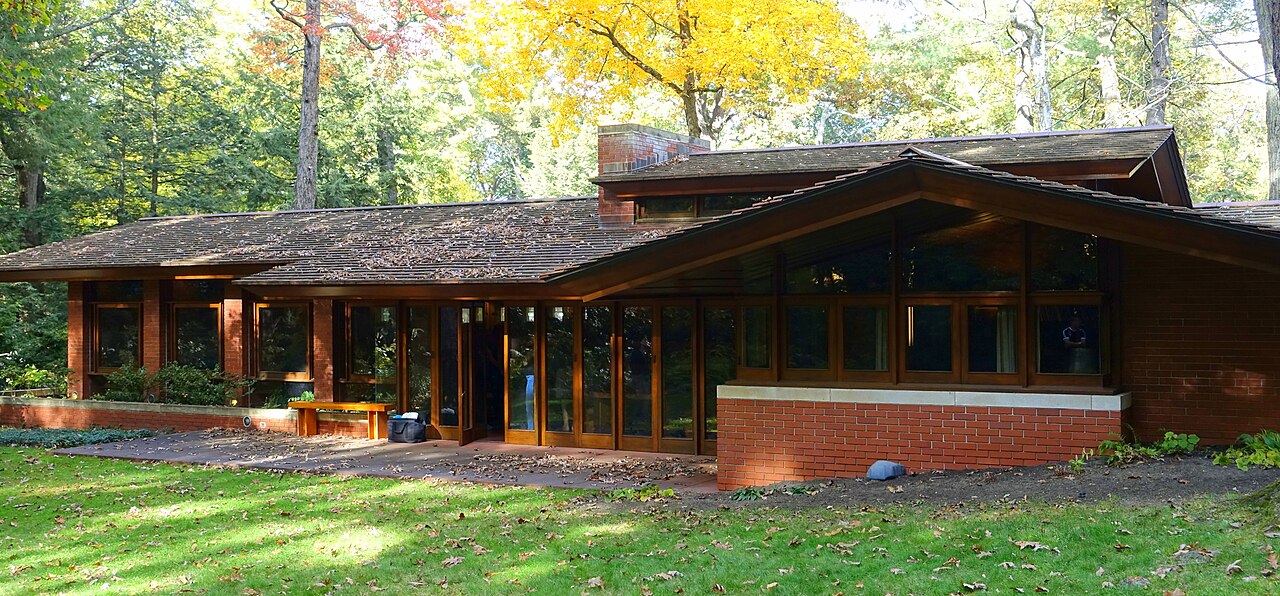
Fallingwater, in the Laurel Highlands of southwestern Pennsylvania, is the destination that justifies the reputation. Built in 1935 over a working waterfall for department store heir Edgar Kaufmann Sr., it's arguably the most famous private residence ever constructed — and it's more surprising in person than any photograph prepares you for. The cantilevered terraces extend over Bear Run creek with an audacity that still reads as borderline reckless. Wright embedded an open hatch in the living room floor so the sound of falling water is literally part of the architecture. He chose boulders from the streambed as the foundation of the hearth, so the fireplace sits directly on stone the water once crossed. Autumn is the obvious time to visit. The honest caveat: tours are timed, crowds are real, and the house is smaller than the photographs suggest. Still worth it. But if you're driving three hours each way, also look at Kentuck Knob nearby — a Usonian house from 1956 that's less famous and more accessible for extended exploration.
In Arizona, Taliesin West — Wright's winter home and school outside Scottsdale, begun in 1937 — is a translation of the Sonoran Desert into built form. The compound uses desert masonry, rough stones gathered from the surrounding land and set into concrete, alongside redwood beams and canvas roofing that filters afternoon light to a particular shade of gold. It spreads low and angular across the desert floor, its angles mirroring the McDowell Mountains behind it. The Frank Lloyd Wright Foundation still operates out of it, which means the experience reads less like visiting a monument than entering a still-inhabited idea. The guided tours are solid. If you're weighing half a day here against more time at a Scottsdale resort, that's a genuine call — but the architecture earns the time.
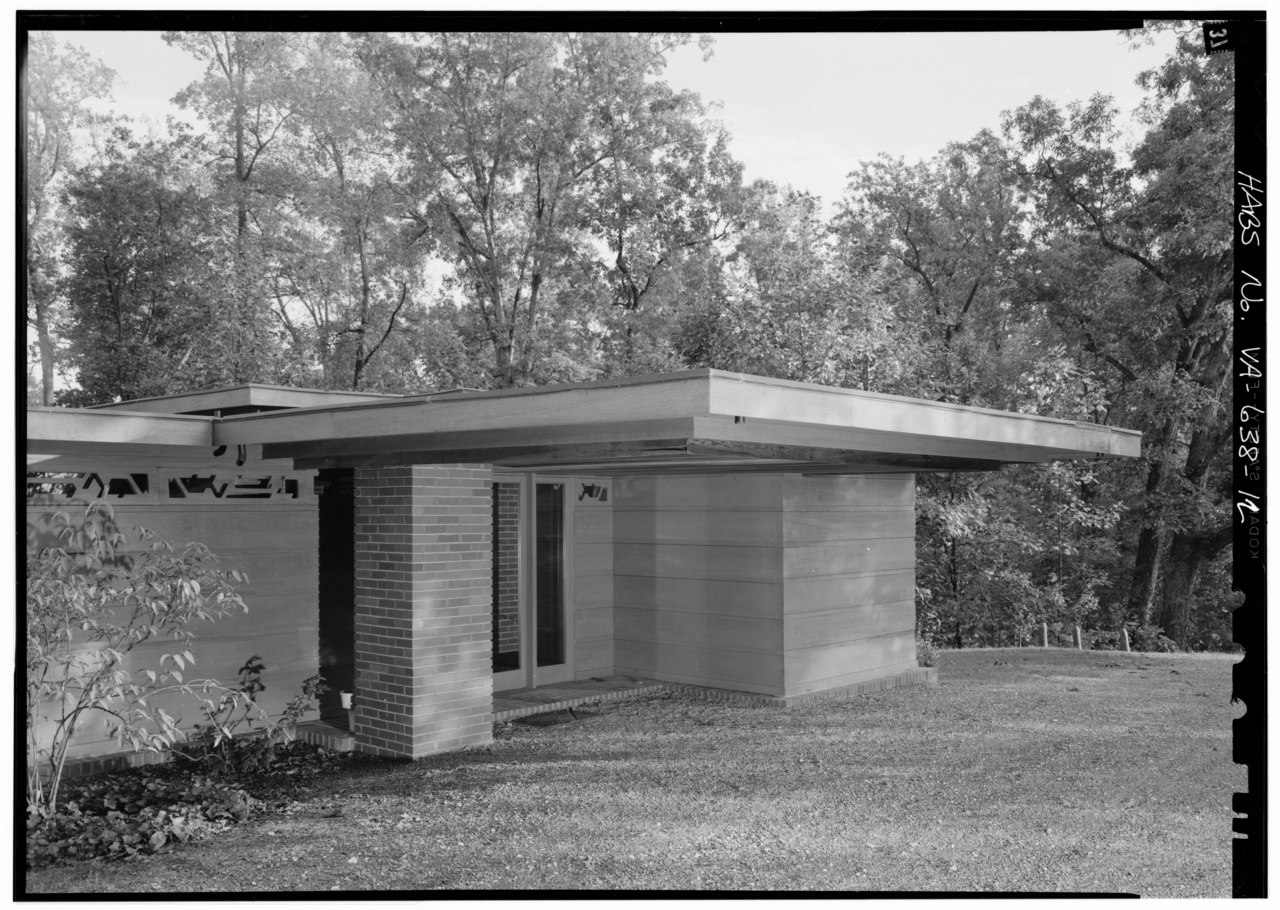
What's underrated in Wright's catalog are the Usonian homes, designed in the 1930s and 1940s as genuinely affordable housing for middle-class families. Carports instead of garages. Radiant floor heating. Open plans that dissolved the formal wall between kitchen, dining room, and living space. Wright was trying to bring his principles to modest budgets, which is a more interesting problem than designing for wealthy clients who'll say yes to anything. Dozens of these homes survive in ordinary neighborhoods across the country, some privately owned, some open by appointment. They don't announce themselves. You have to know to look, and when you find one, it tends to feel like a discovery rather than a pilgrimage.
Wright's broader argument — that American architecture should build from its own land and its own light rather than copy European historical forms — is still legible in his buildings. Whether that convinces you depends less on Wright than on whether you've ever stood in a space that felt genuinely shaped by its site. His houses teach you to read a roofline as a response to prevailing wind, a window placement as a deliberate frame for a specific tree or distant ridge. That's what the best architectural travel does. You walk away seeing differently. Whether that's worth the itinerary is something you'll have to decide.