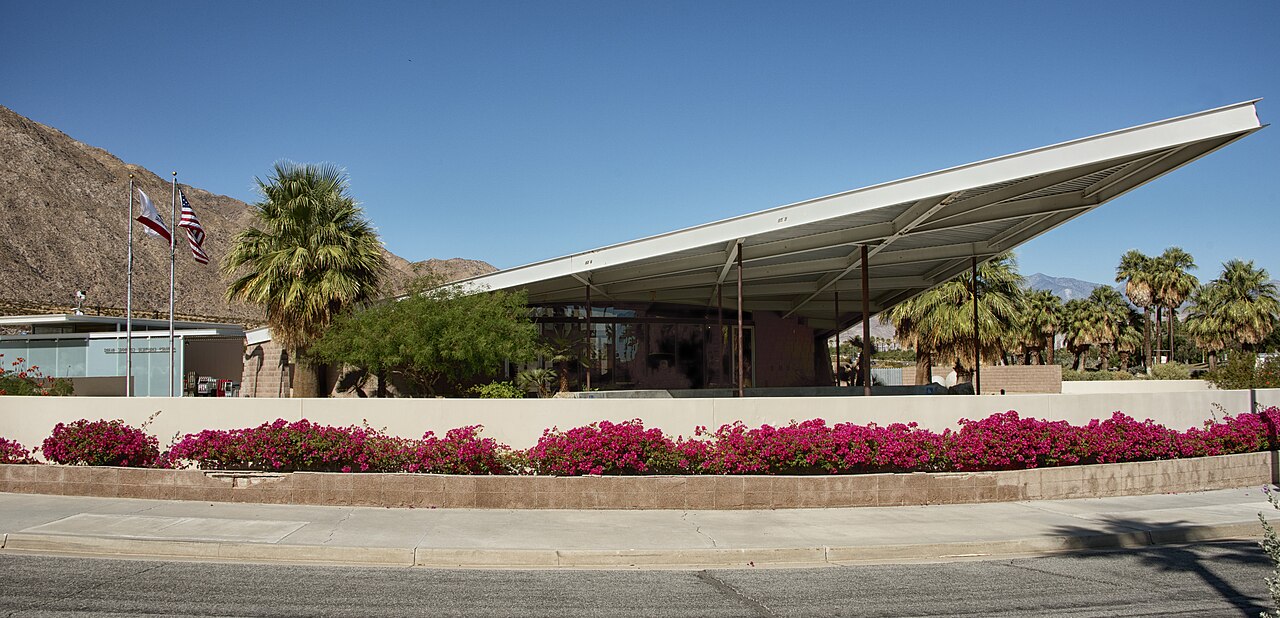
Somewhere between the San Jacinto Mountains and the Coachella Valley floor, a generation of architects discovered that the desert did not ask for ornament. It demanded honesty. The midcentury modern houses that rose across Palm Springs and its surrounding communities from the late 1940s through the 1960s were not the product of aesthetic whimsy but of a genuine reckoning with heat, light, and land. Steel frames floated flat roofs over expanses of glass. Concrete slabs met the earth without apology. Carports replaced formal entries. The desert had stripped away every unnecessary thing, and the best architects of the era simply followed its lead, producing a body of residential architecture that remains among the most coherent and radical ever built in the United States.
Explore Desert Modern Houses
Discover Desert Modern Houses through photos that tell the story.
Find out how well you know Desert Modern Houses.
The story begins in earnest with the postwar housing boom that brought returning veterans and their young families west in search of sun, affordability, and reinvention. Palm Springs, long a retreat for Hollywood's elite, suddenly found itself at the intersection of celebrity money and modernist ambition. Developers like Alexander Construction Company built tract homes in the desert idiom at a scale previously unimaginable, while architects such as William Krisel, Donald Wexler, and E. Stewart Williams designed custom residences that pushed the vocabulary further still. Albert Frey, a Swiss-born émigré who had apprenticed with Le Corbusier, became perhaps the most philosophically committed of them all, building a small house into the rocks above Palm Springs where the boulder that punched through his bedroom wall was not an intrusion but a design element, the landscape welcomed inside rather than excluded. These were not houses that happened to sit in the desert; they were houses that could only have existed there.
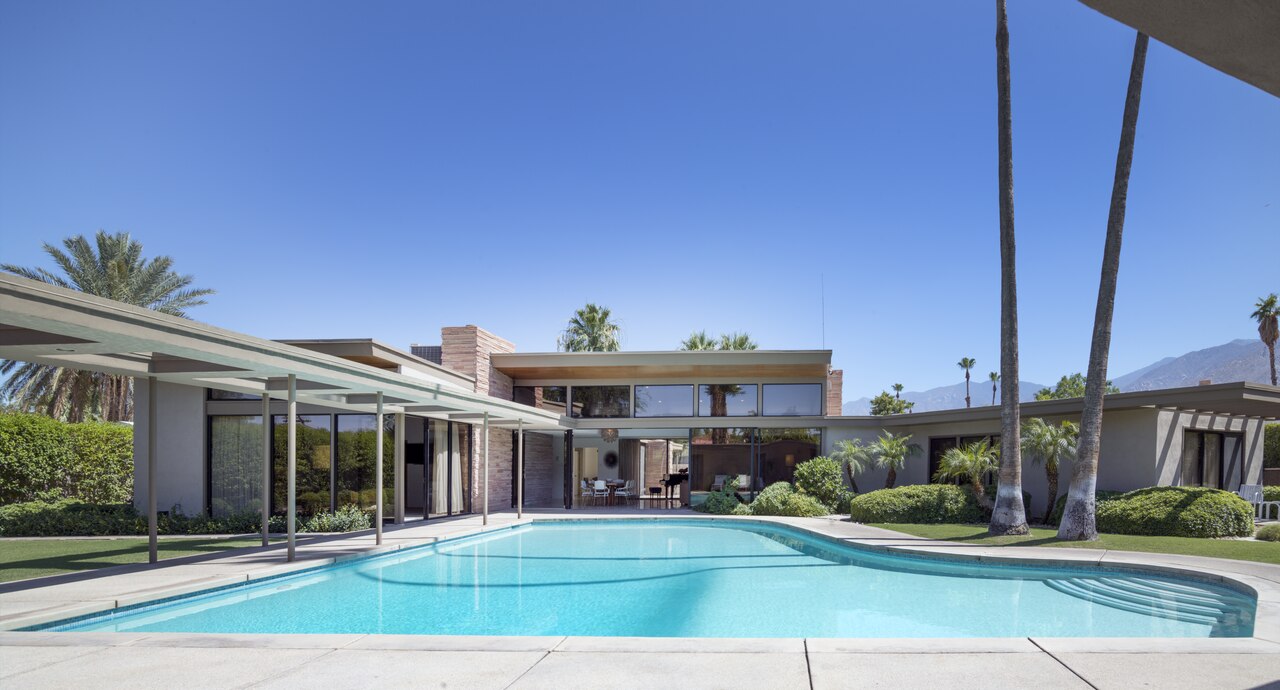
The architectural language that emerged was spare to the point of severity, yet somehow warmly inhabitable. Post-and-beam construction allowed walls of glass to dissolve the boundary between interior and exterior, so that a living room might open entirely onto a courtyard where a kidney-shaped pool shimmered against a backdrop of ocotillo and fan palms. Low-pitched roofs with broad overhangs managed the brutal afternoon sun while admitting the cooler light of morning. Exposed concrete block, painted in earthy or saturated midcentury tones, gave texture without fussiness. Terrazzo floors ran continuously from inside to out. The whole effect was of radical openness, a house that trusted the land around it rather than fortifying against it, and that trust was the most historically significant thing about it: Desert Modern proposed a new relationship between American domesticity and the American wilderness.
Today, Palm Springs preserves this legacy with a seriousness that borders on devotion. The annual Modernism Week, held each February, draws tens of thousands of visitors for home tours, lectures, film screenings, and architectural bus excursions. The Palm Springs Art Museum maintains the Architecture and Design Center in the landmark 1961 Santa Fe Federal Savings building, a Krisel design, and organizes programming around the city's built heritage. The Kaufmann Desert House, designed by Richard Neutra in 1946 for Pittsburgh department store magnate Edgar Kaufmann Sr., remains the most photographed residence in the valley, its pinwheel plan and butterfly roof recognized worldwide as emblems of the modernist ideal. The Smith House, the Edris House, the Frey House II perched in its mountain aerie — each represents a distinct chapter in the same story of geometry meeting landscape, the right angle imposed gently on raw land.
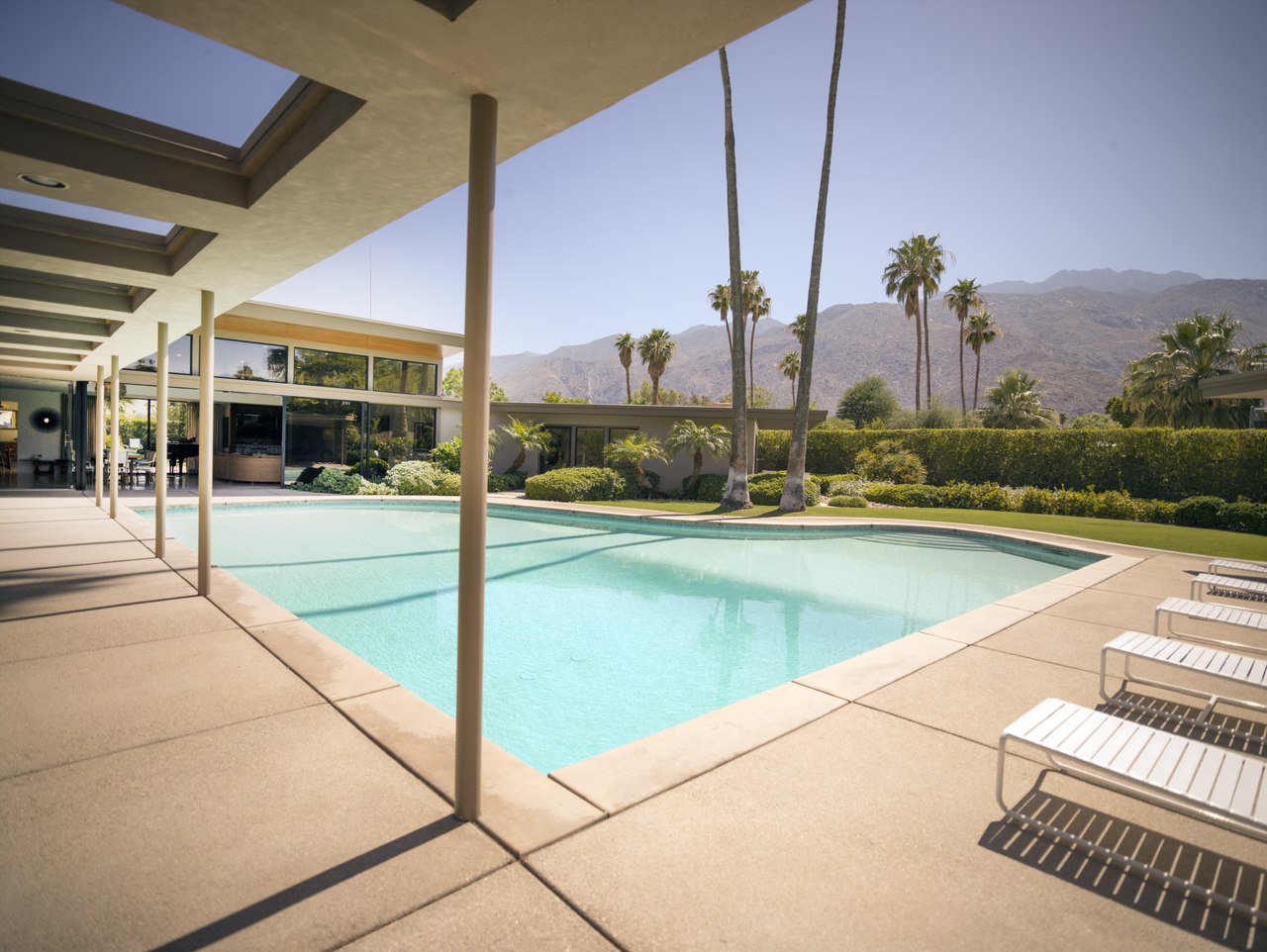
The visitor experience in Palm Springs is unusually intimate for architectural tourism. Unlike a museum or a monument, these houses were built to be lived in, and many still are, which means the walking neighborhoods of Vista Las Palmas, Old Las Palmas, and the Movie Colony reveal their treasures incrementally, behind low walls and hedges, glimpsed from a rented bicycle on a January morning when the air is cool and the mountains are pink with dawn light. The Historic Site Register lists hundreds of structures, and the city's Design Preservation Initiative has made demolition increasingly difficult. New hotels have been built in the modernist mode not as pastiche but as continuation, honoring the formal logic that made Palm Springs architecturally distinct in the first place. What strikes the attentive traveler is not nostalgia but coherence: the city looks like itself in a way that very few American places manage.
Desert Modern matters historically because it proposed something genuinely new about how Americans might live: lighter, more open, more honestly situated in a specific climate and terrain. The desert demanded radical simplicity, and the architects who answered that demand produced houses that have grown more influential with time, not less. Their clean lines were not minimalism for its own sake but a response to a landscape that offered no cover for pretension. To walk among these houses today is to understand that the best architecture is always a conversation between human intention and the particular nature of a place, and that the desert, stripped of everything extraneous, is among the most demanding conversationalists the built world has ever encountered.