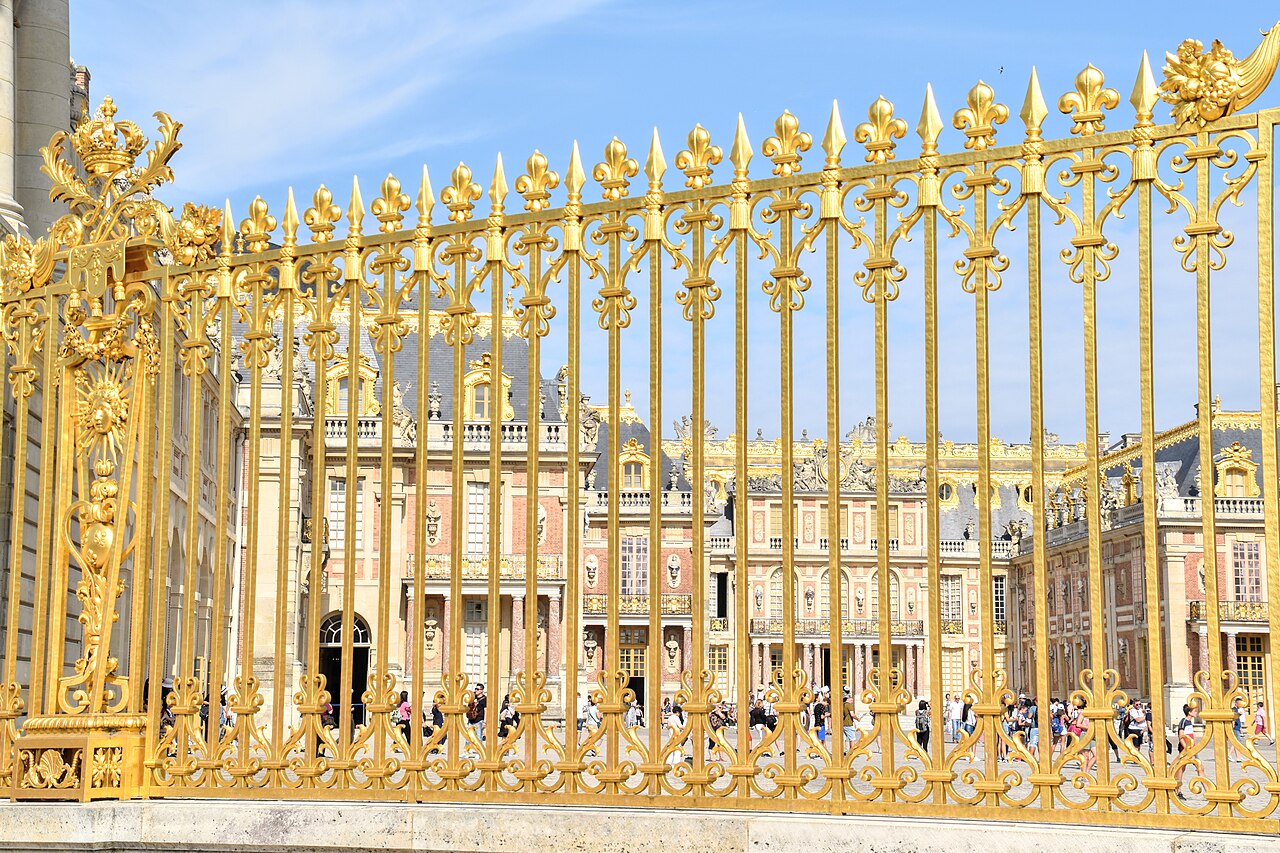
No palace in history embodies royal absolutism as completely as the Palace of Versailles — a monument to the ego of Louis XIV, the 'Sun King,' who transformed a modest hunting lodge into the most magnificent court in Europe and made it the nerve center of French political power for over a century. Louis began the transformation of Versailles in 1661, driven partly by envy of the sumptuous chateau of Vaux-le-Vicomte built by his finance minister Nicolas Fouquet (whom he promptly imprisoned). By 1682, Louis had moved the entire French court and government from Paris to Versailles — over 20,000 people, including 6,000 nobles kept deliberately idle with elaborate court rituals designed to prevent them from plotting against the king.
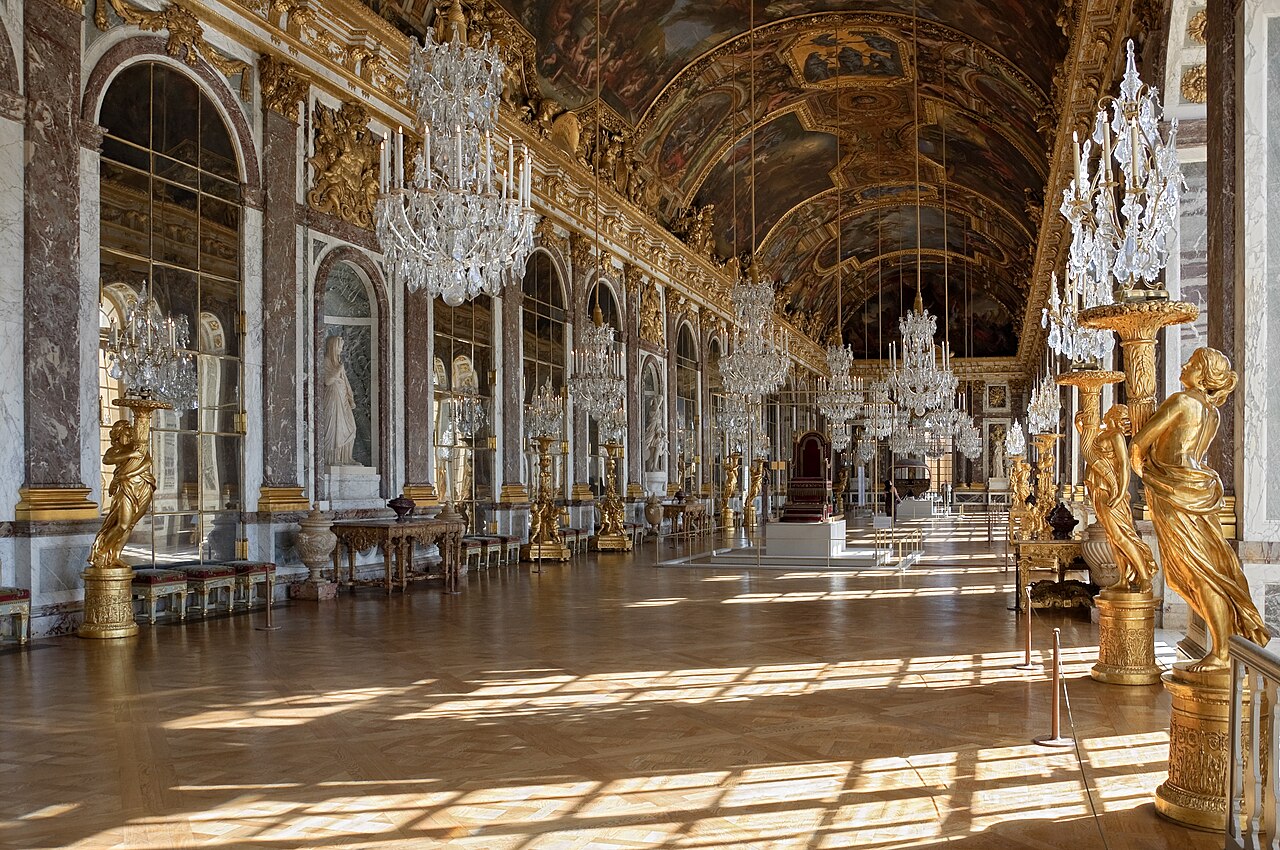
The palace's interiors culminate in the Hall of Mirrors, constructed between 1678 and 1684 by architect Jules Hardouin-Mansart and painter Charles Le Brun. The 73-meter gallery contains 357 mirrors facing 357 corresponding windows overlooking the gardens, creating an infinite reflection of light that made diplomatic receptions here the most dazzling in the world. The ceiling paintings by Le Brun celebrate Louis XIV's military victories in a complex allegorical program that presented the king as a divine being on earth. Foreign ambassadors received in this room were intended to be simultaneously awed and overwhelmed by France's magnificence.
The formal gardens of Versailles, designed by Andre Le Notre and covering 800 hectares, are a masterpiece of French geometric garden design — nature entirely subjugated to human will and royal order. Fountains, parterres, allees, and bosquets (wooded groves) extend for miles along a grand axis pointing toward the setting sun. The Grand Canal, 1.5 kilometers long, once hosted a small fleet of gondolas and warships for the court's amusement. Water for the spectacular fountains required an engineering project of staggering ambition: the Machine de Marly, a system of 14 giant waterwheels on the Seine, could raise 5,000 cubic meters of water daily to the palace reservoirs — yet still the fountains could not all run simultaneously.
Versailles remained the seat of French royal government until October 1789, when the Revolutionary crowd marched from Paris to force Louis XVI and Marie Antoinette back to the capital — an event that effectively ended the monarchy's control of events. The palace was subsequently stripped of its furnishings, which were auctioned off to pay revolutionary debts, and fell into disrepair. Napoleon later used it occasionally, and Louis-Philippe converted it into a historical museum in 1837, saving it from demolition by making it a monument to 'all the glories of France.'
The Palace of Versailles entered history one final time as a diplomatic stage when the Treaty of Versailles, formally ending World War I, was signed in the Hall of Mirrors on June 28, 1919 — the same room where Prussian chancellor Bismarck had proclaimed the German Empire in 1871 after defeating France in the Franco-Prussian War. The symmetry of the locations was deliberately humiliating for Germany. Today Versailles is a UNESCO World Heritage Site (1979) receiving nearly 10 million visitors annually, and its restoration program — still ongoing — aims to return the palace and gardens to their 18th-century magnificence.