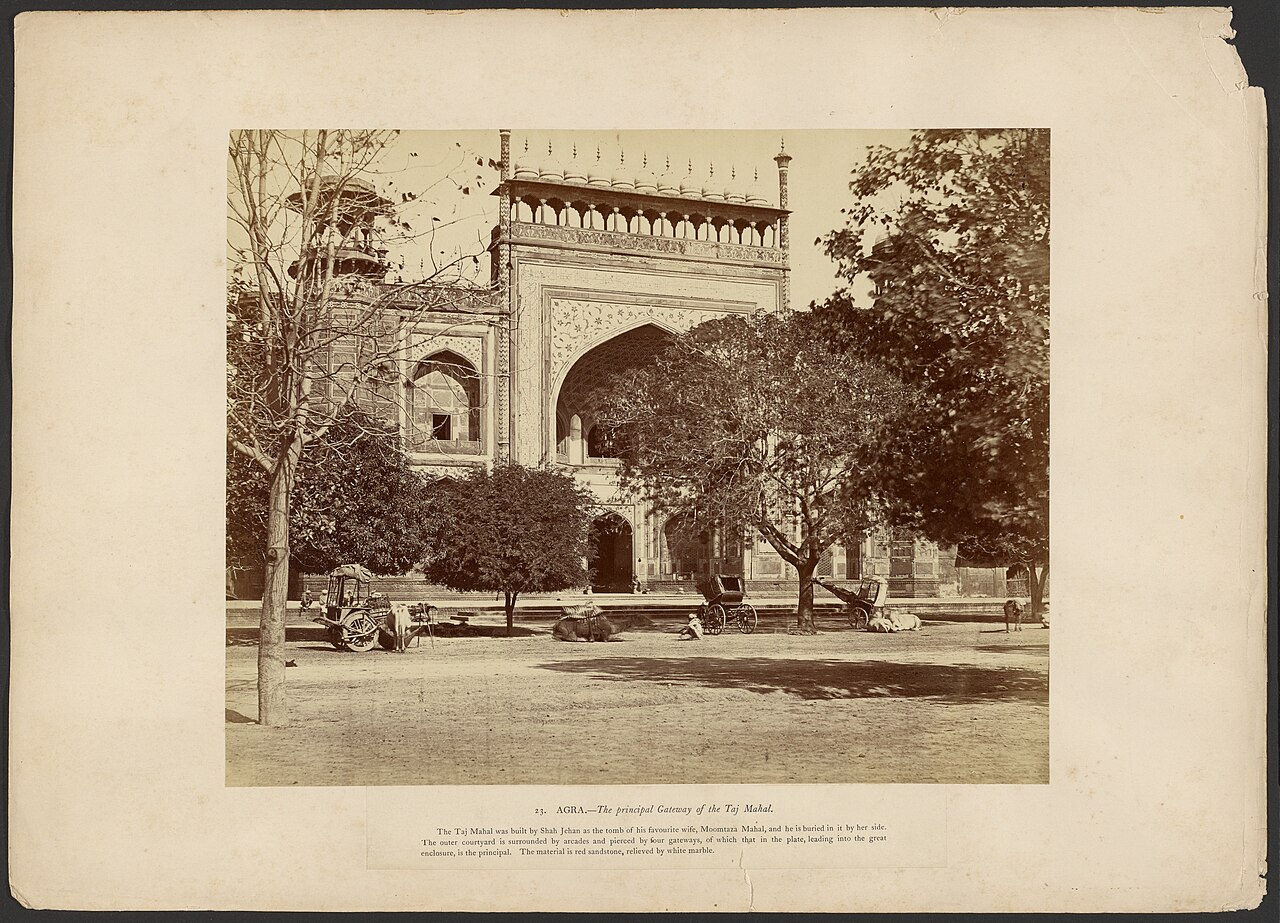
Of all the world's monuments to love, none surpasses the Taj Mahal in scale, beauty, or historical poignancy. Emperor Shah Jahan of the Mughal Empire commissioned this immaculate marble mausoleum in 1632 AD to honor his beloved wife Mumtaz Mahal, who died giving birth to their 14th child. The grief-stricken emperor reportedly turned white overnight at her death and wore mourning clothes for two years. Construction of the monument she would never see took 21 years, employed some 20,000 craftsmen and laborers drawn from across the empire and beyond, and consumed a vast fortune estimated at the equivalent of billions of modern dollars.
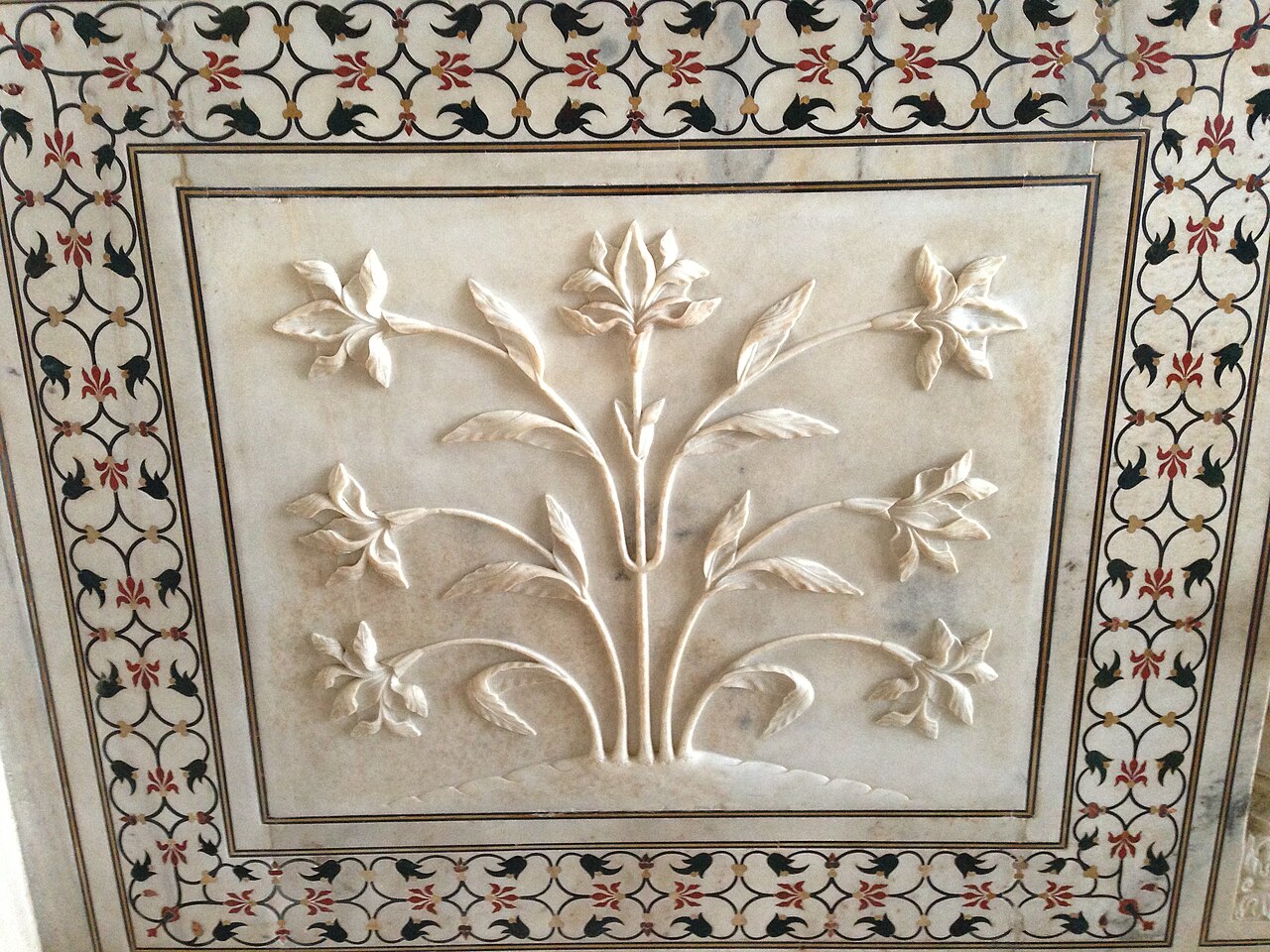
The Taj Mahal's architecture represents the supreme achievement of Mughal design — a synthesis of Persian, Islamic, and Indian building traditions that had been evolving since Babur founded the Mughal Empire in 1526. The main dome, rising 73 meters above the platform, is surrounded by four smaller domed chattris and flanked by four minarets that lean very slightly outward — so that if they ever fell, they would fall away from the tomb rather than onto it. The entire exterior is clad in white Makrana marble from Rajasthan, inlaid with intricate floral and geometric patterns using 28 different types of precious and semi-precious stones including lapis lazuli, turquoise, jade, carnelian, and onyx.
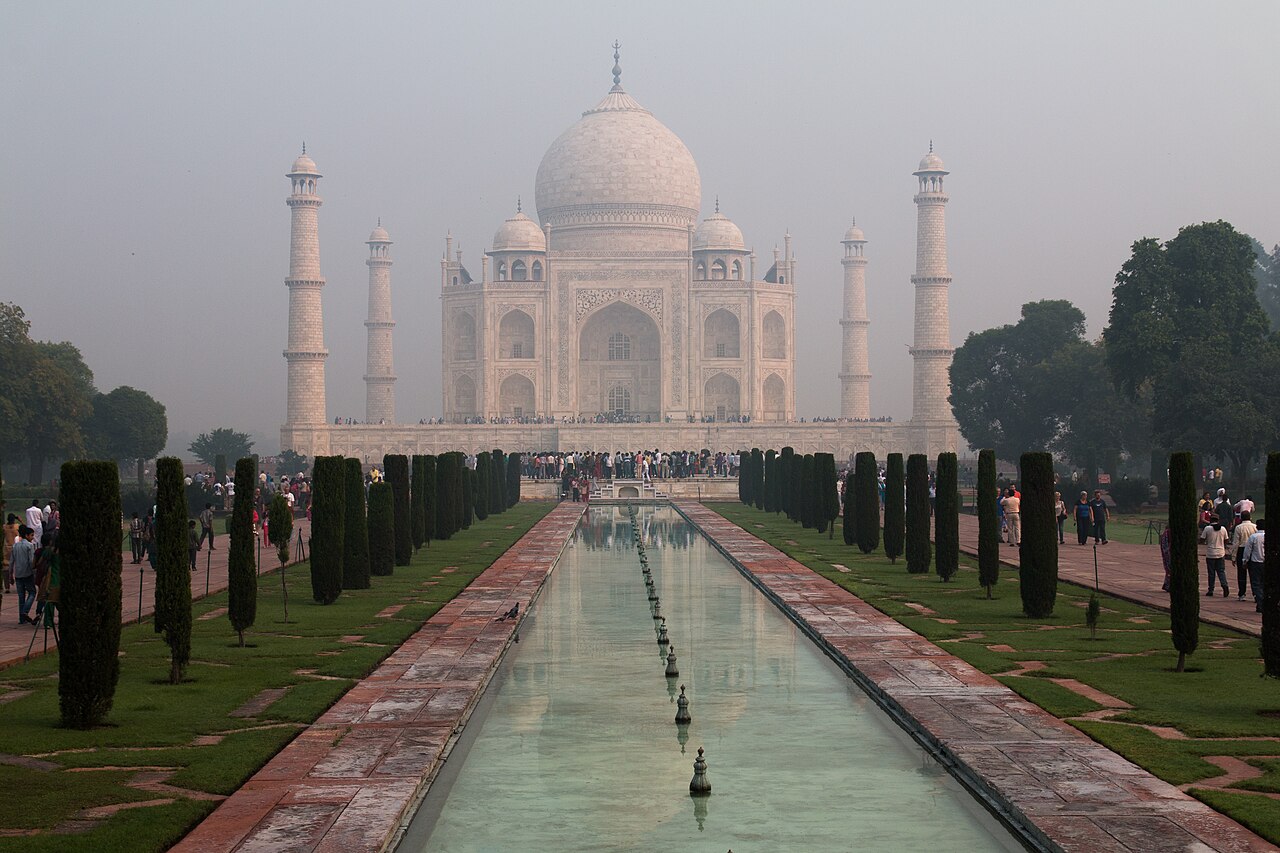
The complex is a masterwork of symmetry and optical illusion. The 300-meter reflecting pool along the central axis creates a perfect mirror image of the mausoleum. Quranic calligraphy panels around the entrance arch are designed with slightly increasing letter sizes toward the top so that when viewed from the ground, they appear uniform in size — a refinement of the principle known in Western architecture as entasis. The gardens, divided into four quadrants by water channels representing the four rivers of paradise, follow the Persian Chahar Bagh layout that the Mughals brought from Central Asia.
Shah Jahan intended to build a black marble mausoleum for himself across the Yamuna River, connected to the Taj by a bridge — a plan that exists only in a drawing by the French traveler Francois Bernier who visited the site. In 1658 his son Aurangzeb deposed him, and the aging emperor spent the last eight years of his life imprisoned in the Red Fort at Agra, able to see the Taj Mahal only from a small window. Upon his death in 1666, he was buried beside Mumtaz in the Taj's underground chamber — the only deliberate asymmetry in the otherwise perfectly symmetrical monument.
The Taj Mahal was designated a UNESCO World Heritage Site in 1983 and was voted one of the New Seven Wonders of the World in 2007. It draws approximately seven million visitors annually, making it India's most visited tourist attraction. Pollution from nearby industries discolored the marble for decades, leading to the Supreme Court of India mandating factory closures and traffic restrictions around the site. Conservation teams apply 'mud packs' of Fuller's earth to draw out embedded pollutants from the marble — a treatment that must be periodically repeated to preserve the Taj's legendary luminous whiteness.