
Snaking across mountains, deserts, and plains for thousands of miles, the Great Wall of China is the most ambitious construction project in human history — a series of fortifications, watchtowers, and garrisons built over nearly two millennia by successive Chinese dynasties to defend against nomadic incursions from the north. The earliest walls date to the 7th century BC, but it was the first Qin Emperor, Qin Shi Huang, who connected and extended existing walls into a unified defensive system after unifying China in 221 BC, mobilizing hundreds of thousands of soldiers, peasants, and prisoners in a project of extraordinary human cost. So many laborers died during construction that the wall was called 'the longest cemetery on Earth.'
The Han Dynasty (206 BC-220 AD) extended the wall dramatically westward into Central Asia to protect the emerging Silk Road trade routes, pushing construction deep into the Gobi Desert. Later dynasties added, abandoned, and rebuilt sections as the threat from nomadic peoples waxed and waned. The wall as most visitors see it today — built of fired brick with crenellated battlements and evenly spaced watchtowers — is primarily the work of the Ming Dynasty (1368-1644 AD), which undertook the most systematic and durable construction campaign. The Ming wall stretches approximately 8,850 kilometers and represents a century of sustained imperial effort.

The wall's total length, counting all periods and branches, exceeds 21,000 kilometers (approximately 13,000 miles) according to a comprehensive 2012 Chinese government survey. It runs from Shanhaiguan Pass on the Bohai Sea in the east to Jiayuguan Fort in the Gansu Desert in the west. Every 100 to 200 meters stood a watchtower where soldiers could signal danger using smoke by day and fire by night, relaying warnings across the entire length of the wall with remarkable speed. Beacon towers beyond the wall itself extended this communication network deep into enemy territory.
The wall's military effectiveness is a matter of ongoing historical debate. While it never prevented all incursions — Genghis Khan's Mongols circumvented or breached it multiple times, ultimately conquering China in 1271 AD — it did serve crucial functions as a customs barrier controlling trade and immigration, a logistical highway for moving troops and supplies along the frontier, and a psychological statement of imperial power. The Ming wall in particular channeled nomadic movements to specific passes where concentrated garrisons could mount effective resistance.
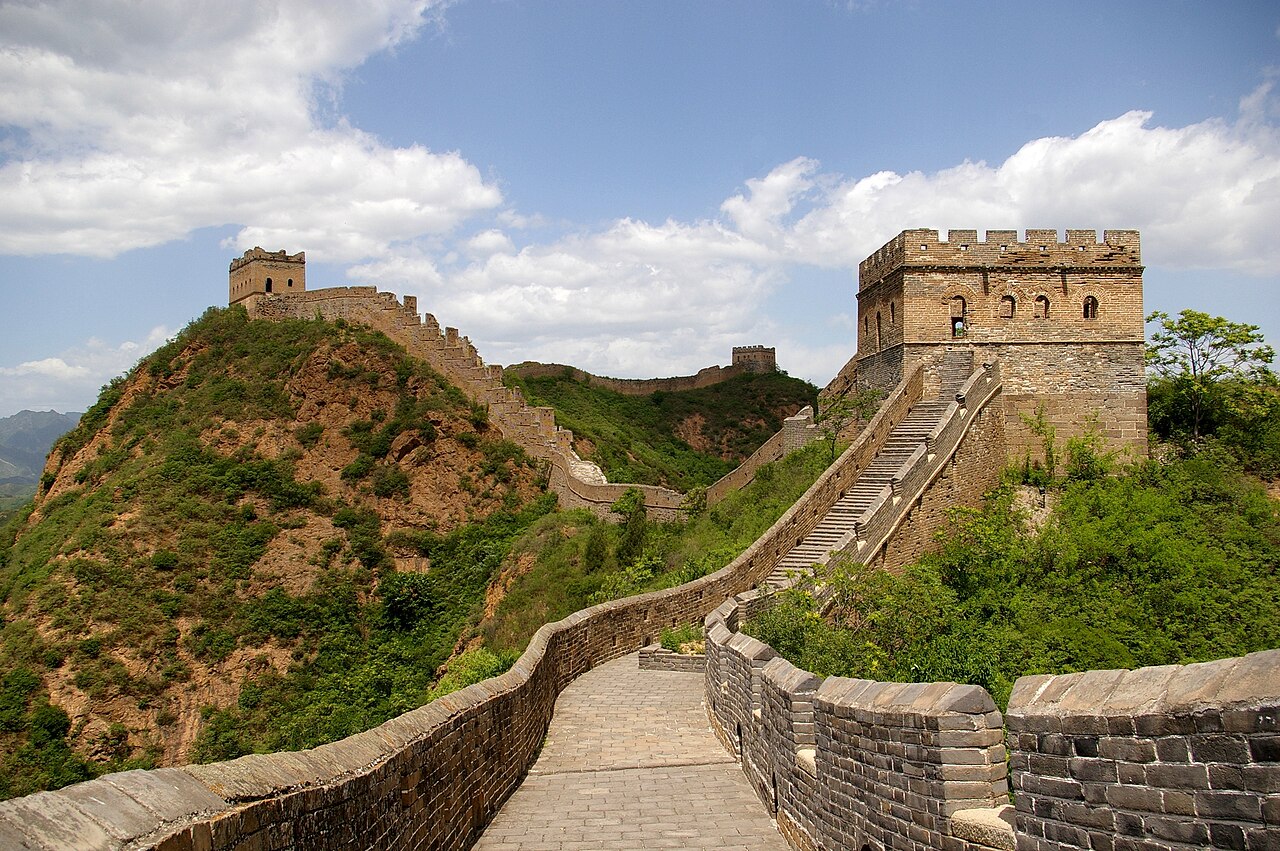
Today the Great Wall is China's most recognizable cultural symbol and its most visited tourist destination, drawing tens of millions of visitors annually. The most heavily visited sections near Beijing — including Badaling, Mutianyu, and Simatai — have been carefully restored, while vast stretches in remote areas crumble back into the landscape. Designated a UNESCO World Heritage Site in 1987, the wall faces ongoing threats from erosion, tourism pressure, and local development. The widely repeated claim that the wall is visible from space with the naked eye has been definitively debunked by astronauts, but its place as humanity's greatest earthwork remains beyond dispute.