Once the second-largest city in the Roman Empire with a population approaching 250,000 people, Ephesus was for centuries the preeminent metropolis of the ancient Greek and Roman world in Asia Minor. Founded as a Greek colony in the 10th century BC, the city grew wealthy on its position at the terminus of major Anatolian trade routes and its sacred association with the goddess Artemis, whose temple was considered one of the Seven Wonders of the Ancient World. The city changed hands repeatedly — Lydian, Persian, Greek, and finally Roman rule each left their mark on its architecture and culture — but reached its apex under Roman administration in the 1st and 2nd centuries CE when it served as the capital of the Roman province of Asia.
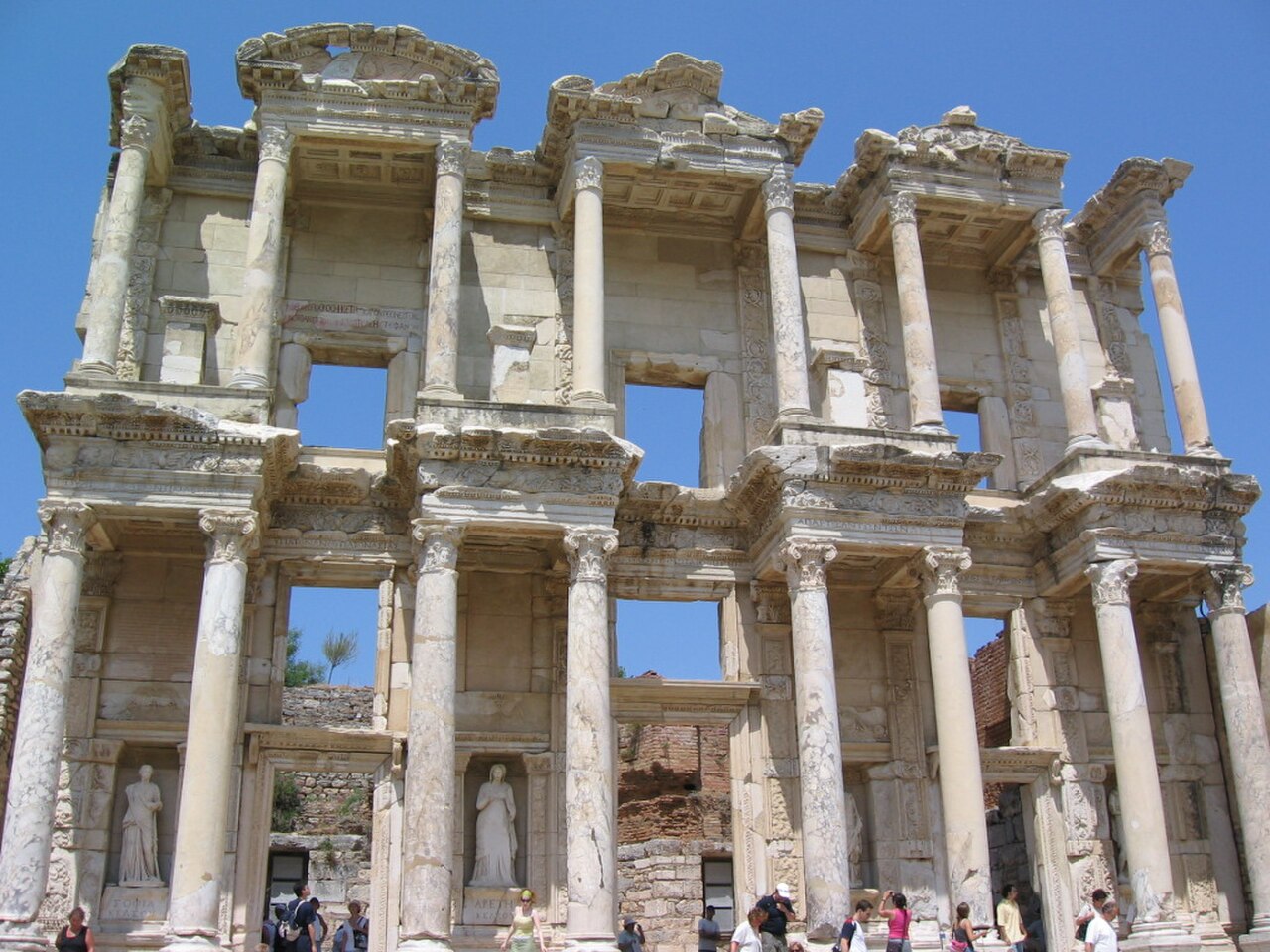
The Library of Celsus, completed in 135 AD and now the most photographed structure at Ephesus, was built as a mausoleum and library by the consul Gaius Julius Aquila in honor of his father Tiberius Julius Celsus Polemaeanus, who had served as governor of the province of Asia. Its two-story facade with columns, niches, and four allegorical statues (Wisdom, Knowledge, Intelligence, and Virtue) was a tour de force of Roman architectural showmanship, and the library within held approximately 12,000 scrolls, making it the third-largest library in the ancient world after Alexandria and Pergamon.
Ephesus was deeply intertwined with early Christianity. The apostle Paul spent approximately three years in the city around 52-55 AD, establishing a Christian community and writing his First Letter to the Corinthians there. According to tradition, the apostle John brought Mary, the mother of Jesus, to Ephesus after the Crucifixion, and a small house on a hill outside the city — the 'House of the Virgin Mary' (Meryem Ana Evi) — has been a pilgrimage site since at least the 4th century. The Book of Revelation was addressed partly to the Christian community at Ephesus, and the city later hosted the Third Ecumenical Council in 431 AD.
The Temple of Artemis at Ephesus, the structure that put the city on the ancient world's equivalent of every 'must-see' list, was in fact destroyed and rebuilt four times. The most famous version — the one listed as a Wonder — was built around 550 BC with Lydian king Croesus as a major patron and measured 55 by 115 meters, larger than the Parthenon. It was deliberately burned in 356 BC by a man named Herostratus who wanted immortal fame, rebuilt even more splendidly, and finally destroyed for the last time by Gothic raiders in 262 AD. Today a single reconstructed column marks its site in a marshy field.
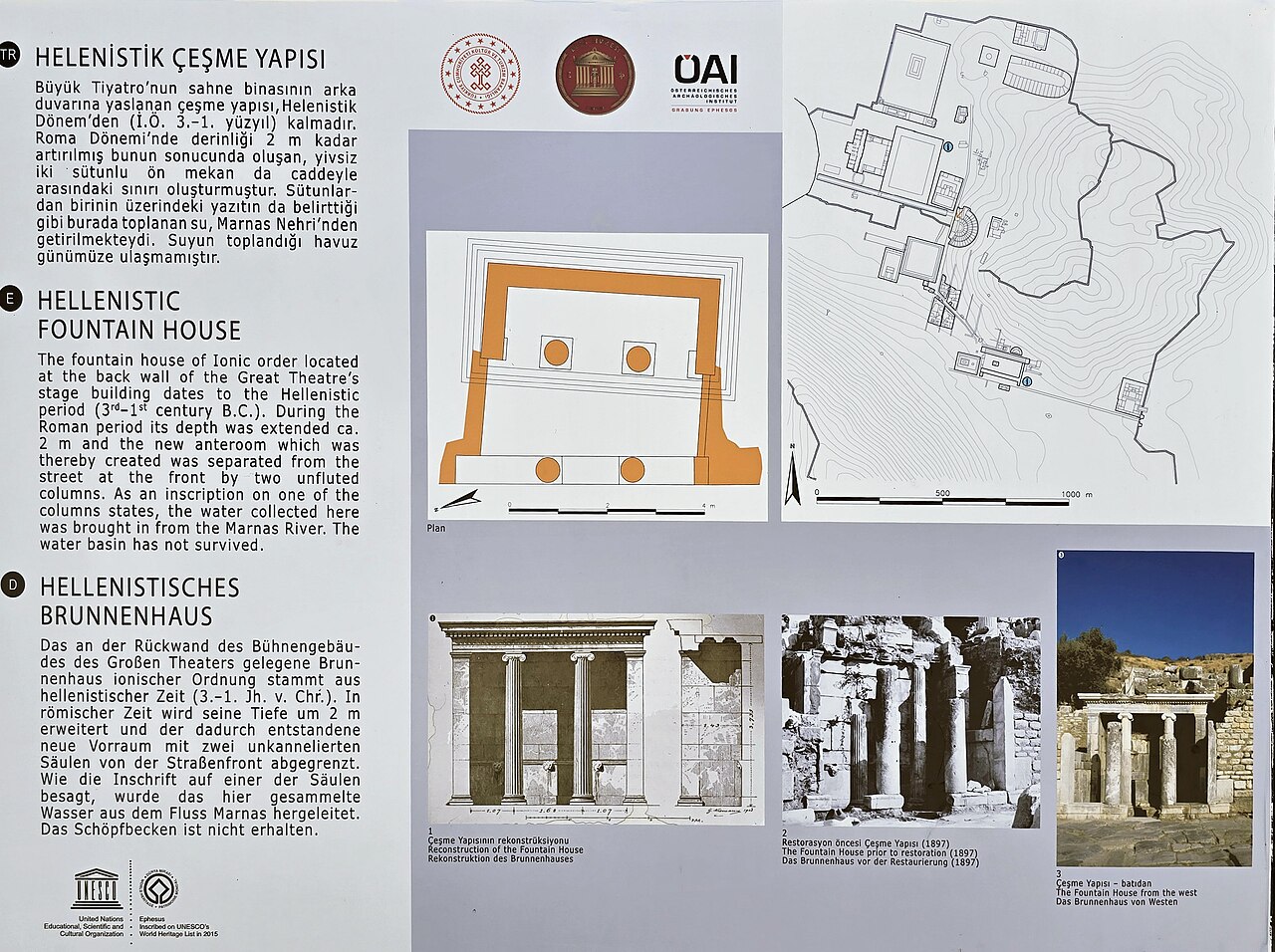
Ephesus declined after the Goths' destruction of the Temple and continued silting of the Cayster River that gradually moved the harbor away from the city. By the 7th century AD, the reduced population had shifted away from the once-magnificent civic center, and the city was largely abandoned after Arab raids made it indefensible. Turkish excavations, ongoing since the 19th century, have uncovered the magnificent Curetes Street, grand baths, the Great Theater seating 25,000 spectators, and the extraordinary Terrace Houses where wealthy Roman citizens lived in multiroom apartments decorated with floor-to-ceiling mosaics and frescoes of remarkable quality. Ephesus was designated a UNESCO World Heritage Site in 2015.