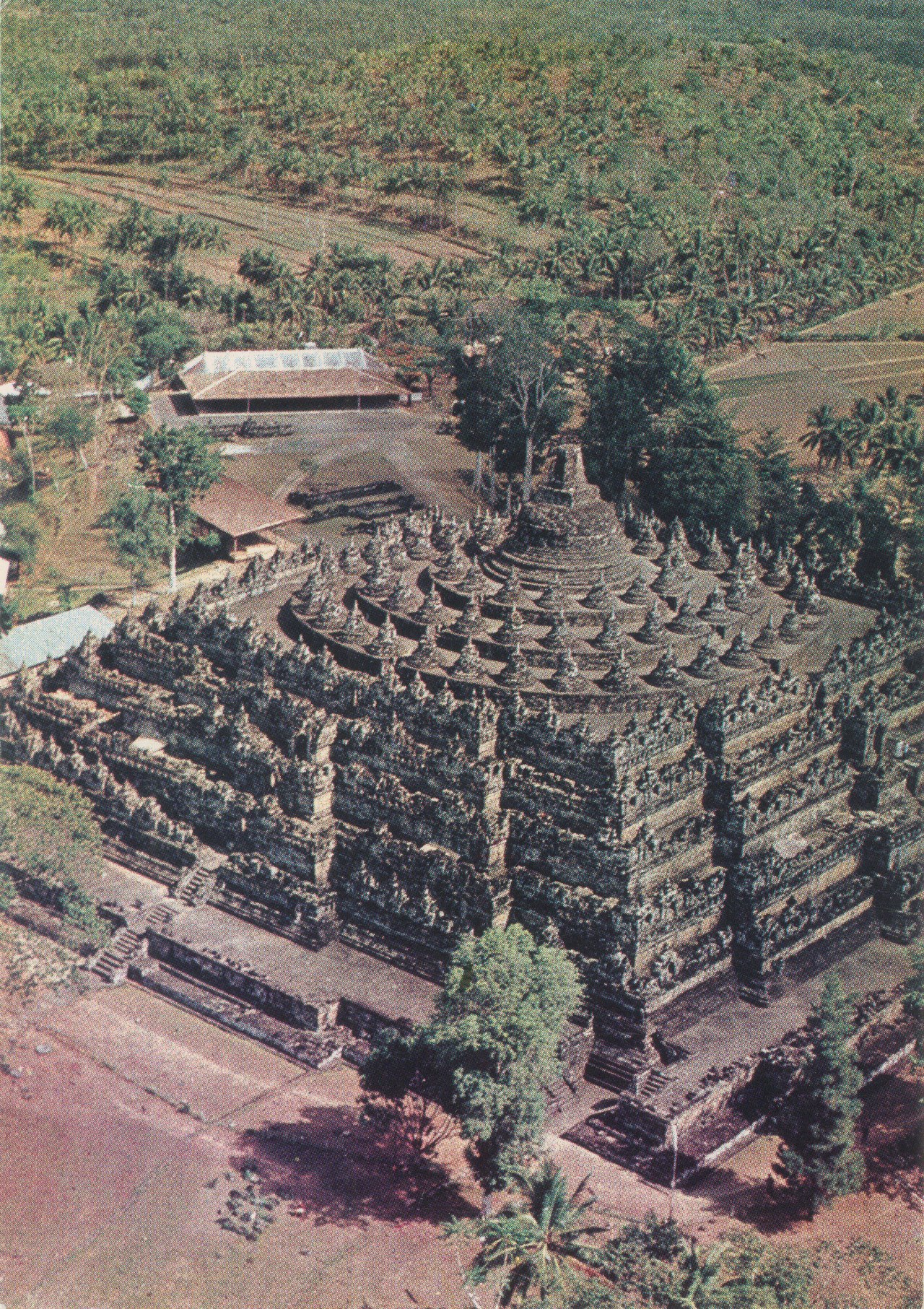
Hidden for centuries beneath volcanic ash and encroaching jungle on the island of Java in Indonesia, Borobudur is the largest Buddhist temple in the world and one of the greatest religious monuments ever created by human hands. Built between approximately 780 and 840 AD under the Sailendra dynasty, the temple took an estimated 75 years and some two million blocks of volcanic andesite stone to complete — a monumental undertaking that required extraordinary organizational capacity and engineering expertise from the Javanese kingdom. The monument was designed as a giant three-dimensional mandala, a sacred diagram of the Buddhist cosmos that pilgrims navigate physically on their journey toward enlightenment.
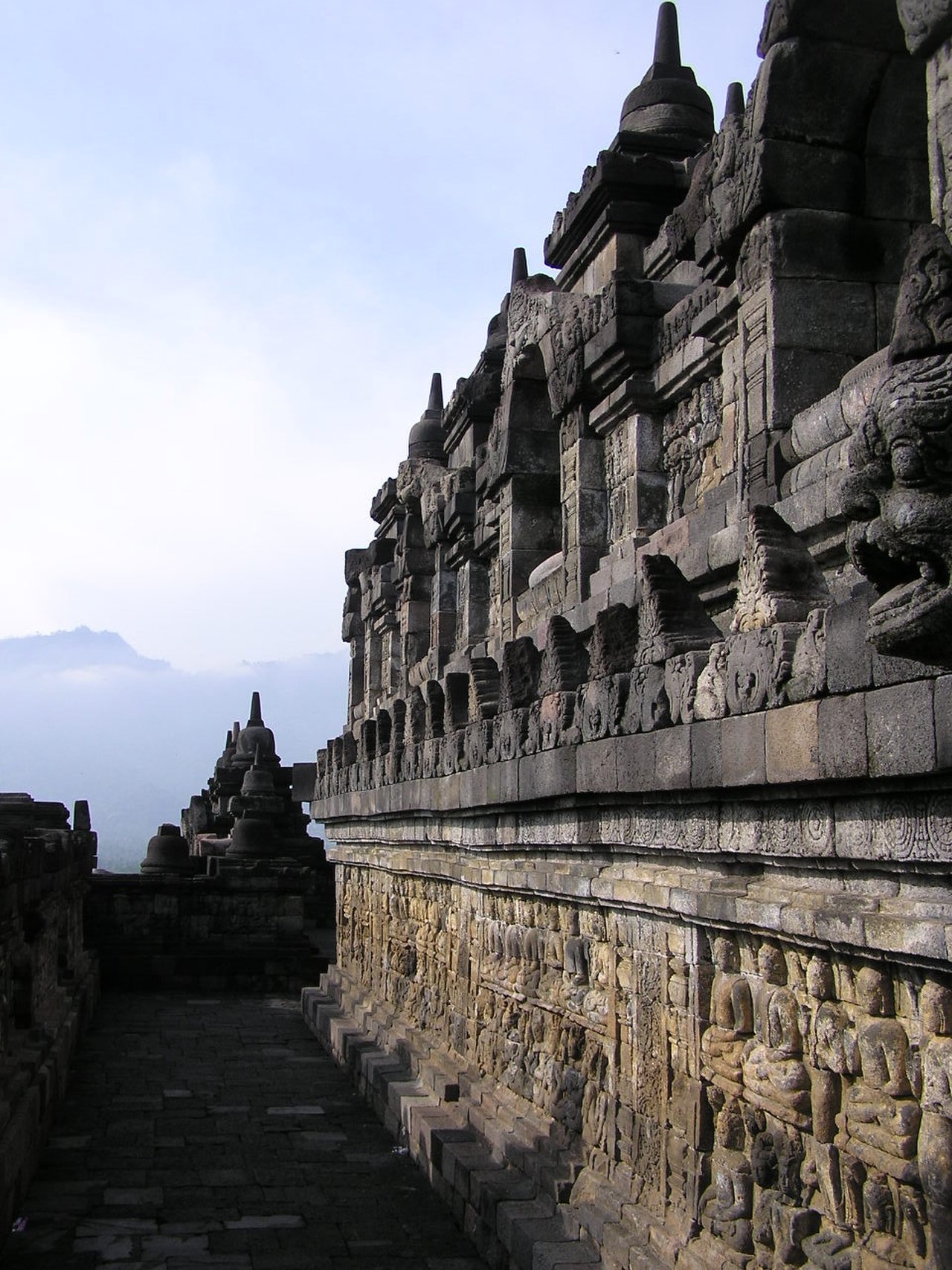
The structure rises in nine stacked platforms — six rectangular terraces topped by three circular ones — and measures 118 meters on each side at its base. Pilgrims ascending the monument follow a prescribed clockwise path on each level, contemplating 2,672 relief panels that together constitute the most extensive narrative Buddhist relief in the world, illustrating the Jataka tales (stories of the Buddha's previous lives), scenes from everyday Javanese life, and the aspirational spiritual realm of the bodhisattvas. The total length of narrative panels, if laid end to end, would stretch for approximately 5 kilometers.
The three circular terraces at the summit represent the Arupadhatu — the formless realm of pure consciousness, beyond the material world depicted on the lower levels. Seventy-two stupas arranged in concentric circles each enclose a Buddha statue in meditation, visible through the latticed stone of the stupa wall like a presence half-seen through a veil. The enormous central stupa at the summit, 9 meters in diameter, is empty — representing the emptiness of nirvana, the state of liberation beyond all form and desire. The symbolic journey from earth to enlightenment is literally walked by the pilgrim who ascends from the earthly realm at the base to the formless summit.
Borobudur was gradually abandoned around the 10th century AD — possibly following the eruption of nearby Mount Merapi, possibly due to the shift of the Javanese political center to East Java, or possibly as the result of a conversion to Islam that made the great Buddhist monument irrelevant. Covered by vegetation and volcanic ash, it was unknown to the wider world until the British colonial lieutenant-governor Thomas Stamford Raffles learned of its existence and sent Dutch engineer Herman Cornelius to clear and map it in 1814. The temple had not entirely been forgotten by local people, who had venerated the site with superstitious awe for centuries.
In 1973, UNESCO and the Indonesian government undertook a massive ten-year restoration project, the largest ever attempted, which dismantled the monument stone by stone, treated each piece for chemical corrosion, installed a drainage system, and reassembled the whole. The restored Borobudur was designated a UNESCO World Heritage Site in 1991. The 2006 Yogyakarta earthquake and the 2010 eruption of Mount Merapi both caused damage that required further restoration. Today approximately 3.5 million visitors come annually, making Borobudur not only the world's largest Buddhist temple but also Indonesia's most visited tourist attraction.