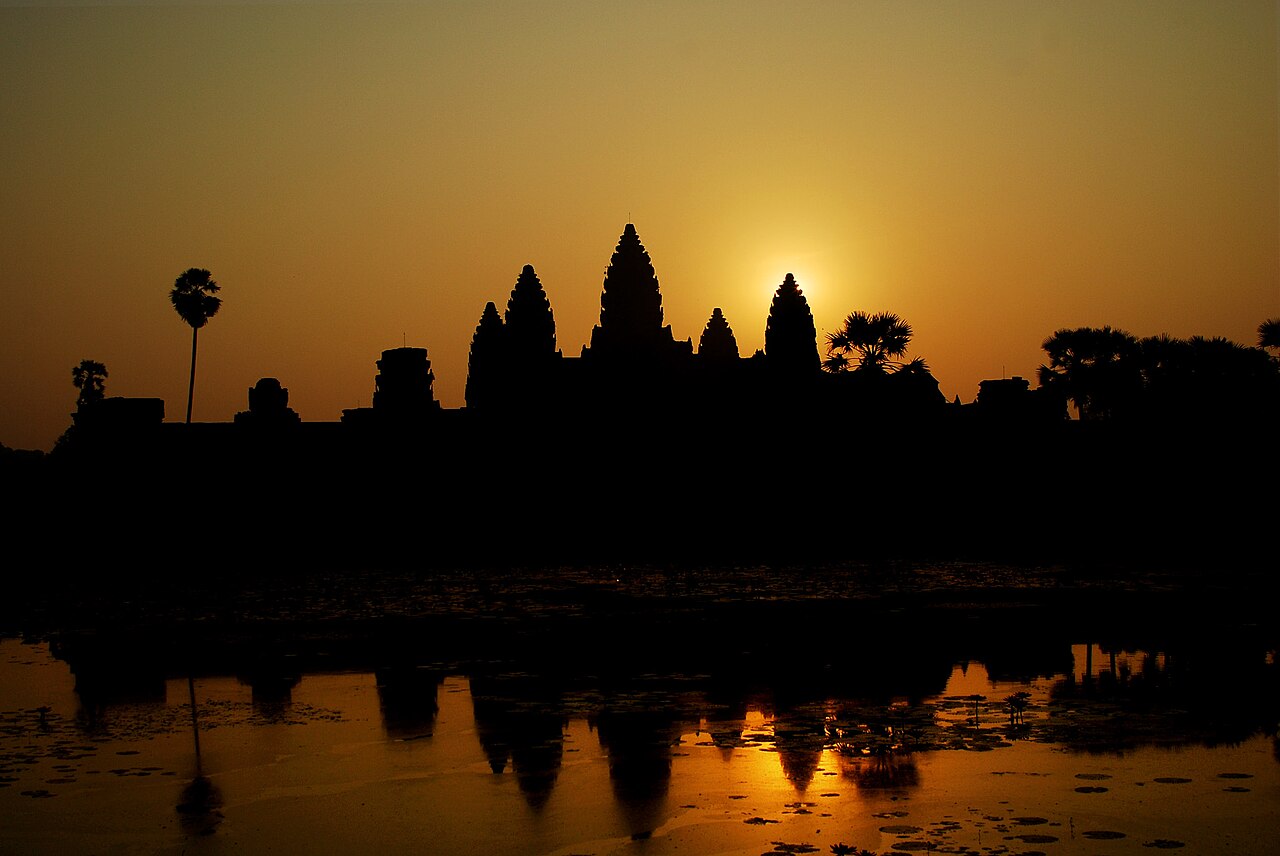
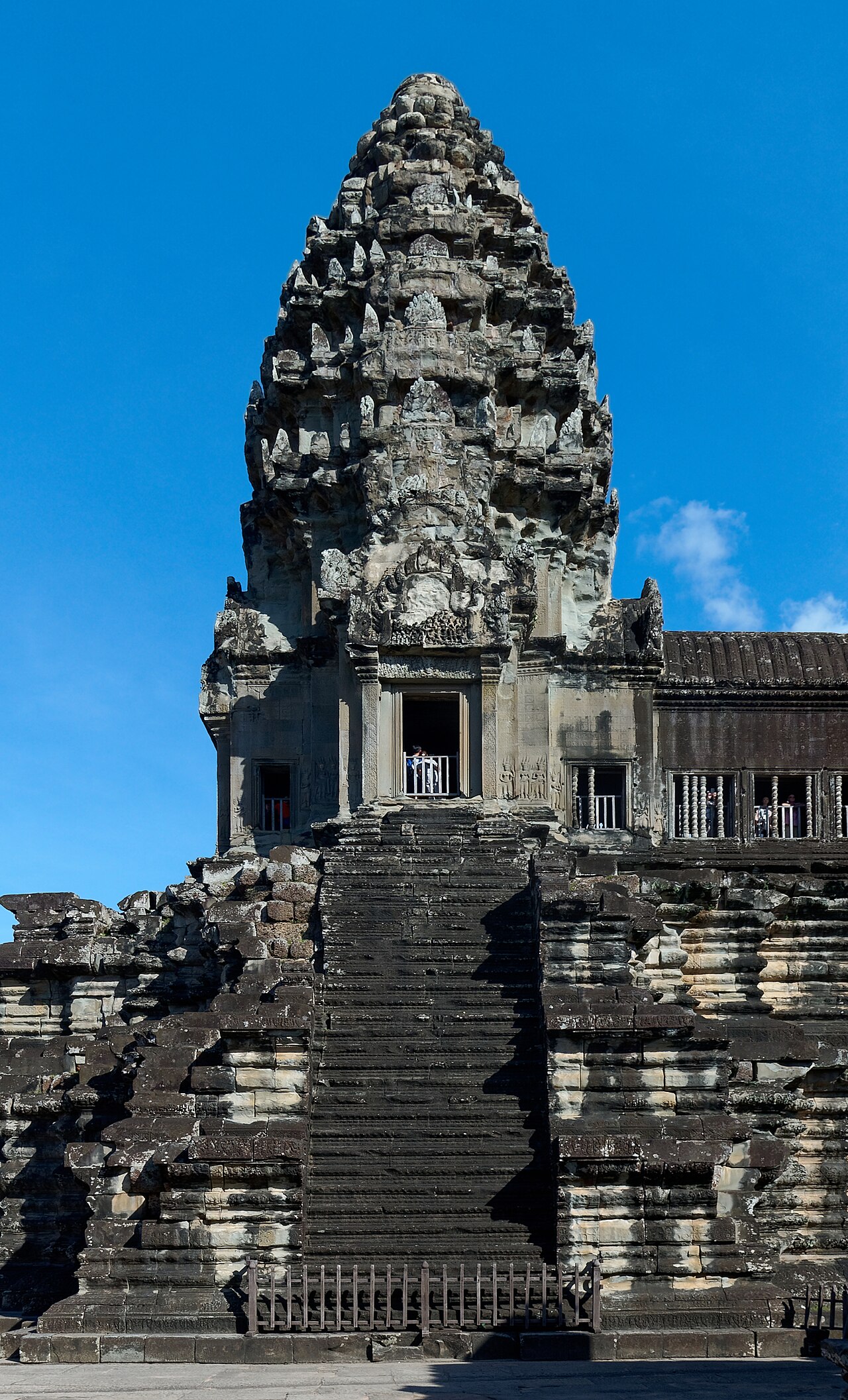
Rising above the jungle of northwestern Cambodia, Angkor Wat stands as the largest religious monument ever constructed — a stone testament to the ambition and spiritual devotion of the Khmer Empire at its zenith. Built between approximately 1120 and 1150 AD under the reign of King Suryavarman II, the temple complex stretches across more than 400 acres and is surrounded by a moat nearly two miles in circumference. Its five towers, representing the five peaks of Mount Meru — the mythological home of the Hindu gods — can be seen reflected in the moat's still waters at dawn, creating one of the world's most iconic silhouettes.
The temple was originally dedicated to the Hindu god Vishnu, a departure from the Shaivite tradition of earlier Khmer rulers. Every surface of Angkor Wat is alive with bas-relief carvings: nearly half a mile of continuous narrative friezes depict scenes from Hindu epics including the Ramayana and Mahabharata, as well as the famous 'Churning of the Sea of Milk' — a cosmic creation myth carved in extraordinary detail. The southern gallery contains a portrait thought to be Suryavarman II himself, seated in royal splendor and receiving homage from his court.
By the late 13th century, Angkor Wat had undergone a profound transformation: it became a Buddhist temple, a transition that mirrored the broader shift of the Khmer Empire from Hinduism to Theravada Buddhism. Monks continued to inhabit and maintain the complex even as the empire declined and the capital shifted southward toward Phnom Penh around 1431 AD. This continuous religious occupation — spanning nearly nine centuries — means Angkor Wat holds the distinction of being the world's oldest continually used religious monument of its scale.
European awareness of Angkor Wat grew dramatically after French naturalist Henri Mouhot published accounts of his 1860 visit, though Portuguese missionaries had recorded the site as early as the 16th century and it had never truly been 'lost' to the local population. French colonial scholars undertook systematic archaeological study beginning in the 1860s, and the complex was painstakingly restored through the 20th century. The Cambodian Civil War and Khmer Rouge era caused significant damage to the surrounding region, but Angkor Wat itself survived largely intact and was inscribed as a UNESCO World Heritage Site in 1992.
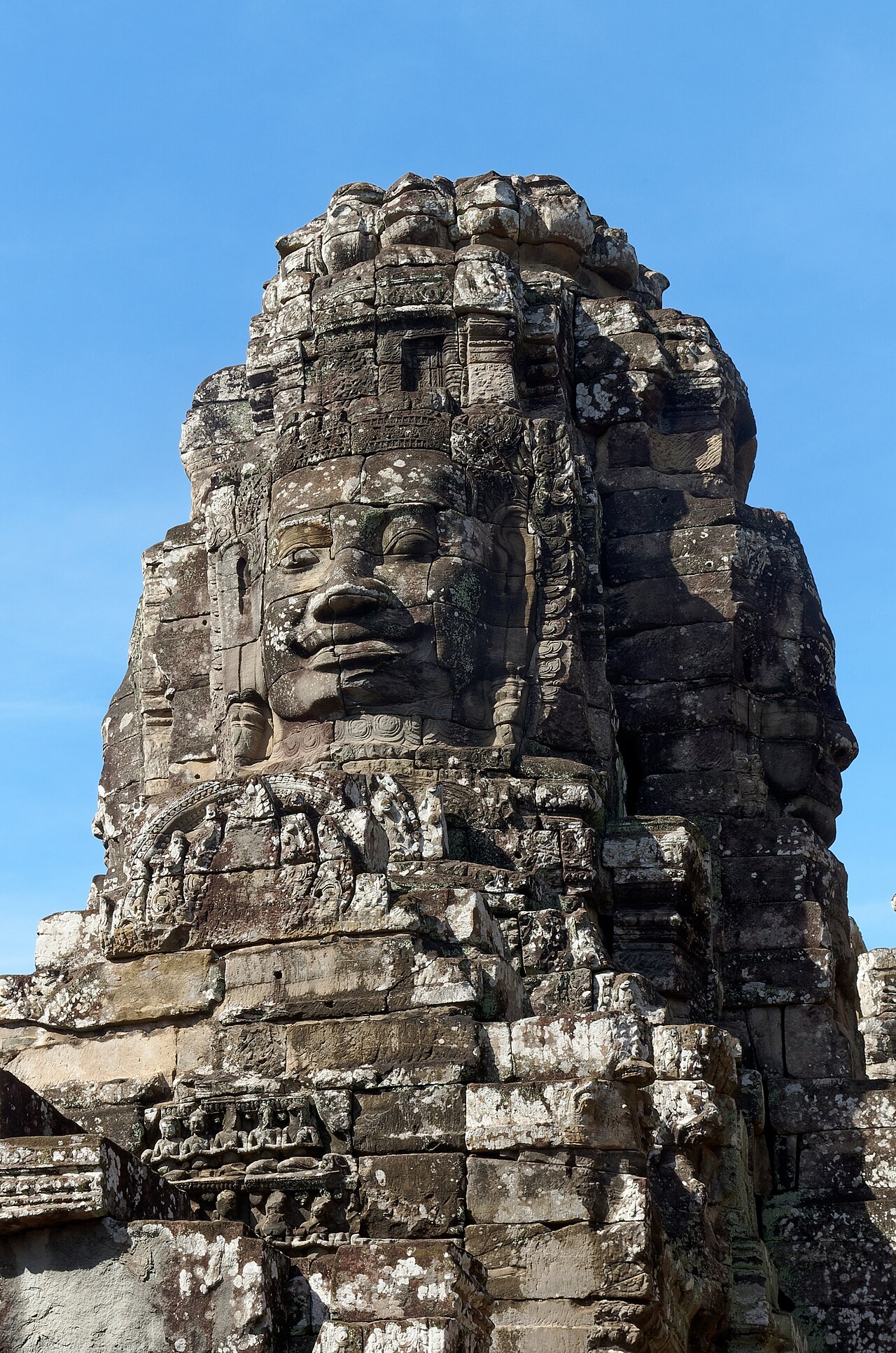
Today Angkor Wat draws more than two million visitors annually, making it Cambodia's most important tourist destination and a powerful symbol of national identity — its silhouette has appeared on the Cambodian flag since 1863. Ongoing conservation efforts address threats from groundwater extraction, mass tourism, and vegetation encroachment, while archaeologists using LiDAR technology have revealed an extensive urban network surrounding the temple, suggesting that Angkor was home to a population of perhaps one million people at its peak — making it the largest pre-industrial city in the world.