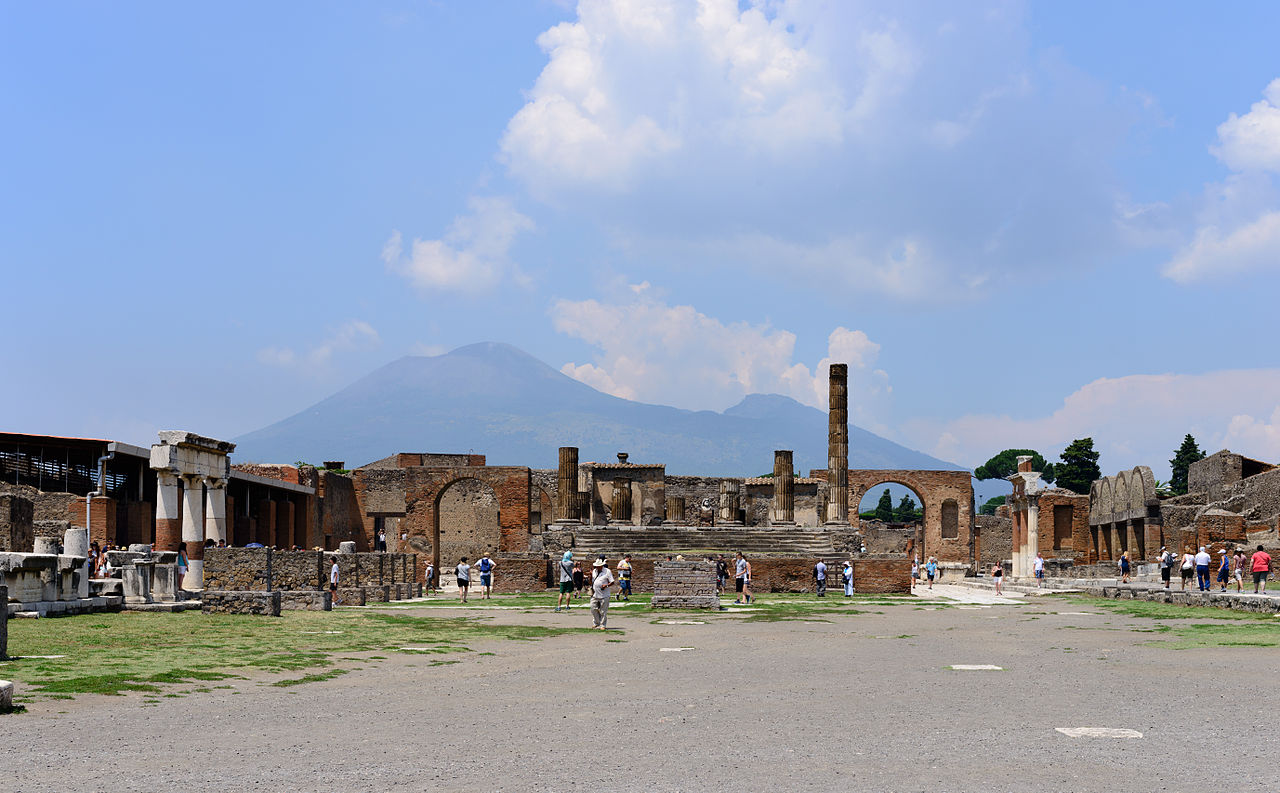
On the morning of August 24, 79 AD, the residents of Pompeii were going about their daily business — shopping in the forum, eating at snack bars (thermopolia), bathing in the public baths, watching gladiators practice — when Mount Vesuvius began its catastrophic eruption. Within 18 hours the prosperous Roman city of approximately 11,000 residents had been buried under 4-6 meters of volcanic ash and pumice, preserving it in near-perfect condition for nearly 1,700 years. Approximately 2,000 people who failed to flee were asphyxiated by a superheated surge of volcanic gas and ash — their bodies creating voids in the hardened pumice that archaeologists later filled with plaster to produce haunting three-dimensional casts.
The city had been warned: a devastating earthquake in 62 AD had caused widespread damage and should have signaled geological instability, and in the days before the eruption water sources mysteriously dried up and tremors shook the ground. Pliny the Younger, then 17 years old and staying at Misenum across the Bay of Naples, witnessed the eruption and later wrote two letters to Tacitus that remain the only contemporary eyewitness account of the disaster — an account so precise that geologists now call this eruption type a 'Plinian eruption.' His uncle, Pliny the Elder and commander of the Roman fleet, sailed toward Pompeii to rescue survivors and died in the attempt.

Systematic excavation of Pompeii began in 1748 under the sponsorship of King Charles III of Naples and has continued to the present day, with approximately two-thirds of the city now uncovered. What archaeologists found was astonishing in its completeness: bakeries with loaves still in the ovens, political graffiti endorsing candidates for local office, rude jokes scratched on walls, prices listed in taverns, a legal brothel with erotic frescoes and a price list, and the preserved remains of a dog chained to a post. More than 11,000 inscriptions have been recorded, making Pompeii the single richest source of information about ordinary daily life in the Roman world.
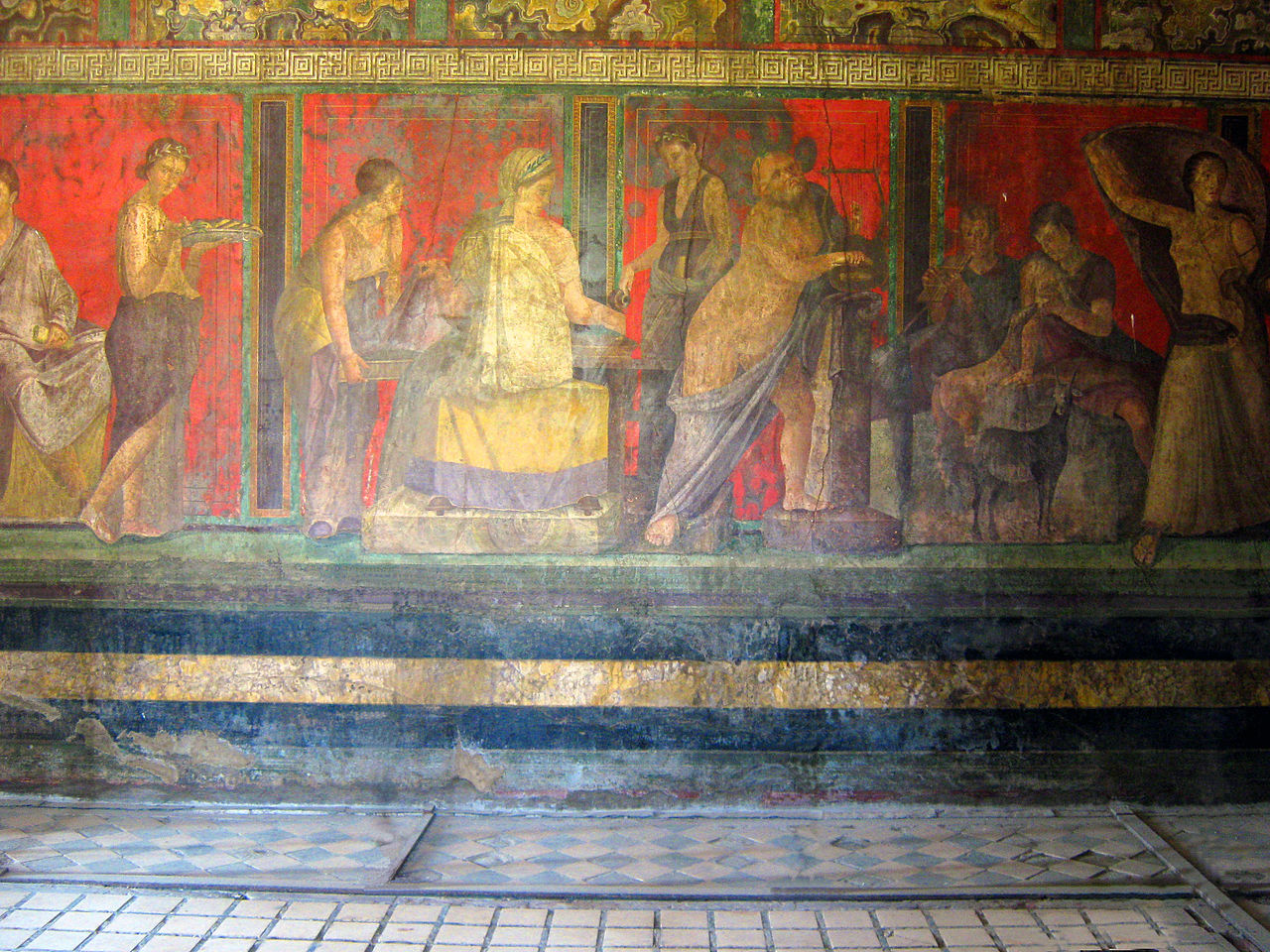
The frescoes of Pompeii represent an irreplaceable record of Roman painting, a medium that otherwise almost entirely failed to survive antiquity. The Villa of the Mysteries contains a celebrated cycle of large-scale paintings depicting what appears to be a Dionysiac initiation ritual, painted in a distinctive deep 'Pompeii red' pigment derived from mercury sulfide. Other villas preserve mythological scenes, garden landscapes, still lifes, and portraits of remarkable sophistication that demonstrate the high artistic standards of Roman decorative painting in the 1st century AD.
Pompeii today faces a paradoxical threat: the very tourism it attracts endangers it. The 'Great Pompeii Project,' a major EU-funded conservation initiative begun in 2012, has stabilized dozens of structures that were on the verge of collapse and opened new areas of the site to visitors. Ongoing excavations continue to yield remarkable discoveries — as recently as 2019-2023, archaeologists uncovered a ceremonial chariot, a snack bar with vivid food mosaics, and the remains of two victims caught in the eruption. Pompeii remains a living archaeological laboratory where the Roman world of two thousand years ago can be touched, seen, and understood with extraordinary intimacy.