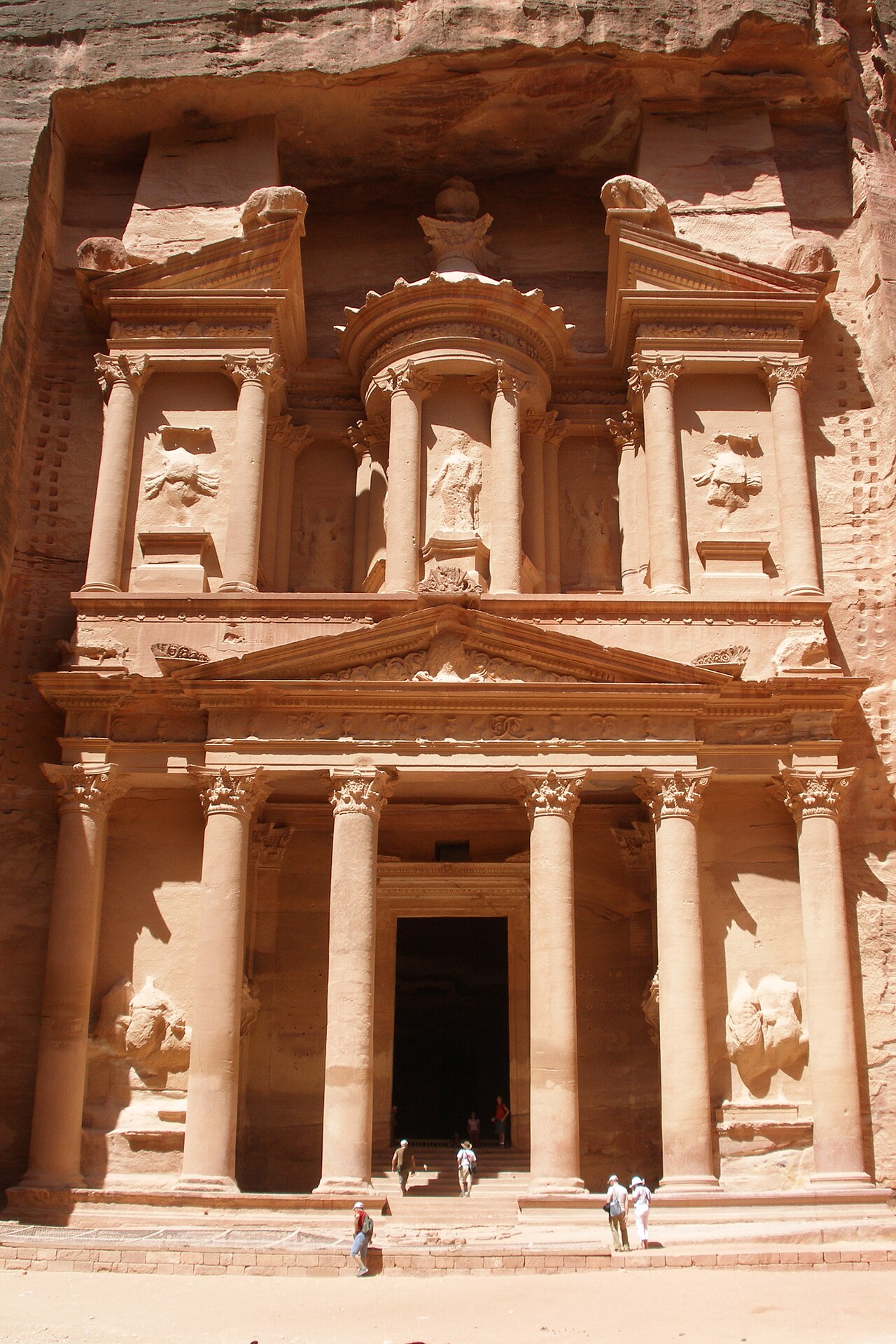
Carved directly into rose-red sandstone cliffs in the heart of the Jordanian desert, Petra was the magnificent capital of the Nabataean kingdom — an ancient Arab civilization that mastered the art of desert survival and grew fabulously wealthy controlling the trade routes linking Arabia, Egypt, and the Mediterranean world. Founded as early as the 4th century BC, Petra flourished for centuries as a crossroads of commerce, with caravans laden with frankincense, myrrh, spices, and silk passing through its narrow canyon entrance known as the Siq. At its height the city may have supported a population of 30,000 people, making it one of the ancient world's most prosperous urban centers.
The city's most celebrated monument, Al-Khazneh — meaning 'The Treasury' — greets visitors as they emerge from the Siq, its Hellenistic facade soaring 40 meters high and carved with extraordinary precision from a single cliff face. Local legend held that an Egyptian pharaoh hid his treasure inside the urn atop the structure — hence the name and the bullet holes that pockmark it from hopeful Bedouin sharpshooters. In reality, Al-Khazneh was almost certainly a royal tomb, possibly for the Nabataean king Aretas IV who ruled from 9 BC to 40 AD. The blend of Nabataean, Hellenistic, and Egyptian architectural motifs in its facade reflects Petra's role as a true cosmopolitan crossroads of ancient civilization.
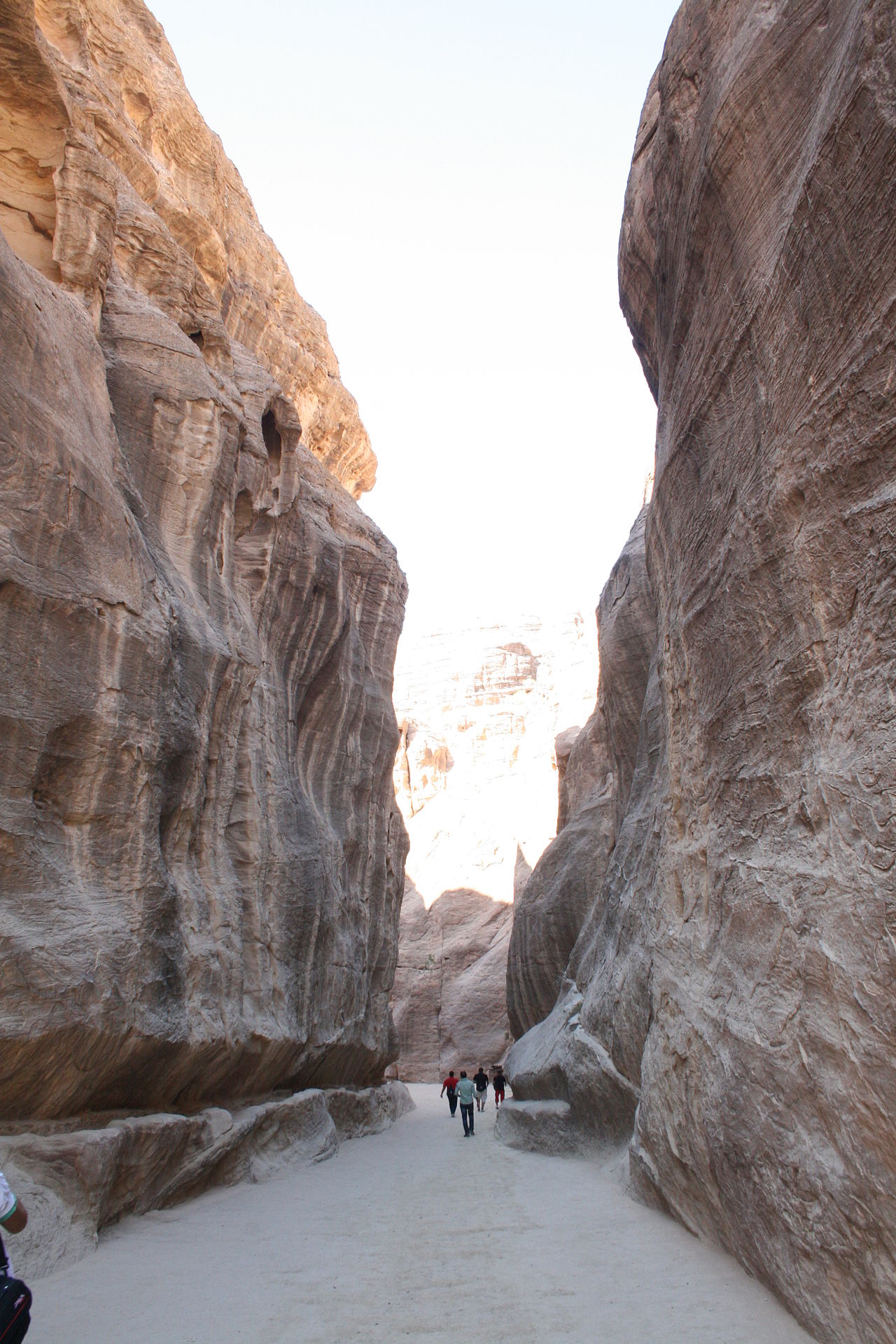
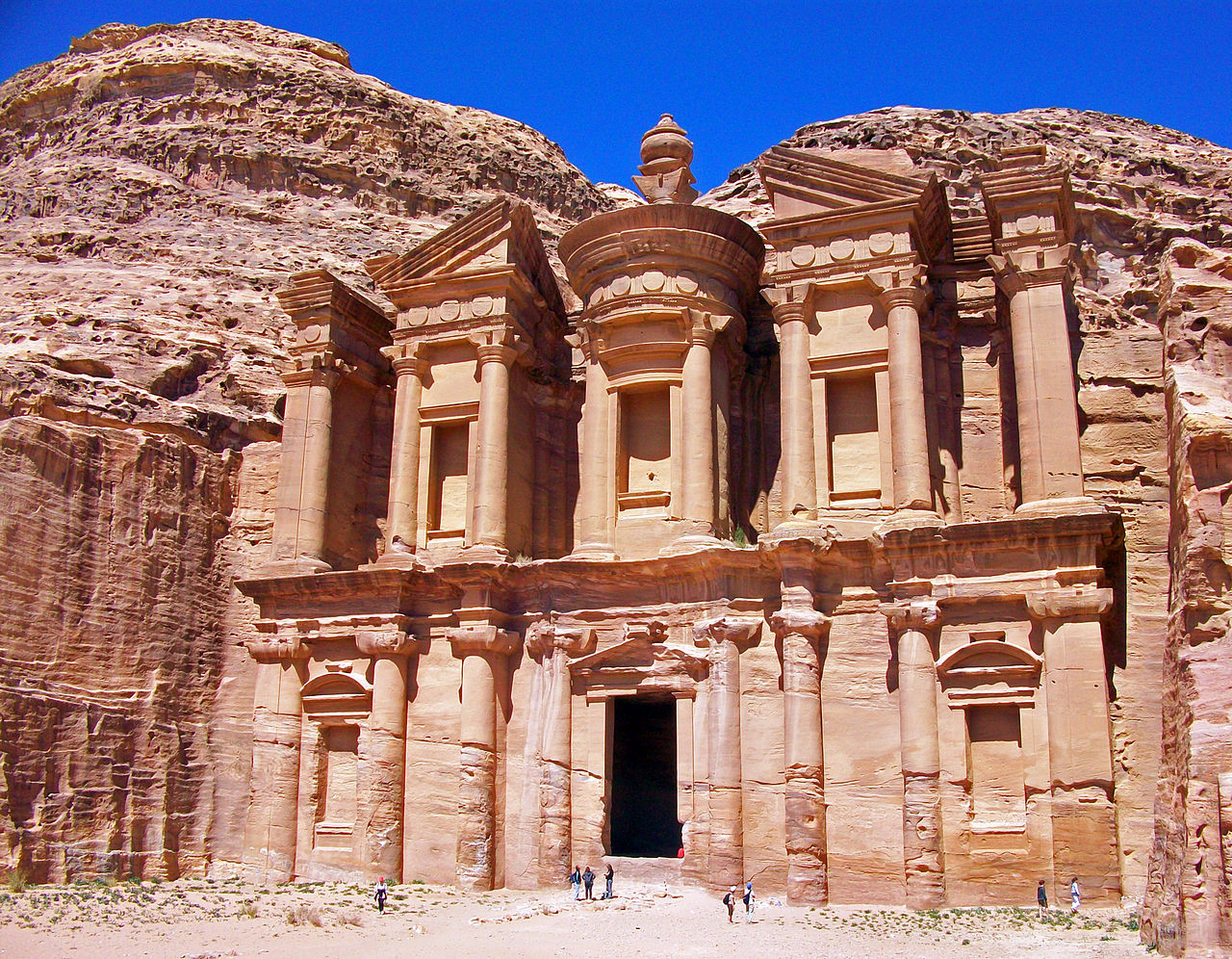
The Nabataeans were master hydraulic engineers whose ingenuity transformed an arid canyon into a thriving metropolis. They constructed an elaborate system of dams, cisterns, aqueducts, and ceramic pipelines that captured and distributed the rare desert rainfall, supporting agriculture and a permanent population where water should have made settlement impossible. Beyond Al-Khazneh, Petra contains hundreds of carved tombs, temples, a colonnaded street, a 7,000-seat theater, and the grand Monastery (Ad-Deir) — a structure even larger than The Treasury, perched high above the city after an exhausting climb of 800 steps.
The city's decline began after Rome annexed the Nabataean kingdom in 106 AD, gradually rerouting trade to sea lanes in ways that reduced Petra's strategic importance. A catastrophic earthquake in 363 AD damaged much of the city, and by the Byzantine period Petra had shrunk to a small settlement. The Western world had largely forgotten the city when Swiss explorer Johann Ludwig Burckhardt, disguised as an Arab pilgrim, became the first Westerner to visit in 1812, producing the accounts that reintroduced Petra to European consciousness and launched its career as an archaeological wonder.
Today Petra is Jordan's most visited tourist attraction and was designated a UNESCO World Heritage Site in 1985. The Bdoul Bedouin community, whose ancestors lived in Petra's caves for generations, were relocated in 1985 though many return daily to sell crafts. Recent archaeological surveys using satellite imagery and ground-penetrating radar have revealed that only 15% of Petra has been excavated — beneath the desert sands lie vast undiscovered palaces, roads, and monuments that promise to rewrite our understanding of Nabataean civilization for decades to come.