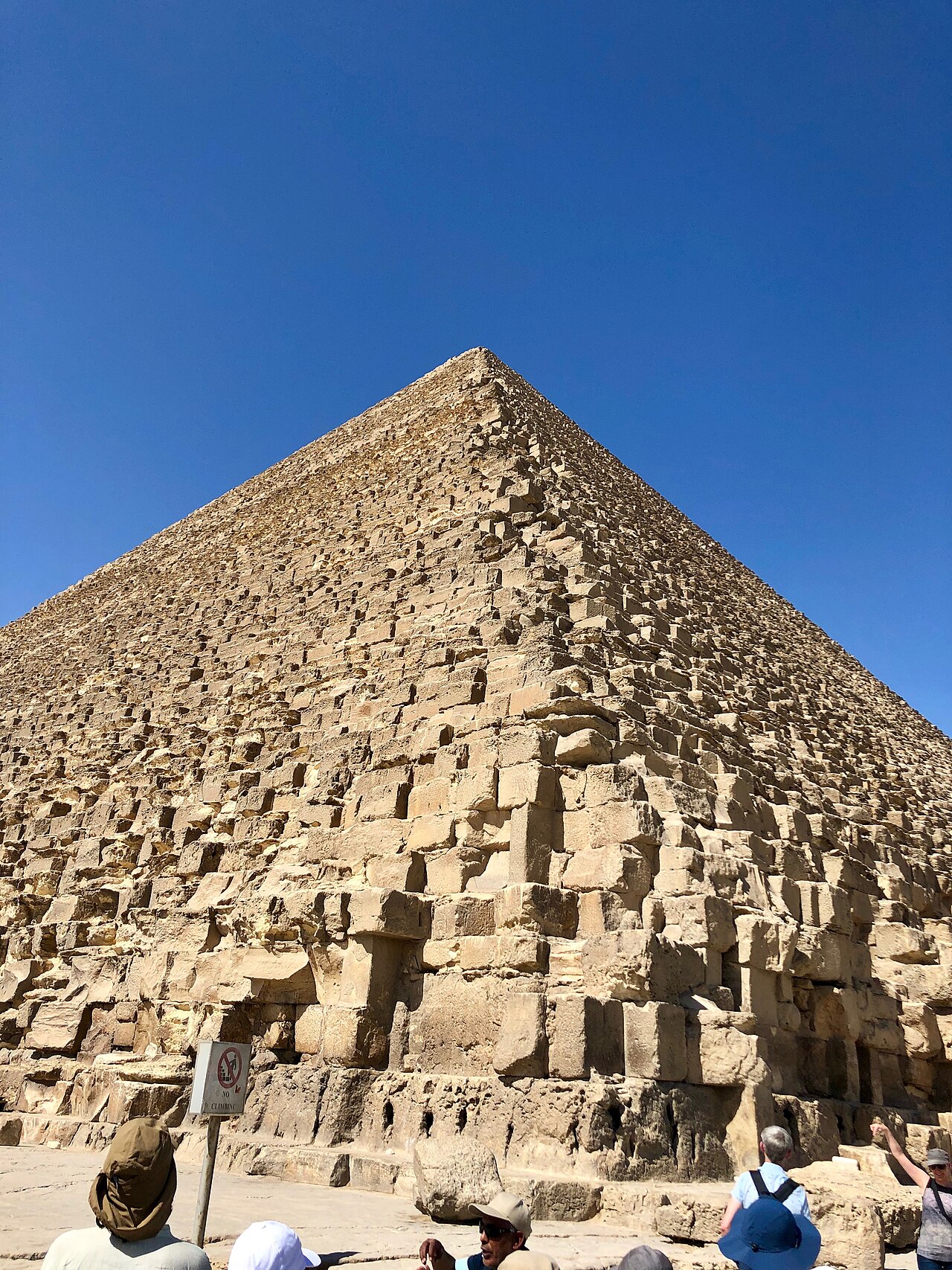
Cairo stands at the edge of the oldest continuous civilization on earth, a city of twenty million people pressed against a desert whose silence holds five thousand years of human ambition. The Nile, which made Egypt possible, still moves through the city in the same direction it always has, depositing the same black silt that allowed farmers to feed pharaohs, Roman emperors, and Arab caliphs in turn. To arrive in Cairo is to step into a place where history is not a museum exhibit but a physical fact — where the pyramids are visible from the airport, where minarets and ancient obelisks share the same skyline, and where the ground beneath every construction site is liable to yield something that rewrites a chapter of human history.
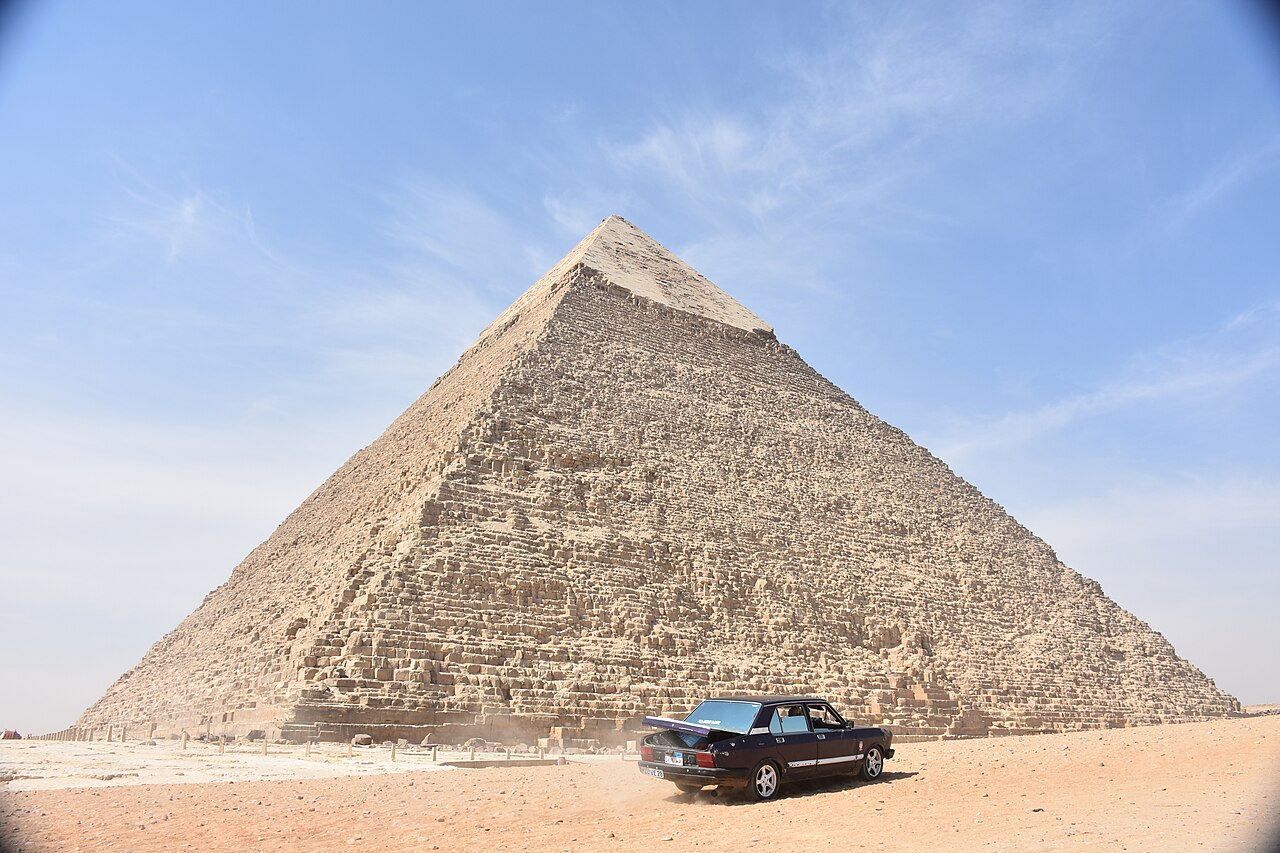
The story of pharaonic Egypt reaches its most spectacular expression in the Old Kingdom, roughly 2700 to 2200 BC, when a succession of god-kings commanded resources on a scale the ancient world would not see again for centuries. At Giza, just outside modern Cairo, the pharaohs Khufu, Khafre, and Menkaure raised their three great pyramids in the space of about a century. Khufu's Great Pyramid, completed around 2560 BC, required an estimated 2.3 million stone blocks averaging two and a half tons each. At 481 feet, it was the tallest structure on earth for 3,800 years — surpassed only by the Lincoln Cathedral in 1311 AD. But the engineering tradition that produced the Giza pyramids was not born fully formed. At Saqqara, ten miles to the south, the Step Pyramid of Djoser — designed by the architect and physician Imhotep around 2650 BC — is the oldest stone structure of significant size on earth, a revolutionary experiment in stacking mastabas into a six-tiered mountain for the dead. And at Dahshur, Pharaoh Sneferu's Bent Pyramid shows the engineers literally solving the problem in real time: the angle of its sides changes abruptly partway up, from 54 degrees to 43 degrees, as the builders adjusted for structural stress. Pyramids were not simply built — they were figured out.
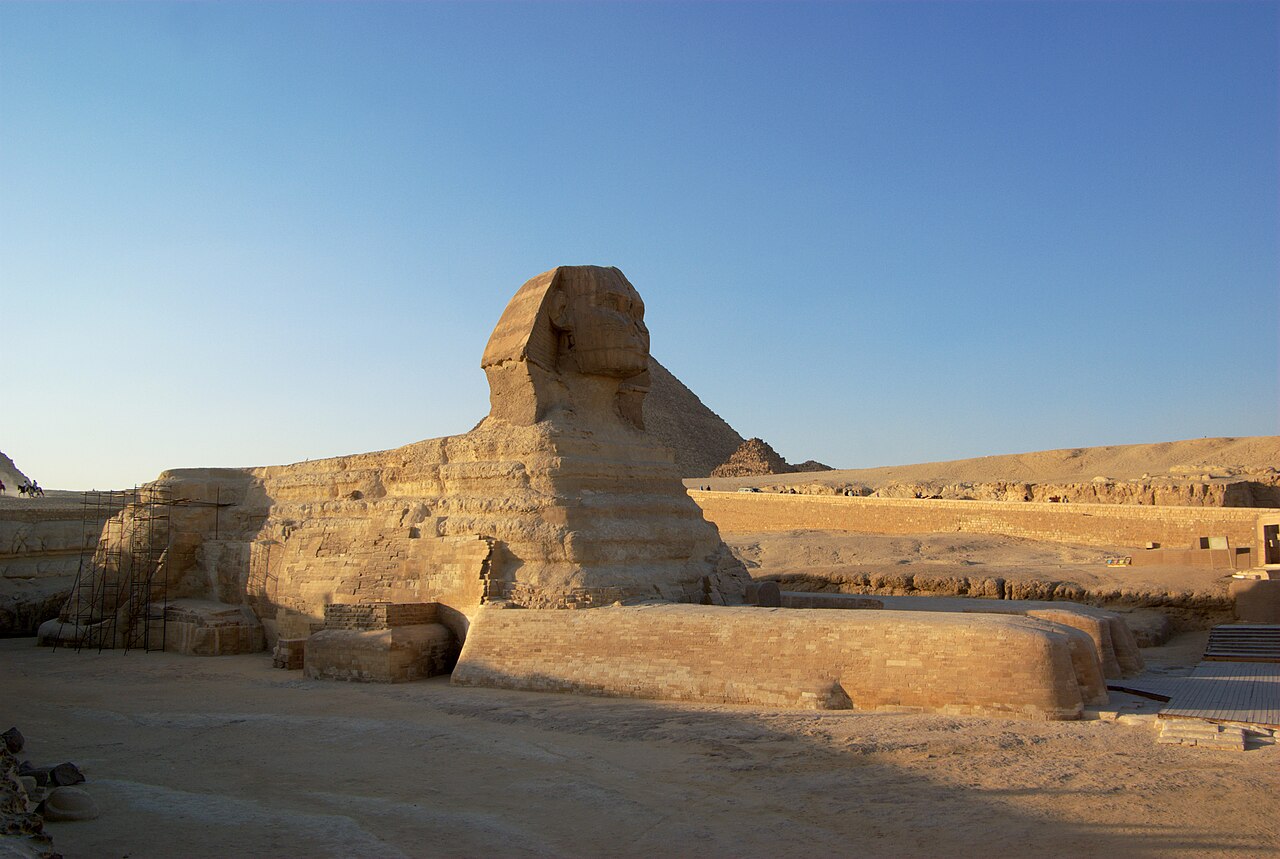
The Great Sphinx of Giza crouches at the eastern end of the plateau, carved from a single natural limestone outcrop sometime around 2500 BC, most likely during the reign of Pharaoh Khafre. At 240 feet long and 66 feet high, it is the largest monolithic sculpture in the world. Its face is thought to be a portrait of Khafre himself, though the nose has been missing for centuries — not, despite popular legend, shot off by Napoleon's artillery, but damaged by Mamluk soldiers in the 14th century AD. The Giza plateau is not merely a collection of spectacular monuments; it is a mortuary complex of extraordinary sophistication. Khafre's pyramid is connected by a 1,700-foot causeway to his Valley Temple, where the pharaoh's body was ritually prepared. Beside the Great Pyramid, excavated boat pits held full-sized cedar vessels — one, now reassembled, stretches 143 feet — intended to carry the pharaoh through the heavens. The scale of intention behind Giza is as staggering as the scale of the construction.
Much of what we know about ancient Egypt poured through a single doorway. On November 4, 1922, the archaeologist Howard Carter's team cleared a step cut into the bedrock in the Valley of the Kings and found the virtually intact tomb of Tutankhamun — a minor pharaoh who died at roughly nineteen years of age after a reign of only nine years, yet whose burial contained over 5,000 objects sealed for 3,200 years. The centerpiece is the death mask: solid gold, weighing 24 pounds, inlaid with lapis lazuli, carnelian, obsidian, and turquoise in patterns that still gleam as if newly made. For decades, the treasures were housed in the Egyptian Museum on Tahrir Square in central Cairo — a pink neoclassical building opened in 1902 and now so densely packed with antiquities that the sheer accumulation becomes overwhelming in the best possible way. In 2023, the Grand Egyptian Museum opened at the foot of the Giza plateau, the largest archaeological museum on earth, displaying all 5,000 objects from Tutankhamun's tomb together for the first time in history, alongside 100,000 further artifacts spanning the full arc of Egyptian civilization.
Cairo's history did not stop with the pharaohs. The city that exists today was largely shaped by a thousand years of Islamic rule that left behind a skyline of over a thousand minarets and a dense urban quarter that UNESCO has called one of the world's great historic cities. In 1176 AD, the Kurdish military commander Saladin — then in the service of the Fatimid Caliphate and soon to be its conqueror — began construction of a citadel on a spur of the Muqattam Hills overlooking the Nile plain, intended as a fortress against the Crusaders. The Citadel of Saladin still dominates Cairo's eastern skyline, and within its walls stands the Muhammad Ali Mosque — the Alabaster Mosque — built between 1830 and 1848 by Egypt's Ottoman viceroy in a style consciously modeled on the great mosques of Istanbul. Below the Citadel, Al-Azhar Mosque, founded in 970 AD by the Fatimid caliph Al-Mu'izz, is the oldest university in continuous operation in the world, its courtyard still filled with students of Islamic scholarship as it has been for more than a millennium. Threading between these monuments, the Khan el-Khalili bazaar — founded in 1382 — has operated without meaningful interruption ever since, its lanes selling spices, gold, copper, and perfume much as they did when the city was the wealthiest trading hub in the medieval world.
Modern Cairo is the largest city in the Arab world and the largest in Africa, a place of relentless energy and organized chaos where ancient history and the twenty-first century negotiate an uneasy coexistence. The traffic does not stop; the city does not sleep; the call to prayer rolls across the rooftops five times a day from minarets that have been sounding for a thousand years. At sunset, when the light turns the desert gold and the Nile catches the last of it, a felucca on the water reduces all of that noise to something ancient and quiet. The pyramids are still visible from the city in almost every direction, provided the smog cooperates — a reminder that the civilization that produced them was not a prelude to history but a central chapter of it, and that Cairo, for all its modernity, is still living inside that chapter.